
Mesa Apologizes for Steal of Third as Rays Refuse to Ease Up on Bases
On this page6
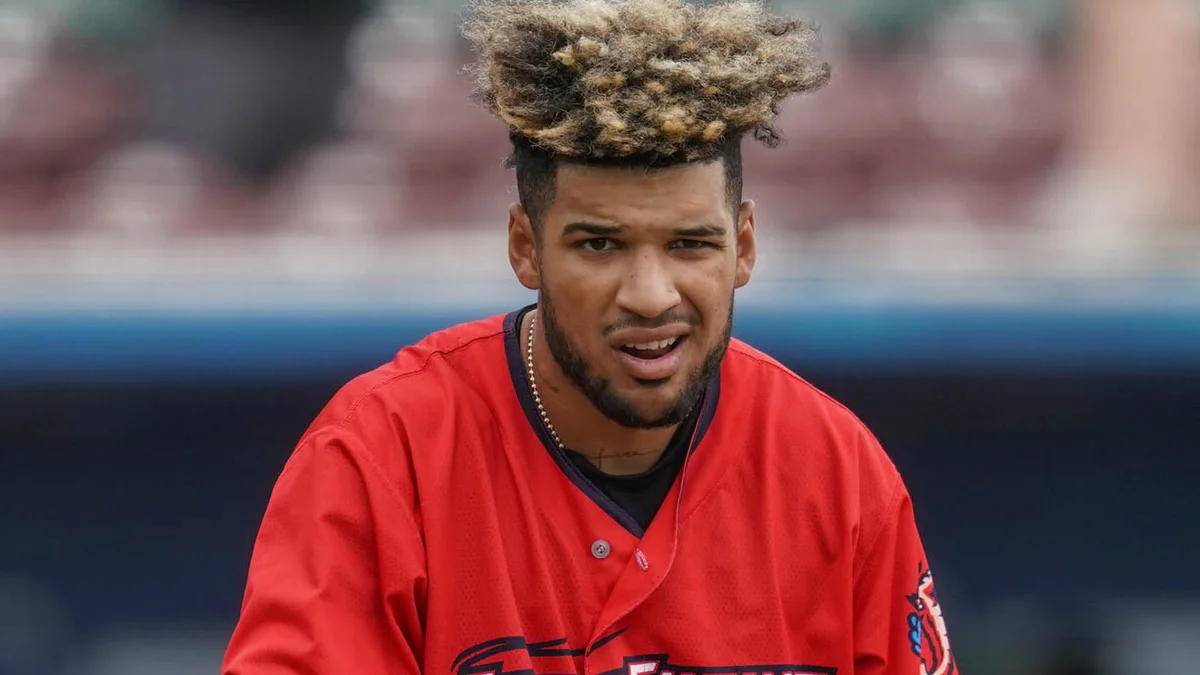
TL;DR: Victor Mesa Jr. apologized after trying to steal third with two outs in the fifth inning of World Series Game 1, a gamble William Contreras ended by throwing him out as the Rays trailed 2-1. Mesa called it “not the smartest move” and said he was trying to make something positive happen. Tampa Bay will not change its approach: Chandler Simpson said “that’s us” and the Rays will keep running, only smarter, starting in Game 2 on Saturday.
The apology came first, and the defiance came second, and both are true at once. Mesa knows the play was wrong. The Rays know the identity behind it is right. That tension is the story of Game 1 for Tampa Bay, a 3-2 loss in Milwaukee in which the team’s greatest strength turned into its most visible problem for two innings in a row. Tampa Bay arrived in Milwaukee after beating its way through the pennant race to face the Brewers in the World Series, and the running game was a large part of how it got there.
What exactly did Mesa do?
He led off the fifth inning with a single against Brewers starter Jacob Misiorowski, then moved to second when Ben Williamson grounded out. With two outs and Yandy Diaz, Tampa Bay’s slugging leadoff man, at the plate, Mesa broke for third.
It was the wrong pitch to run on and the wrong catcher to run against. Misiorowski threw a 103 mph fastball on an 0-2 count, and Contreras fired a throw in time to nail Mesa and end the inning. Tampa Bay was trailing 2-1, and Diaz never got his chance to drive in the tying run. The New York Post notes that Mesa, 25, had stolen nine bases in the regular season and added two more in the postseason, so this was not a player out of his depth on the bases. It was a good baserunner making a bad read at the worst moment.
Mesa did not hide from it afterwards. “Easy to say now, but it was not the best move,” he said, according to ESPN. “I understand that was not the smartest move. Learn from that, and I apologize or whatever to my teammates because, obviously, I’m trying to make something positive, and it wasn’t done in that way.”
Why was the steal so costly?
Because of the situation, not just the out. Mesa was already in scoring position at second base with two outs, and Diaz was at the plate. Getting to third would have helped only at the margins, on a wild pitch or a ball getting past Contreras, and Contreras was blocking everything that night. Getting caught ended the inning outright.
USA Today captures the extra layer in Mesa’s own words. “I think baseball treats you that way,” he said, “when you don’t do the right thing.” Then the qualifier that explains why Tampa Bay is not about to bench its instincts: “Obviously, not saying what I did was the right thing. But I’d rather be aggressive than be (passive).” Mesa was the first Ray thrown out on the bases in these playoffs, after the team had entered the game a perfect 11-for-11 on steal attempts. The streak ended on a play where the reward never matched the risk.
Was Mesa’s play the only mistake?
No, and the second one belongs more to the dugout than to the runner. In the sixth inning, Jonathan Aranda delivered a one-out single against reliever Abner Uribe, bringing Simpson to the plate for the third time. Cash, figuring Simpson would make contact or take the walk, sent the slow-moving Aranda for second on a full count.
Simpson struck out instead, failing to check his swing on a slider that would have been ball four, and Contreras threw Aranda out by a few feet for a double play to end the inning, with Junior Caminero, the team’s best hitter, on deck. Cash took that one on himself. “That’s on me ultimately,” he said. “So much trust in Chandler putting the ball in play. But he had a pretty nasty pitch.”
Put together, the two innings explain the final line: Tampa Bay entered the night 11-for-11 on the bases in the postseason and finished 13-for-15, after Simpson and pinch-runner Jorge Mateo executed a double steal in the ninth to bring the go-ahead run to the plate. The Rays’ running game did not disappear. It misfired twice, then showed up late, in the inning where it mattered most and still was not enough. Mistakes on the bases have already shaped this postseason for Tampa Bay, as a miscue-heavy ALCS Game 2 showed, but Game 1 was the first time the Rays’ own aggression cost them in this way.
What did Cash say about Mesa?
He defended the intent while conceding the outcome, which is the manager’s version of Mesa’s own apology. “Ultimately, Victor is really competing, trying to do something to make something happen, put a little pressure on the defense,” Cash said. “And it didn’t work in our favor.”
That is a careful distinction, and it matters for Game 2. Cash is not saying the steal was a good idea. He is saying the instinct behind it, trying to force the defense into a mistake, is the instinct Tampa Bay plays with, and a manager who punishes that instinct in public will not have it available when he needs it. The criticism is in the result. The encouragement is in the approach.
Are the Rays really going to keep running?
Yes, in their own words, and Simpson said it plainly enough that there is no room to soften it. “That’s us,” the Rays left fielder said. “We can’t run away from that because that’s who we are. Just because we got stopped a couple of times on the basepaths, we can’t shy away from that. Not now, at the end. We just got to continue to go forward. Be smart, be conscious of it, and just learn from it going forward.”
Simpson added the practical caveat himself. “I just feel like we didn’t really get on base enough to be able to pick spots where we could run,” he said. “But, I mean, he’s a great catcher. He’s been great. So definitely have to be smart. And we talked about that coming in, and we definitely have to be conscious of it for sure moving forward.” The message is not recklessness. It is the same aggression, aimed better, against a catcher who just threw out two runners in one night and was already the player of the game in the Contreras-centred account of Game 1.
What does this mean for Game 2?
It means the baserunning question travels with the series. Tampa Bay will try to avoid falling behind 2-0 on Saturday before the series shifts to Tampa, and Milwaukee now knows the Rays will keep testing Contreras. That is useful information for both sides, and it cuts both ways: a catcher who has already thrown out two runners can be run on again, but only if the Rays pick spots where the risk is worth it.
The wider context helps explain why Tampa Bay is so stubborn about this. The Rays reached the World Series for the third time in franchise history on the back of this style, finishing second in the majors in steals during the regular season. Abandoning it after one bad night would be a bigger change than the two mistakes justify, and it would hand Milwaukee exactly what it wants: a Tampa Bay team playing careful baseball in a series where careful baseball loses to the Brewers’ bullpen. Mesa apologized for the play. Nobody in the Rays clubhouse apologized for the identity, and Game 2 will show whether the distinction holds up when Contreras is behind the plate again.
That identity has already produced one memorable subplot this postseason, when Jacob Misiorowski traded a signed jersey and cleats to a fan for his own 1-of-1 card, and it is the same Misiorowski whose 103 mph fastball set up Mesa’s fateful break. The Rays’ season has been built on players making things happen. On Friday night, one of them made the wrong thing happen, said so, and the team decided to keep making things happen anyway.
Frequently asked questions
What did Victor Mesa Jr. do in World Series Game 1?+
In the fifth inning, Mesa led off with a single against Jacob Misiorowski, moved to second on a groundout, and then tried to steal third with two outs and Yandy Diaz at the plate. He broke on an 0-2, 103 mph fastball, and Brewers catcher William Contreras threw him out to end the inning with Tampa Bay trailing 2-1.
What did Mesa say afterwards?+
He owned it. Mesa said, 'Easy to say now, but it was not the best move. I understand that was not the smartest move. Learn from that, and I apologize or whatever to my teammates because, obviously, I'm trying to make something positive, and it wasn't done in that way.' USA Today also quotes him saying he would rather be aggressive than passive.
Was this the Rays' only baserunning mistake in Game 1?+
No, there were two in consecutive innings. In the sixth, Jonathan Aranda singled and manager Kevin Cash sent him for second on a full count, trusting Chandler Simpson to make contact or take a walk. Simpson struck out on a slider that would have been ball four, and Contreras threw Aranda out to complete a strikeout-throwout double play with Junior Caminero on deck.
Did Kevin Cash take responsibility for the second play?+
Yes. Cash said, 'That's on me ultimately. So much trust in Chandler putting the ball in play. But he had a pretty nasty pitch.' On Mesa's play, Cash was more forgiving, saying Mesa was competing and trying to put pressure on the defense, and that it simply did not work in Tampa Bay's favor.
Will the Rays stop running after Game 1?+
No, and that is the point of the postgame message. Simpson said, 'That's us. We can't run away from that because that's who we are. Just because we got stopped a couple of times on the basepaths, we can't shy away from that. Not now, at the end.' The adjustment is judgment, not retreat: be smart and conscious of the spots, Simpson said, and learn from Game 1 going forward.
How good had the Rays been on the bases before Game 1?+
They entered the game 11-for-11 on stolen-base attempts in the postseason, after finishing second in the majors in steals during the regular season. The New York Post puts the regular-season total at 164 steals, tied for second. Game 1 ended that perfect postseason run, and Tampa Bay finished the night 13-for-15 after a ninth-inning double steal.
What happened in the ninth inning on the bases?+
The Rays finally got their running game going again. Pinch-runner Jorge Mateo and Simpson executed a double steal to put themselves in scoring position with one out, bringing the go-ahead run to the plate. That rally is part of the [chaotic ninth inning that Milwaukee survived](/brewers-game-1-overturned-double-play/), when a replay review overturned an apparent game-ending double play before Trevor Megill struck out Jonny DeLuca.
What is next for the Rays in the series?+
Game 2 on Saturday night in Milwaukee, where Tampa Bay will try to avoid falling behind 2-0 before the series shifts to Tampa. The question from Game 1 follows them into it: whether the aggression that carried them to a third World Series in franchise history can be aimed at the right spots against a catcher who threw out two runners in one night.
Sources
- ESPN: Rays won't ease up on basepaths after World Series Game 1 loss (the fifth and sixth inning sequences, the Mesa and Cash quotes, Simpson's 'that's us' line, the 11-for-11 postseason figure)
- New York Post: Rays' outfielder apologizes for costly baserunning mistake in Game 1 loss (the Mesa apology, the 13-for-15 final figure, the ninth-inning double steal, the 164 regular-season steals)
- USA Today: World Series Game 1 winners and losers (Mesa's 'baseball treats you that way' and 'rather be aggressive' quotes, Contreras's podium game)
Play & tools
Free browser games and tools — no account, no download.
- Play 162-0 — Draft nine and see if your roster can survive a flawless 162-game MLB season.
- Explore all our games →
- Analyze a trade — Compare both sides of a fantasy baseball trade before you accept.
- Run the MLB predictor — Simulate the MLB postseason bracket down to a World Series champion.
- Open the ERA calculator — Work out earned run average from earned runs and innings pitched — handles the .1/.2 thirds convention.
- Explore all our free sports tools →
Related baseball guides
View all →
Woodford Pitched for Both World Series Teams and Is in Line for a Ring Either Way
Jake Woodford pitched for Milwaukee and Tampa Bay in 2026, was designated four times, and is on neither World Series roster. The ring custom puts him in line for one either way.
Freddy Peralta Pitches Rays Into the World Series, Where Milwaukee Waits
Freddy Peralta won ALCS Game 6 and the series MVP award for Tampa Bay. Traded twice in nine months, he now faces Milwaukee, the club that raised him.
Woodruff Makes Brewers' World Series Roster After No Game Since July 4
Brandon Woodruff hasn't pitched since July 4. The Brewers added him to their World Series roster hours before Game 1 anyway, and the gamble has a real catch.
Brewers Won World Series Game 1 Twice After an Overturned Double Play and Early Fireworks
Milwaukee thought Game 1 ended on a 6-4-3 double play, then replay ruled Cooper Pratt's foot was off the bag. Trevor Megill regrouped to seal a 3-2 win.
Bob Uecker's Family Tells Milwaukee 'Let's Win Our Way' as the Brewers Reach the World Series
Two days before the Brewers' first World Series game since 1982, the Uecker family released a letter through the club: pride, longing for Bob, and a message for the players, the staff and the fans.
Brewers Admit a Timeless Ticket Mistake and Let Holders Keep Both Seats
The Brewers admitted an internal mistake over Timeless Ticket World Series seats. Holders who applied in time keep their seats and keep their ticket for a future season.