
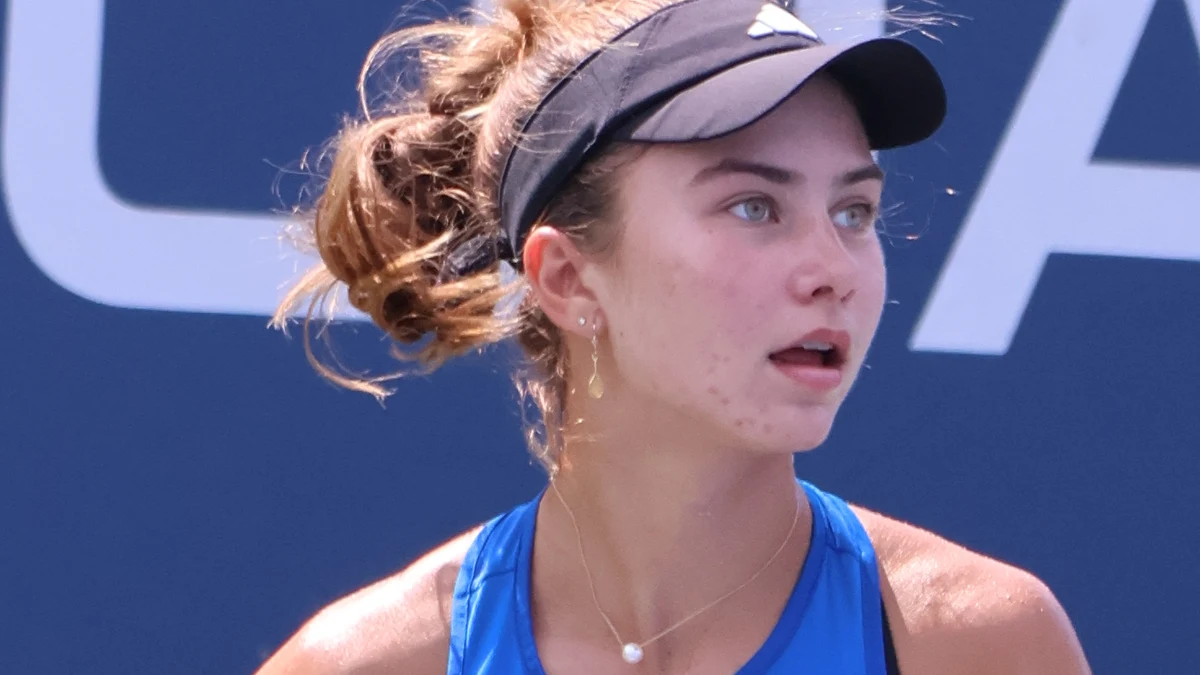
Iva Jovic Shares 'Insane' Abuse After Ningbo Loss and Asks Fans to Be Kind
On this page6
TL;DR: Iva Jovic posted screenshots of the abuse she received after losing her Ningbo Open quarter-final to Diana Shnaider, calling it insane and asking fans to be kind. The 18-year-old American lost 3-6, 6-4, 1-6 on Friday after beating Jasmine Paolini in the previous round, and the messages she shared included insults, an accusation of match-fixing and an ableist slur. She did not name any accounts or link the abuse to betting, and the episode lands days after Coco Gauff faced a wave of racist abuse at the China Open.
Jovic did not lose badly, collapse, or cause a scene. She lost a competitive quarter-final at a WTA 500 event she had never entered before, having already beaten a two-time Grand Slam finalist to get there. Then she opened her phone. What she found there, and her five-word answer to it, is the story: a teenager at the peak of her young career deciding to show the world what losing a tennis match now costs off the court.
What did Jovic actually post?
A screenshot and a sentence. After the defeat, Jovic shared a screenshot of her Instagram inbox on her Story and wrote: “Just insane. Be kind everyone,” with a heart emoji, Athlon Sports and TennisWorldUSA report. She did not name individual accounts, quote every message, or turn the post into a longer statement. The restraint is part of why it travelled: the screenshot did the talking, and the caption refused to escalate.
The contents, as reported by TennisWorldUSA, were not criticism of her tennis. Users called her horrible, horrendous and overrated. One accused the world No. 12 of fixing matches. Another used an ableist slur. TennisUpToDate reports similar wording, including attacks on her parents and her appearance. None of it bore any relationship to what had happened on court in Ningbo, where Jovic had fought back to force a deciding set.
How did the match itself go?
It was a proper contest, not a collapse. Jovic lost 3-6, 6-4, 1-6 to Shnaider, Athlon Sports reports. She made the better start and led 2-0, TennisWorldUSA reports, before Shnaider took six of the next seven games to claim the opener. Jovic answered by winning the second set with the only break in the seventh game, forcing a decider. Then Shnaider won five consecutive games to seal her first victory over the American. It was the kind of three-set loss that happens every week on tour, which is precisely why the reaction to it stands out.
The run to the quarter-final had been strong. Jovic reached the last eight with a 6-4, 6-3 victory over two-time Grand Slam finalist Jasmine Paolini, Athlon Sports reports, on her Ningbo debut at a WTA 500 event. That context matters, because the abuse arrived anyway, after a win over a major finalist and a competitive loss, not after a shock defeat or a controversy.
Why does this keep happening to tennis players?
Because losing a match now means opening an inbox full of strangers who lost money, or simply wanted a target. Athlon Sports notes Jovic did not specify who sent her messages or directly link the incident to sports betting, and this article does not claim a betting link for her case. The wider picture, though, is documented: a WTA and World Tennis report found gambling-related accounts were responsible for 42 percent of verified online abuse and 59 percent of serious abuse directed at players during the 2025 season.
Former players have described the same pattern in starker terms. Daria Kasatkina has said 95 percent of the messages players receive after defeats come from people who lost money betting on them, including threats against their families, Athlon Sports reports. Caroline Garcia has called for stronger safeguards, saying comments hurt even experienced professionals. Jovic, at 18, is now the latest young player to learn that lesson in public.
How does this compare with what happened to Coco Gauff?
It is a different kind of abuse, in the same broken pattern. Gauff revealed a wave of racist abuse after a replayed point in her China Open win over Sun Xinran, and the UN Human Rights Office later condemned the messages aimed at her. Gauff’s case involved racial slurs after an officiating controversy; Jovic’s involved insults, a fixing accusation and an ableist slur after a routine loss. The common thread is not the content but the mechanism: a young player finishes a match, opens social media, and finds abuse waiting.
That parallel is also why Jovic’s post matters beyond one tournament. When the sport’s biggest young stars keep having to publish their inboxes to be believed about abuse, the problem is no longer a series of isolated incidents. It is a feature of how tennis players now experience defeat, and every new voice that names it makes it harder to dismiss.
What has Jovic achieved this season?
A breakthrough that makes the abuse look even more disconnected from reality. TennisWorldUSA reports she lifted her second WTA title in Guadalajara, reached a career-high ranking of No. 11 and made her maiden Grand Slam quarter-final at the Australian Open, where she also finished as runner-up in Hobart. She is currently ranked No. 12, and her Ningbo run extended a season in which she has beaten major finalists and established herself among the game’s rising names. The messages she shared did not reflect that season. They reflected an inbox.
Her story also has a recent precedent at the same tournament. Rybakina’s Ningbo week began with a 30-minute win when Polina Kudermetova retired at 5-0, and the event has now produced two very different talking points in one week: a title defence taking shape and a teenager showing the world her inbox. Tennis keeps producing both kinds of story in the same week, and only one of them gets fixed by winning the next match.
What happens next?
Tokyo, and a question for the tour. Jovic plays the Pan Pacific Open in Tokyo this week, and whether the WTA or the tournament addresses her post is the open item. Her own message needs no follow-up to stand on its own: five words, a heart emoji, and a screenshot. But the pattern she joined, from the conduct rows that keep following young players on tour and the ball-kid warning that followed Rafael Jodar in Shanghai to the abuse Gauff faced in Beijing, will keep producing new examples until the platforms and the sport find an answer. For now, the most useful thing in this story is the simplest one: a player who, instead of absorbing it quietly, showed everyone exactly what it looks like.
Frequently asked questions
What did Iva Jovic post after losing in Ningbo?+
She posted a screenshot of her Instagram inbox on her Story after the quarter-final defeat, Athlon Sports and TennisWorldUSA report. The caption was short: 'Just insane. Be kind everyone,' with a heart emoji. She did not name individual accounts, dwell on the details or accuse any one group, letting the screenshot itself carry the point.
What kind of messages did Jovic receive?+
TennisWorldUSA reports the messages called her horrible, horrendous and overrated, and one accused the world No. 12 of fixing matches, while another used an ableist slur. TennisUpToDate reports similar wording, including criticism of her parents and her looks. None of the abuse related to how she actually played in Ningbo.
How did the Ningbo quarter-final actually go?+
Jovic lost 3-6, 6-4, 1-6 to Diana Shnaider, Athlon Sports reports. She started well and led 2-0, TennisWorldUSA reports, but Shnaider took six of the next seven games to claim the opener. Jovic won the second set with the only break in the seventh game, then Shnaider won five straight games to close out the decider.
Did Jovic blame sports betting for the abuse?+
No. Athlon Sports notes she did not specify who sent the messages or directly link the incident to sports betting. The wider context comes from a WTA and World Tennis report finding gambling-related accounts were behind 42 percent of verified online abuse and 59 percent of serious abuse directed at players in 2025.
Has Jovic faced online abuse before?+
Yes, this was not her first brush with it. Athlon Sports reports she faced criticism at the 2026 US Open after beating her friend Alexandra Eala in three sets, with some fans upset she did not mention Eala in her on-court interview. The Ningbo episode follows that pattern: a routine result followed by a disproportionate pile-on.
How does this connect to Coco Gauff's abuse at the China Open?+
Gauff revealed a wave of racist abuse after a replayed point in her China Open win over Sun Xinran, and the UN Human Rights Office later condemned the messages, as covered in our earlier report on the episode. Jovic's case is different in kind, but it sits in the same pattern: a young player opening her phone after a match and finding abuse instead of discussion.
What has Jovic achieved this season?+
It has been a breakthrough year. TennisWorldUSA reports she lifted her second WTA title in Guadalajara, reached a career-high ranking of No. 11 and made her first Grand Slam quarter-final at the Australian Open, where she also finished as runner-up in Hobart. The Ningbo run, including a win over two-time Grand Slam finalist Jasmine Paolini, extended that form.
What happens next for Jovic?+
She heads to Tokyo for the Pan Pacific Open this week, with the WTA Finals in Indian Wells to follow for the players who qualify. Whether the WTA or the tournament responds to her post is the open question, and her next public comment on the subject would move this story on. For now, her own message stands: be kind.
Sources
- Athlon Sports: Iva Jovic speaks out against online abuse after latest defeat (the Instagram post, the Ningbo score, the Paolini win, the betting-abuse data)
- TennisWorldUSA: Iva Jovic exposes vile messages received following Ningbo exit (the inbox contents, the match-fixing accusation, the season context)
- TennisUpToDate: 'Just insane. Be kind everyone' (the message wording, the Gauff parallel, the betting context)
- Tennis365: Iva Jovic reveals 'insane' abuse after Ningbo Open loss (the 'give up' messages, the career-high ranking, the Guadalajara title)
Play & tools
Free browser games and tools — no account, no download.
- Play today's Sports Connections — Today's Sports Connections — daily hints, answers, and play the grid.
- Play Guess the NFL Player — A new mystery NFL player every day. Eight guesses, with a clue on each — plus free unlimited mode.
- Explore all our games →
Related tennis guides
View all →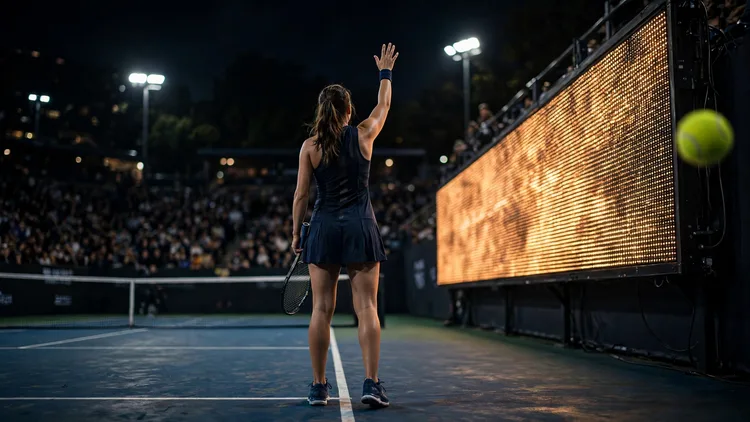
Coco Gauff Calls Out 'Insane' Racist Abuse After Replayed Point at the China Open
Coco Gauff said she received an 'insane' amount of racist abuse online after a flickering LED board got a point replayed in her China Open win over Sun Xinran.
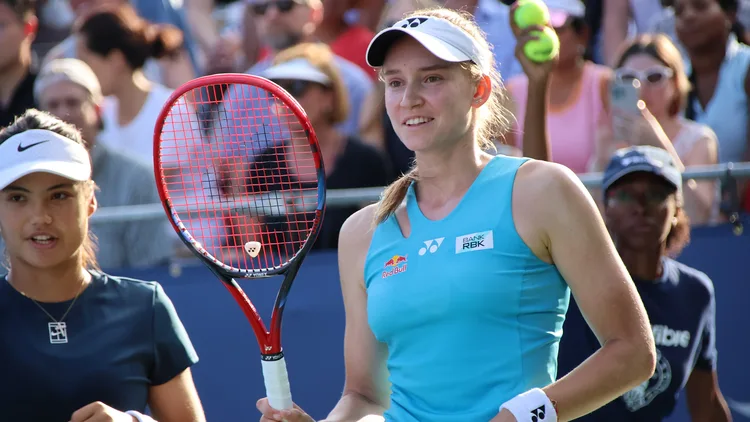
Rybakina's Ningbo Return Lasts 30 Minutes as Kudermetova Retires at 5-0
Elena Rybakina reached the Ningbo quarterfinals in 30 minutes on her return from injury after Polina Kudermetova retired at 5-0. Katarzyna Kawa is next.
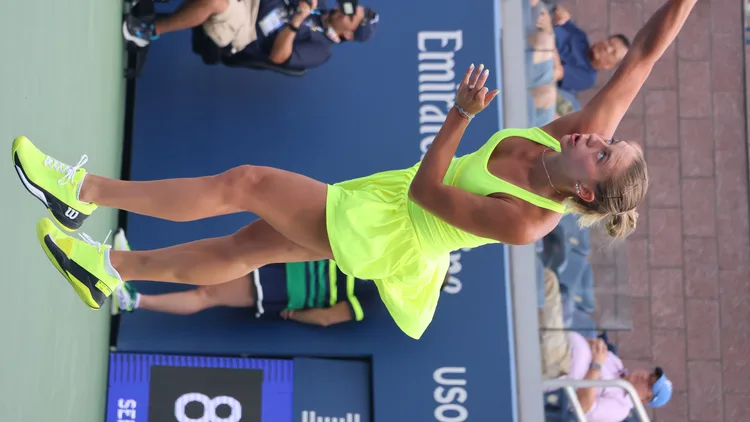
Muchova Clinches the Last WTA Finals Spot Without Playing as Kostyuk Retires in Ningbo
Karolina Muchova secured the last WTA Finals place on Wednesday without hitting a ball, after Marta Kostyuk retired in Ningbo with a wrist problem.
Iga Swiatek Ends Her Season With a Thigh Injury and Will Miss the WTA Finals
Iga Swiatek withdrew from Ningbo with a left thigh injury and ended her season on Tuesday, giving up the WTA Finals berth she was still chasing.
Elina Svitolina Announces Separation From Gael Monfils
Elina Svitolina announced on Instagram that her marriage to Gael Monfils is ending, citing the toll of the war in Ukraine and asking for space.
Eva Lys Ends Her 2026 Season Early to Focus on Her Health and Change Her Treatment
Eva Lys announced she is ending her 2026 season early to focus on her physical and mental health and change the arthritis treatment she has used for over six years.