
Candlepin Bowling Rules, Explained
On this page6
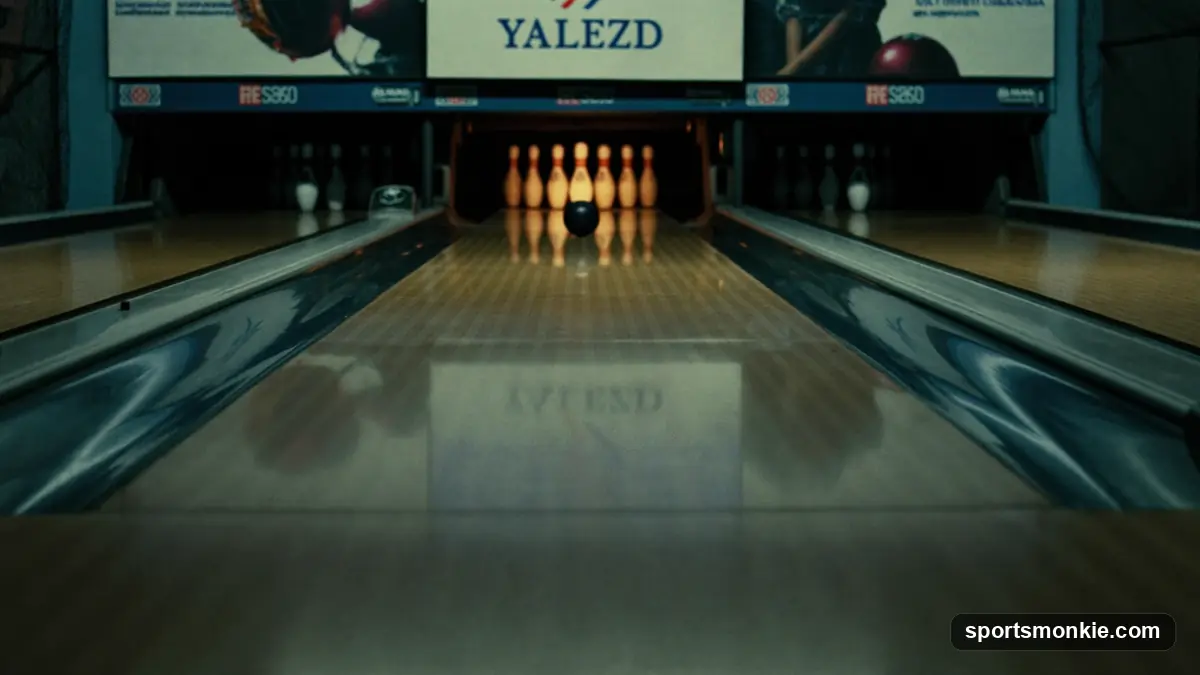
Candlepin bowling is a New England variant of the sport in which you roll three balls per frame using a small, palm-sized ball with no finger holes, aiming at tall, thin, nearly cylindrical pins. Its most distinctive rule is that fallen pins, called “wood” or “deadwood,” stay on the lane and can be used to knock down other pins, which makes the game both quirky and famously difficult.
If you have only bowled the standard tenpin game, candlepin will feel like a different sport. The scoring framework is familiar, but almost everything else, the ball, the pins, the number of throws, changes the strategy completely. Here is how it works.
What makes candlepin different
Three physical differences set candlepin apart from the tenpin game most people know:
- A tiny, hole-less ball. The candlepin ball is roughly the size of a large grapefruit and weighs about the same as a single pin. You cradle it in your palm rather than gripping it with finger holes.
- Thin, cylindrical pins. Candlepin pins are tall and slender, shaped a bit like candles (hence the name), rather than the fat, bottom-heavy tenpin. They are much harder to topple.
- Three balls per frame. You get three throws each frame to clear the ten pins, not two.
Add to those the deadwood rule, fallen pins are never cleared during a frame, and candlepin becomes a game of angles and caroms rather than raw power.
The deadwood rule
This is the rule newcomers most need to understand. In tenpin, a sweep clears knocked-down pins between balls. In candlepin, fallen pins stay on the lane for the rest of the frame. That “wood” is live: a following ball can strike it and drive it into standing pins, and skilled bowlers deliberately leave wood in useful positions to help clear the remaining rack. Learning to read and use the deadwood is central to good candlepin play.
How candlepin is scored
Scoring follows the same ten-frame structure as tenpin, so if you know one, you can read the other.
| Result | Definition | Points |
|---|---|---|
| Strike | All 10 pins down on the first ball | 10 + your next 2 balls |
| Spare | All 10 down using 2 or 3 balls in the frame | 10 + your next 1 ball |
| Open frame | Some pins left standing after 3 balls | Number of pins knocked down |
The crucial distinction is that clearing all ten pins only counts as a strike if you do it on the very first ball. Knock them all down on your second or third ball and it scores as a spare, exactly as in tenpin. Because you have three balls per frame, spares are more achievable, but first-ball strikes are extremely rare given how hard the thin pins are to topple. Our guide to how bowling scoring works walks through the strike-and-spare math in full, and it applies directly here.
Why candlepin is so hard
The combination of a light ball and skinny pins makes candlepin one of the most difficult bowling variants in the world. The ball simply cannot deliver the pin-scattering energy of a heavy tenpin ball, so knocking everything down demands precision, not force. The most telling statistic: no one has ever bowled a sanctioned perfect game of 300 in candlepin, a feat that happens routinely in tenpin. That single fact tells you everything about the difficulty gap between the two games.
Strategy: accuracy over power
Because you cannot overpower the pins, candlepin rewards a very different approach:
- Aim for the gaps. Target the spaces between pins to maximize how many you clip on each ball.
- Use the wood. Leave and exploit deadwood so a later ball can carom into standing pins.
- Control speed and release. A consistent, controlled roll with the palm-held ball beats a hard, wild throw every time.
This finesse-first mindset is the opposite of the power game some tenpin bowlers rely on, and it is why techniques like a heavy hook or debates over what ball weight to use simply do not translate, the candlepin ball is fixed and light for everyone.
What counts as a good score
Candlepin scores run far lower than tenpin because of the difficulty. For a casual bowler, breaking 100 is a genuinely good game, and averaging comfortably above 100 marks a strong recreational player. Top competitive candlepin bowlers average higher and post individual games in the 150-plus range, with record games climbing above 200, still nowhere near the 300 ceiling that remains unreached. If your first candlepin game lands in the double digits, that is completely normal; the game humbles everyone at first.
The short version: candlepin bowling gives you three balls per frame, a small hole-less ball and tall thin pins, and it leaves fallen “wood” on the lane to be used as a weapon. Scoring mirrors tenpin’s strikes and spares, but the light ball and stubborn pins make it dramatically harder, so much so that a perfect 300 has never been bowled and breaking 100 is a point of pride.
Frequently asked questions
What is the difference between regular bowling and candlepin bowling?+
The main differences are the ball, the pins and the number of throws. Candlepin uses a small ball, about the size of a large grapefruit, with no finger holes, held in the palm, versus the heavy, drilled tenpin ball. Candlepin pins are tall, thin and nearly cylindrical rather than the fat tenpin shape, making them much harder to knock down. You also get three balls per frame in candlepin instead of two, and fallen pins ('deadwood') are left on the lane, both unique to candlepin.
How do you score candlepin bowling?+
Scoring uses the same framework as tenpin. Each game is ten frames; a strike (all ten pins on the first ball) scores 10 plus your next two balls, and a spare (all ten down within the frame) scores 10 plus your next one ball. The key difference is you have three balls per frame to clear the pins, but knocking them all down still counts as a spare, not a strike, if it takes more than one ball. Open frames simply score the number of pins knocked down. A perfect game is theoretically 300 but has never been achieved in sanctioned candlepin.
What is the trick to candlepin bowling?+
Because the ball is light and the pins are hard to topple, accuracy and using the deadwood matter more than power. Skilled players aim to leave fallen pins ('wood') positioned so a following ball can carom off them into standing pins, and they target the space between pins rather than trying to overpower the rack. Controlled speed, a consistent release with the palm-held ball, and reading how the wood lies are the real keys, not throwing harder.
What is a good score in candlepin bowling?+
Candlepin scores are much lower than tenpin because the game is harder. Breaking 100 is a solid game for a casual bowler, and averages well above 100 mark a strong recreational player. Top competitive candlepin bowlers average higher and post individual games in the 150-plus range, with record games around and above 200. For context, no sanctioned candlepin bowler has ever rolled a perfect 300, which underlines just how difficult scoring is compared with tenpin.
Sources
Play & tools
Free browser games and tools — no account, no download.
- Play today's Sports Connections — Today's Sports Connections — daily hints, answers, and play the grid.
- Play Guess the NFL Player — A new mystery NFL player every day. Eight guesses, with a clue on each — plus free unlimited mode.
- Explore all our games →
Related guides
How Bowling Scoring Works: Strikes and Spares
How bowling scoring works: a strike is 10 plus your next two balls, a spare is 10 plus your next one, and a perfect game of 300 is 12 strikes.
What Is a Brooklyn in Bowling?
A Brooklyn in bowling is a crossover shot hitting the pocket on the opposite side from your throwing hand. What it means and why bowlers dislike it.

How to Hook a Bowling Ball: Beginner Guide
Learn to hook a bowling ball: the fingers-then-thumb release, wrist position and axis rotation that curve the ball into the pocket. Step-by-step guide.

Two-Handed Bowling Technique Explained
Two-handed bowling uses both hands and no thumb to generate huge revolutions and hook. How the technique works, its pros and cons, and how to learn it.
What Is a Turkey in Bowling? 3-Strike Name
A turkey in bowling is three strikes in a row. Where the name came from, what longer streaks are called, and how consecutive strikes score.

What Weight Bowling Ball Should I Use?
A common guideline is a bowling ball about 10% of your body weight, up to the 16 lb max. How to pick the right weight you can actually control.