
What Does It Feel Like to Paraglide? The Mystery Solved
On this page5
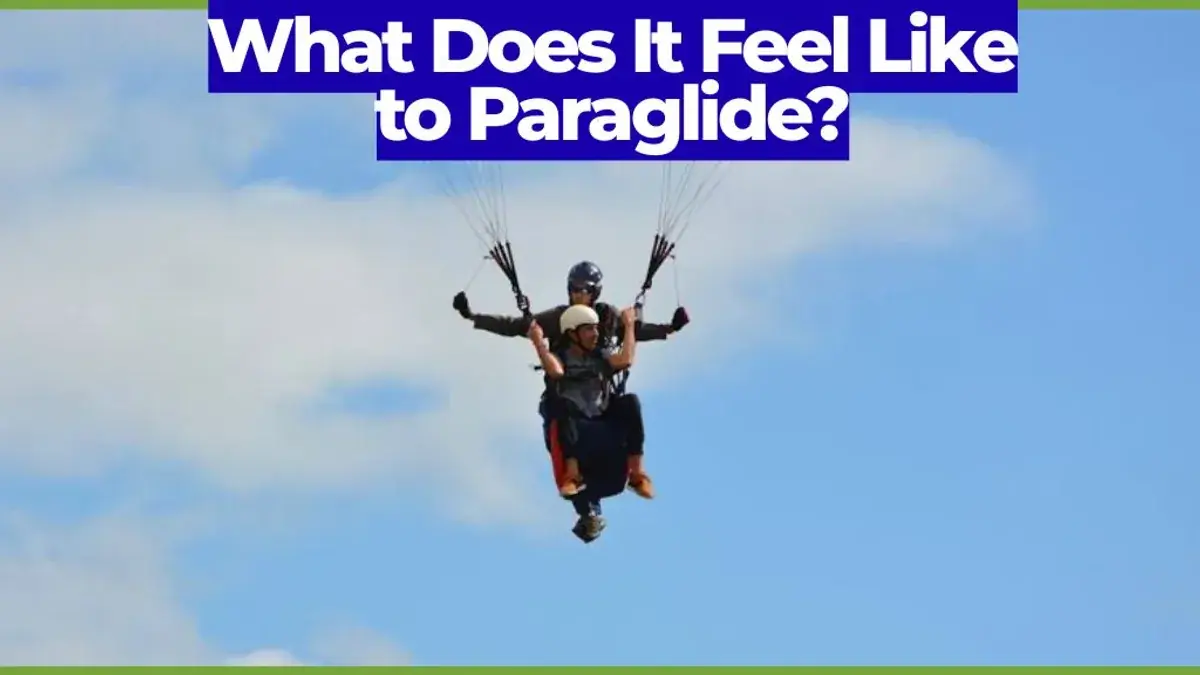
Most people brace for the drop. They picture skydiving, a lurch in the stomach, a rush of wind screaming past their ears. Then they run three steps off a hillside, the wing catches, and instead of falling they’re just sitting there, suspended, and the ground is quietly sliding away underneath them. That mismatch between what people expect and what actually happens is the whole story of paragliding.
The launch is the intense part
Nearly all the nerves live in the ten seconds before takeoff. You stand at the top of a slope with a large fabric wing inflated above your head, run into the wind, and the ground disappears faster than most people expect. Weight shifts from your legs into the harness, and within two or three strides you’re airborne. On a tandem flight the pilot manages the wing, so the passenger’s only job is to run forward on cue. Solo students spend real training time just learning to inflate and control the wing before their first flight even happens.
What the body actually feels once you’re up
| Sensation | What Causes It |
|---|---|
| Weightlessness in the harness | Weight transfers from legs to the seat harness; feels like sitting in mid-air |
| Gentle rocking or tilting | Wing responds to air movements; normal and easily managed |
| Upward push (thermal lift) | Rising columns of warm air push the wing upward, like a smooth elevator |
| Silence | No engine; wind noise is minimal at slow flying speeds |
| Panoramic vision | Nothing obstructs the view; open landscape below and ahead |
| Temperature drop | Altitude brings cooler air; many pilots dress warmer than they expect to need |
The dominant feeling is calm, not adrenaline. Paragliding is the slowest and quietest form of unpowered flight there is. In still air the wing barely moves, and the ground unfolds gradually below, farms, roads, forests, or coastline depending on where you launched.
Thermals change the picture
On a thermally active day, things get livelier. A thermal is a column of rising warm air, and when the wing flies into one, the pilot feels a clear upward surge, not violent, but unmistakable. Pilots circle inside thermals to climb, the same way birds of prey spiral on invisible columns of rising air, and that’s how experienced pilots stay up for hours instead of twenty minutes. Turbulence can also collapse part of the wing momentarily, which pilots call, unsurprisingly, a collapse. Trained pilots deal with this routinely, modern wings tend to recover on their own, and tandem operators pick conditions specifically to avoid putting beginners anywhere near it.
What it does to your head
Beyond the physical sensations, there’s a mental shift that a lot of pilots describe as close to meditation. No traffic, no notifications, nothing demanding attention except the wing and the air moving through it. Whatever fear shows up at launch tends to fade within the first minute of flight, often replaced by a strong urge to stay up longer. It’s common enough for someone to try a single tandem flight and sign up for a beginner’s course the same week.
How it compares to other air sports
| Activity | Speed | Noise | Sensation |
|---|---|---|---|
| Paragliding | Slow (~25–40 km/h typical) | Near-silent | Floating, meditative |
| Hang gliding | Faster | Low | More prone and aerodynamic |
| Skydiving | Extreme (freefall) | Very loud | Adrenaline, freefall |
| Powered paragliding (PPG) | Slow | Moderate (engine) | Motorised freedom |
| Hot air balloon | Very slow | Near-silent | Passive, no steering feel |
What separates paragliding from the rest of that list is control. The pilot is actively reading the air and steering the wing the entire flight, building real skill over time, but doing it at a pace and a sensation level that never tips into the extreme.
Frequently asked questions
Is paragliding scary the first time?+
Most first-time paragliders report that the launch feels like the most intense moment — stepping off a hillside takes nerve. Once airborne, the sensation quickly shifts to calm and wonder. Tandem flights with a qualified pilot are the most common way to experience it safely for the first time.
Does paragliding feel like falling?+
No. Unlike skydiving or bungee jumping, paragliding does not involve a freefall sensation. You are supported by a fully inflated wing and typically rise or glide smoothly. Strong thermals can produce a noticeable upward 'lift' sensation, but there is no stomach-drop freefall feeling during a normal flight.
How long does a typical paragliding flight last?+
A standard recreational or tandem paragliding flight lasts between 15 and 30 minutes. Experienced pilots using thermals can stay airborne for several hours and cover significant distances — cross-country flights of over 100 km are achieved regularly by skilled pilots.
Sources
Play & tools
Free browser games and tools — no account, no download.
- Play today's Sports Connections — Today's Sports Connections — daily hints, answers, and play the grid.
- Play Guess the NFL Player — A new mystery NFL player every day. Eight guesses, with a clue on each — plus free unlimited mode.
- Explore all our games →
Related guides

What Does MVP Mean in Sports?
MVP means Most Valuable Player, an award for the athlete judged to have the greatest value to a team or competition under its voting rules.
What Does Rookie Mean in Sports?
A rookie is a first-year or newly eligible player, with the exact definition set by the sport, league or competition.
How Long Does It Take to Swim a Mile?
How long to swim a mile: 40-50 min for beginners, 30-35 for intermediates, 22-28 for advanced swimmers. Full pace tables plus exact pool-length math.

Libero in Volleyball: What the Position Actually Does
The libero volleyball role: the back-row defensive specialist who passes, digs and reads hitters. Origin, skills, jobs and the players who define it.
How Does an Expansion Draft Work?
An expansion draft stocks a new team by letting it pick players that existing clubs leave unprotected, under league rules limiting how many each team can shield.
How Much Does Club Volleyball Cost?
Club volleyball typically costs a few thousand dollars a season once fees, travel and gear are added. Full cost breakdown and why it's expensive.