
Suriname Call on FIFA and Concacaf to Act After Racist Abuse Allegation in Guatemala
On this page7
- 01What happened in the 63rd minute?
- 02Why did the game stop for nearly 10 minutes?
- 03What happened at the end of the match?
- 04Why do Suriname say this is a pattern, not an incident?
- 05What are Suriname asking FIFA and Concacaf to do?
- 06Have Concacaf and FIFA now responded?
- 07Has Europe seen its own version this week?
Suriname’s players finished a match they considered walking out of, lost it in stoppage time, and then asked football’s governing bodies a direct question: how many times does this have to happen? The team has called on FIFA and Concacaf to investigate alleged racist abuse from the crowd during Monday’s Nations League match in Guatemala City, USA Today reports. The player who reacted to the alleged abuse was the one sent off.
Update, October 6: Concacaf has confirmed it will investigate. A confederation spokesperson told USA Today Sports on Tuesday morning that the Surinamese Football Association had made it aware of alleged discriminatory conduct by fans, that Concacaf takes the allegations very seriously, and that it will investigate under its regulations and disciplinary procedures. FIFA president Gianni Infantino also issued a statement of support to the Suriname federation. The new section at the end of this article has the details.
What happened in the 63rd minute?
The match turned on a red card. Suriname forward Richonell Margaret was shown a direct red card for what appeared to be a comment made toward a fan, USA Today reports, and The Sun reports the dismissal set the benches against each other as tempers rose.
Margaret said afterwards that the crowd had been making monkey noises at him, USA Today reports, and he shared racist comments and images sent to him on Instagram, asking the governing bodies whether players always have to accept this. His manager Henk Fraser gave the fullest account of the flashpoint: the red card came because a player reacted to noises from the crowd, noises Fraser called stupid and ignorant, while also saying Margaret should have responded better and that the dismissal cost Suriname the game, USA Today reports.
Why did the game stop for nearly 10 minutes?
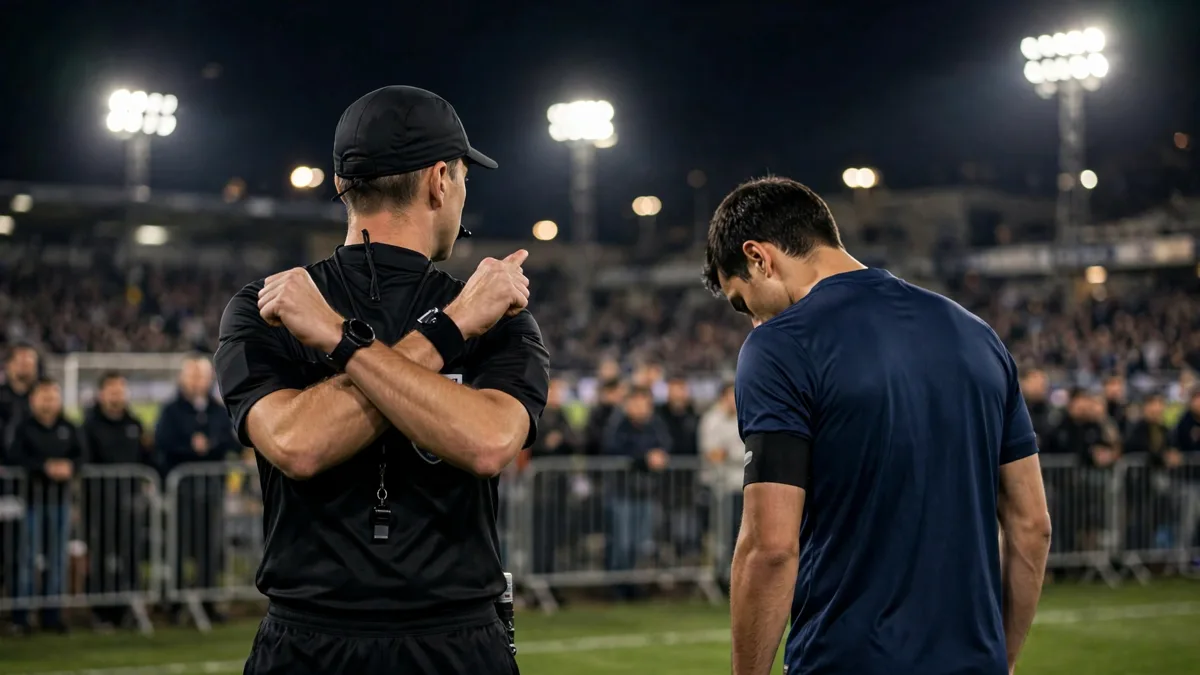
Because the anti-racism protocol started. Play was held up for nearly 10 minutes while Suriname spoke with referee Joe Dickerson, who could be seen making the crossed-arms “X” gesture, FIFA’s signal for reported racist abuse, during his conversation with captain Myenty Abena, USA Today reports.
Abena then gathered his team in front of the bench and the players made the decision themselves: continue with 10 men, or walk off and accept the consequences. They continued. Abena wrote afterwards that the choice was made with about 20 minutes left, out of love for the game and each other, and he was explicit that finishing the match did not mean forgiving what prompted the stoppage. A red card that punishes the reaction while the alleged provocation goes unexamined is the imbalance Suriname keep returning to.
What happened at the end of the match?
The result, and then a brawl. Guatemala won 1-0 through Matthew Evans in the sixth minute of stoppage time against the 10 men, The Sun reports, a goal that put Guatemala into the Nations League quarter-finals as Group B winners, against Canada next month, and eliminated Suriname, who finished third and fall into the Gold Cup preliminary round.
At the final whistle the two teams fought in the middle of the pitch, with players and substitutes exchanging blows until riot police came in to separate them, The Sun reports. It was the second disciplinary spectacle of this international window, after Ireland’s draw with Israel ended in a spitting allegation that UEFA is now investigating, and it guarantees Concacaf has more than the racism complaint to review from this fixture.
Why do Suriname say this is a pattern, not an incident?
Because it happened to them last year, in the same region, and the system already agreed with them once. Suriname endured racist chanting during a World Cup qualifier in El Salvador in 2025; FIFA fined the Salvadoran federation and ordered part of the stadium closed for the next home game, USA Today reports.
General manager Brian Tevreden stood on the touchline at both matches. In a statement to USA Today he called Monday scandalous, said Suriname are the ones being punished while their match was turned upside down, and said he is seriously considering no longer travelling with the team to places where this is allowed to happen. Several Guatemala players apologised to Fraser for the crowd’s behaviour, USA Today reports, a detail that complicates any attempt to dismiss the allegation as sour grapes after a defeat. Disciplinary arguments over red cards are nothing new in this region’s football, as Jesse Marsch’s attack on the Balogun red-card ruling showed this week, but Suriname’s complaint is about what the crowd did, not what the referee decided.
What are Suriname asking FIFA and Concacaf to do?
Investigate, and then act. Abena’s post-match message called on both bodies to take responsibility, arguing that players had done their part by finishing the game in extremely difficult circumstances and were now waiting for the governing bodies to do theirs, USA Today reports. His line that words and campaigns are not enough is aimed at a specific record: the previous incident produced a fine and a partial stadium closure, and the abuse, on Suriname’s account, happened again a year later in another country.
Neither FIFA nor Concacaf had responded when USA Today first sought comment. What to watch is whether Concacaf opens a disciplinary case covering all three threads of the night, the alleged abuse, Margaret’s red card and the full-time brawl, and whether any sanction goes further than the one El Salvador received. Suriname have now been through this twice. Their captain’s question, whether players must always accept it, is sitting in two inboxes.
Have Concacaf and FIFA now responded?
Yes, and faster than the last time Suriname went through this. On Tuesday morning a Concacaf spokesperson told USA Today Sports that the Surinamese Football Association had made the confederation aware of alleged discriminatory conduct by fans during the Nations League matches, that Concacaf takes the allegations very seriously, and that it will investigate the matter in accordance with its regulations and disciplinary procedures, adding that racism and discrimination have no place in the sport.
FIFA’s answer came from its president. Gianni Infantino said in a statement to USA Today that there is no place for racism or any form of discrimination in football, called the abuse directed at Suriname’s players absolutely unacceptable, and said FIFA will continue to offer its unequivocal support to the Suriname federation to ensure strong deterrents are in place and actions are taken. Because this incident happened in the Concacaf Nations League, a competition the confederation runs, the investigation itself sits with Concacaf rather than FIFA, USA Today notes, unlike the El Salvador case, which came in FIFA-run World Cup qualifying.
An investigation is a start, not an outcome. What Suriname are waiting for now is the part that has no timetable in Concacaf’s statement: findings on the alleged abuse, a ruling on Margaret’s red card, and a decision on the full-time brawl, and whether any sanction for Guatemala goes further than the fine and partial stadium closure El Salvador received last year.
Red cards decided Nations League nights on two continents this week: in Split, Cucurella handed the referee his dropped red card before Perisic’s dismissal turned Croatia’s game against Spain, a gamesmanship row with none of the gravity of Suriname’s case but the same lesson that the card, not the play, is what travels. In Kenya on Tuesday the referee himself became the target, when a promotion playoff was abandoned after John Sulwe was attacked over a penalty.
The same argument about how officials should respond to a report during play surfaced in England this week, when Millwall’s match against Swansea was paused for almost seven minutes after alleged racist chanting towards Eom Ji-sung, and manager Alex Neil criticised the stoppage itself.
Has Europe seen its own version this week?
Yes, and the response there moved faster. In Split on Thursday, Hajduk supporters marched with antisemitic chants before the Conference League match against Ajax and flares stopped the game for 12 minutes; by Friday, 12 Hajduk fans had been arrested and the Croatian federation had condemned the chanting. Suriname’s case is still waiting for findings. The Split case shows what the first 24 hours can look like when police and a federation act at once.
Frequently asked questions
What do Suriname allege happened in Guatemala?+
Suriname allege their players were racially abused by the crowd during Monday's Concacaf Nations League match in Guatemala City, USA Today reports. Forward Richonell Margaret said the entire stadium was making monkey noises at him and his team-mates, and he later shared racist messages sent to him on Instagram. Concacaf has since told USA Today it will investigate the allegation under its disciplinary procedures.
Why was Richonell Margaret sent off?+
Margaret was shown a direct red card in the 63rd minute for what appeared to be a comment directed at a fan, USA Today reports. His manager, Henk Fraser, said the red card came because a player reacted to people in the crowd making noises that should never be heard in a stadium, while also saying his player should have responded better. The Sun reports the dismissal sparked angry scenes between the benches.
What is the 'X' gesture the referee made?+
It is FIFA's signal that racist abuse has been reported during a match. Referee Joe Dickerson could be seen making the crossed-arms gesture while speaking with Suriname captain Myenty Abena during a delay of nearly 10 minutes, USA Today reports. The gesture is the visible start of FIFA's anti-racism protocol, the process under which a match can be stopped, and ultimately abandoned, over discriminatory abuse.
Why did Suriname decide to keep playing?+
Captain Myenty Abena explained the choice in an Instagram post after the match, USA Today reports. With about 20 minutes left, the players weighed walking off and accepting the consequences against continuing with 10 men, and chose to continue out of what Abena described as love for football, their country and each other, while insisting that choosing to play on did not make what happened acceptable.
What happened after the final whistle?+
The match boiled over. Guatemala won 1-0 on a stoppage-time goal by Matthew Evans, and at full time the two sets of players brawled in the middle of the pitch until riot police intervened to separate them, The Sun reports. The result sent Guatemala into the Nations League quarter-finals as group winners and eliminated Suriname, who finished third and drop into the Gold Cup preliminary round.
Have Suriname faced this before?+
Yes, in the same region, a year earlier. Suriname endured racist chanting during a World Cup qualifier in El Salvador in 2025, after which FIFA fined the Salvadoran federation and ordered part of its stadium closed for the next home match, USA Today reports. Suriname's general manager Brian Tevreden, who was on the touchline at both matches, said he is seriously considering not travelling with the team to places where this is allowed to happen.
What do Suriname want FIFA and Concacaf to do now?+
Act, in the captain's words. Abena called on both bodies to take responsibility, arguing that words and campaigns are not enough and that there must be accountability when abuse happens, USA Today reports. Tevreden said the team is the one being punished while the match was turned upside down. What form any investigation or sanction takes is now a matter for Concacaf, as the competition organiser, and FIFA.
Have Concacaf and FIFA responded to Suriname's call?+
Yes, on Tuesday morning. A Concacaf spokesperson told USA Today Sports that the Surinamese Football Association had made the confederation aware of alleged discriminatory conduct by fans, that Concacaf takes the allegations very seriously, and that it will investigate under its regulations and disciplinary procedures. FIFA president Gianni Infantino, in a separate statement to USA Today, called the alleged abuse absolutely unacceptable and said FIFA will offer its support to the Suriname federation to ensure strong deterrents are in place.
Sources
Play & tools
Free browser games and tools — no account, no download.
- Play 38-0 — Sign a 4-4-2 of all-time football legends and chase a perfect 38-0 league season — perfect, not just unbeaten.
- Explore all our games →
Related football guides
View all →
Balogun Rule Change Is Put Off to December 16 After the Council Meets Without a Vote
The FIFA Council met in Zurich without voting on the Article 27 amendment. The Balogun case specifics and the rule change are now due on December 16.
Jesse Marsch Says Balogun Red-Card Reversal Shows 'Why Everyone Hates America' Before USA-Canada
Canada coach Jesse Marsch told The Guardian the Folarin Balogun red-card reversal at the World Cup would never happen for another country. He said it days before Canada face the USA.
FIFA Knew Congo Goalkeeper Mpasi Was Ineligible, Reports Say, and Let Him Play On
Internal FIFA documents reported by the New York Times and Le Monde say Lionel Mpasi never completed his switch from France, yet Congo kept him for the World Cup.
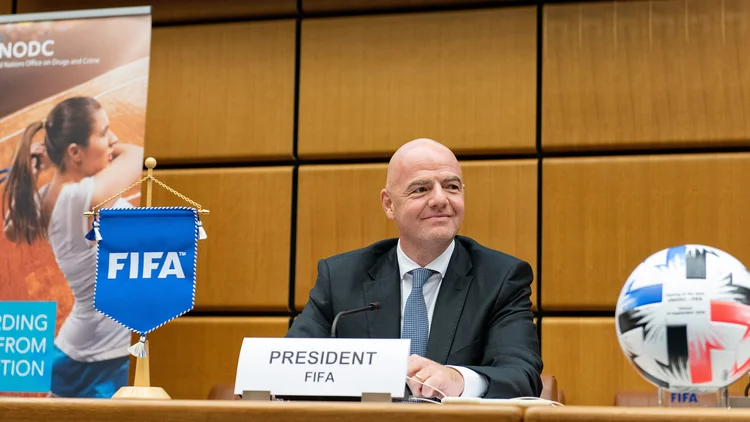
Infantino Apologises to His Council and Is Told He Is Not Fit to Lead Without Answers
Gianni Infantino apologised to the FIFA Council over the World Cup sell-off plan, gave no documents, and was told by Debbie Hewitt he is not fit to lead without answers.
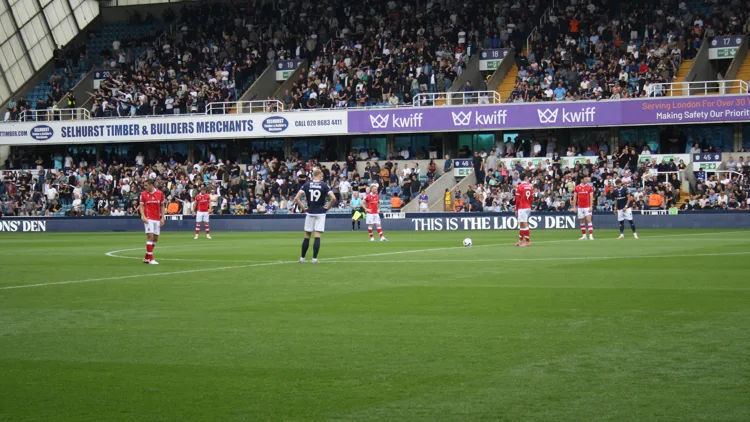
Alex Neil Criticises the Seven-Minute Pause After a Racist Chanting Allegation at The Den
Swansea's 1-0 win at Millwall stopped for almost seven minutes after racist chanting was alleged against Eom Ji-sung. Alex Neil condemned the abuse and criticised the pause.
Vinicius Gets a Four-Game Ban and Will Miss El Clasico After His Hair Pull
The disciplinary committee banned Vinicius Junior for four matches, two for the hair pull and two for his protests, ruling him out of El Clasico on October 25.