
Smallest Cricket Stadium in the World: Bready Ground, 3,000 Capacity
On this page7
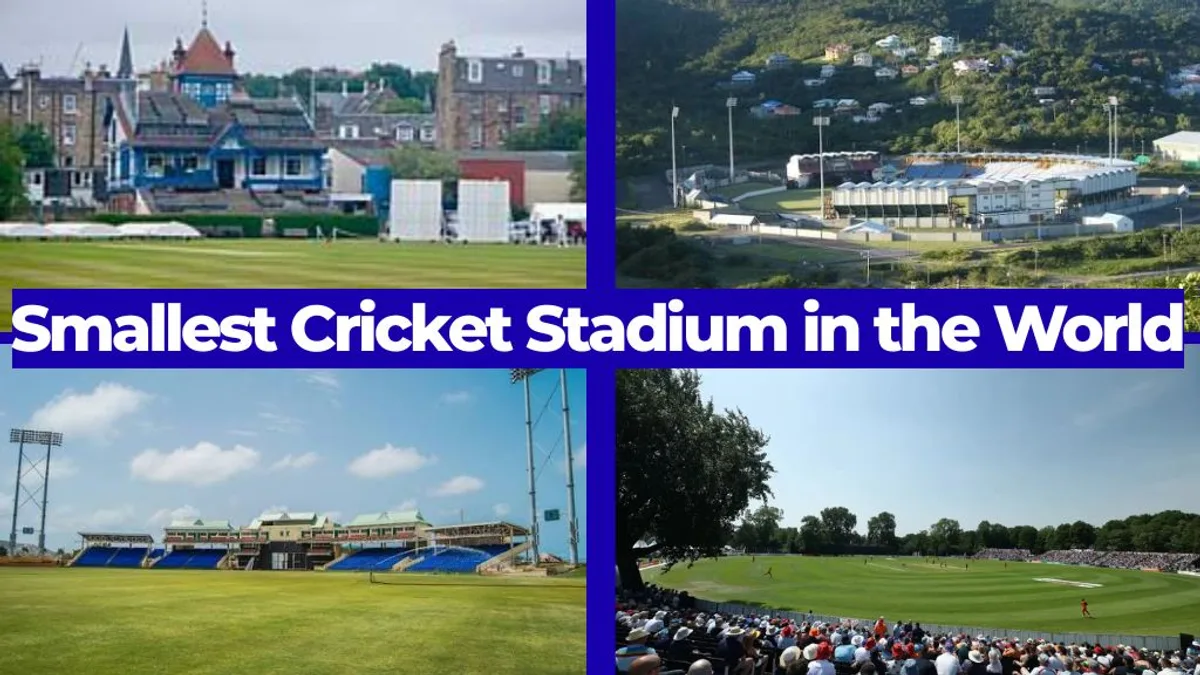
Bready Cricket Club Ground in County Tyrone, Northern Ireland holds about 3,000 spectators — smaller than plenty of English county club grounds — yet it has hosted Ireland men’s and women’s T20 internationals since 2015 and a full men’s ODI in 2019. That is the smallest venue currently staging ICC-recognised international cricket, and it sits at the head of a small cluster of grounds — most in Ireland, Scotland, the Netherlands, and the eastern Caribbean — that prove top-level cricket doesn’t need a six-figure crowd to count.
How This List Is Ranked
This list only includes grounds that have hosted ICC-recognised international cricket — men’s or women’s Test, ODI, or T20I matches — ranked by their official permanent seating capacity, smallest first. Capacities come from ESPNcricinfo ground profiles and Wikipedia venue infoboxes, cross-checked against at least two sources per venue. Where a ground has both a base capacity and an expanded, temporary-stand capacity for marquee fixtures, both figures are shown. Club grounds with no publicly confirmed capacity (several Dutch and Scottish venues fall into this category) are excluded rather than estimated — depth over padding.
The 8 Smallest International Cricket Grounds
| Rank | Ground | Location | Capacity | Status |
|---|---|---|---|---|
| 1 | Bready Cricket Club Ground | Magheramason, Northern Ireland | ~3,000 | Men’s/women’s T20I venue; hosted 1 men’s ODI (2019) |
| 2 | Castle Avenue (Clontarf CC) | Dublin, Ireland | ~3,200 | Ireland ODI/T20I venue since the 1990s |
| 3 | Warner Park | Basseterre, St Kitts & Nevis | ~4,000 (up to ~10,000 with temporary stands) | Test venue since 2006; hosted 2007 World Cup matches |
| 4 | VRA Cricket Ground | Amstelveen, Netherlands | ~4,500 | Netherlands ODI venue since 1999 |
| 5 | The Grange Club | Edinburgh, Scotland | ~5,000 | Scotland’s primary international ground since 1999 |
| 6 | Coolidge Cricket Ground | Coolidge, Antigua | ~5,000 | Regional/limited-overs venue; hosted 2022 U19 World Cup |
| 7 | Stormont (Civil Service CC) | Belfast, Northern Ireland | ~6,000 | Ireland’s first men’s Test venue (July 2024) |
| 8 | Maple Leaf North-West Ground | King City, Ontario, Canada | ~7,000 | Canada ODI/T20I venue since 2008 |
Capacities are approximate; several grounds add temporary seating for specific fixtures, which is noted where it materially changes the figure.
2026 Status: What’s Changed and What Hasn’t
As of 2026, this ranking is stable at the top. Bready and Castle Avenue remain Ireland’s smallest recognised international venues, and neither has undergone the kind of stand expansion that would push it out of this list. The most notable recent shift is Stormont’s promotion to Test status in July 2024, which made it — at roughly 6,000 seats — the smallest ground in the world to have ever hosted men’s Test cricket, a title Warner Park (4,000 base capacity) would otherwise hold since it staged Tests from 2006. Coolidge Cricket Ground in Antigua has grown its international workload since hosting the 2022 ICC Under-19 World Cup, though it still sits at limited-overs and franchise level rather than full Test/ODI status. None of the eight grounds above has announced a major capacity expansion for 2026 or 2027.
Why These Small Grounds Host International Cricket at All
The ICC does not set a minimum spectator capacity for a ground to be accredited for international cricket — its venue standards focus on pitch and outfield dimensions, drainage, floodlighting, and broadcast infrastructure, not crowd size. That single fact explains this entire list. Ireland and Scotland earned ODI status in the 1990s, decades before either country built a purpose-made national stadium, so club grounds — Clontarf, Bready, The Grange, Stormont — were simply upgraded to meet ICC standards instead. The Netherlands took the same path with VRA. It means:
- Spectators sit close enough to the boundary rope to hear fielders talk.
- Matches feel like local sporting occasions rather than mass-attendance spectacles.
- Several of these grounds — Clontarf dates to 1876, Stormont to 1949 — have far longer histories than the international cricket they now host.
The Caribbean’s Smaller Venues
West Indies cricket is spread across more than a dozen island nations, and several run ICC-accredited grounds at modest capacities rather than full-size national stadiums. Warner Park in St Kitts (4,000 permanent seats) has hosted Test cricket since 2006 and staged matches at the 2007 ICC Cricket World Cup, expanding to roughly 10,000 with temporary stands for that tournament. Coolidge Cricket Ground in Antigua, opened more recently, hosted the entire 2022 ICC Under-19 Cricket World Cup at a base capacity of around 5,000. Both sit well below Antigua’s main Test venue, the Sir Vivian Richards Stadium, and far below Barbados’s Kensington Oval.
Ireland and the UK’s Cluster of Small Grounds
Four of the eight grounds on this list — Bready, Castle Avenue, Stormont, and The Grange — belong to Ireland, Northern Ireland, and Scotland. Ireland’s promotion to Full Member and Test status in 2017 pushed its bigger venue, Malahide (11,500 capacity), into the Test rotation, but Bready, Castle Avenue, and Stormont continued hosting the bulk of Ireland’s ODIs and T20Is at a fraction of that size. Stormont’s first men’s Test, against Zimbabwe in July 2024, made it the newest and smallest ground added to the exclusive list of Test venues worldwide. Scotland has followed a similar model with The Grange in Edinburgh, its main international ground since 1999, and smaller venues such as Cambusdoon in Ayr that host occasional fixtures without a publicly listed capacity.
Smallest vs Biggest: The Scale Gap
| Venue | Country | Capacity |
|---|---|---|
| Narendra Modi Stadium | India | 130,000+ |
| Melbourne Cricket Ground | Australia | ~100,000 |
| Eden Gardens | India | ~66,000 |
| Bready Cricket Club Ground | Northern Ireland | ~3,000 |
| Castle Avenue (Clontarf CC) | Ireland | ~3,200 |
| Warner Park | St Kitts & Nevis | ~4,000 |
The Narendra Modi Stadium, the sport’s largest venue, holds over 40 times as many people as Bready Cricket Club Ground — both ICC-recognised international grounds, at opposite ends of the sport’s spectator scale. For the full ranking of the sport’s biggest venues, see our list of the biggest cricket stadiums; for how pitch and boundary dimensions differ from seating capacity, see cricket ground size explained. Several of the grounds on this list — Clontarf and Stormont among them — also rank among the sport’s oldest stadiums, having hosted club cricket for a century or more before international status arrived.
Frequently asked questions
What is the smallest cricket stadium in the world?+
By official seating capacity, Bready Cricket Club Ground in County Tyrone, Northern Ireland is the smallest venue to host international cricket, holding around 3,000 spectators. It has staged men's and women's T20Is and one men's ODI since 2015, edging out Dublin's Castle Avenue at roughly 3,200.
What is the smallest Test cricket ground in the world?+
Stormont in Belfast, capacity 6,000, is the smallest ground to have hosted a men's Test match — Ireland's first Test at the venue came in July 2024. Warner Park in St Kitts (4,000 permanent seats) is smaller but has also staged Tests since 2006.
Does the ICC set a minimum capacity for international cricket grounds?+
No. The ICC's venue standards cover pitch dimensions, boundary length, drainage, floodlights, and broadcast infrastructure, not a minimum spectator count. That is why several ICC-accredited international grounds — Bready, Castle Avenue, VRA Amstelveen among them — hold under 5,000 fans and still qualify.
Why do so many of the smallest international cricket grounds belong to Ireland and Scotland?+
Ireland and Scotland gained ODI status decades before either built a dedicated national stadium, so club grounds such as Clontarf, Bready, Stormont, and The Grange were upgraded instead. Ireland's Test status (2017) came even later, so most of its venues were never built with Test crowds in mind.
What is the largest cricket stadium in the world, for comparison?+
The Narendra Modi Stadium in Ahmedabad, India holds more than 130,000 spectators, over 40 times the capacity of Bready Cricket Club Ground, the smallest international venue. See our [full breakdown of the biggest cricket stadium in the world](/biggest-cricket-stadium-in-the-world/) for the complete comparison and history.
Has a small cricket ground ever hosted a World Cup match?+
Yes. Warner Park in St Kitts (4,000 permanent seats, expandable to roughly 10,000) hosted matches at the 2007 ICC Cricket World Cup, and Malahide and Bready have both staged World Cup qualifying and T20 World Cup fixtures despite their modest, low-thousands capacities.
Can these small grounds expand capacity for big matches?+
Several do. Warner Park adds temporary stands to reach around 10,000 for marquee fixtures, and Beausejour/Daren Sammy Stadium in St Lucia can grow from 15,000 to 20,000. Grounds like Clontarf and Bready, by contrast, have little room to expand and stay near their base capacity.
Sources
Play & tools
Free browser games and tools — no account, no download.
- Play today's Sports Connections — Today's Sports Connections — daily hints, answers, and play the grid.
- Play Guess the NFL Player — A new mystery NFL player every day. Eight guesses, with a clue on each — plus free unlimited mode.
- Explore all our games →
Related cricket guides
View all →
Biggest Cricket Stadiums in the World: Top 10 by Capacity
The biggest cricket stadiums ranked by seating capacity, from India's 132,000-seat Narendra Modi Stadium and the MCG to Eden Gardens, Raipur, and Perth's Optus.
Biggest Cricket Stadium in the World: Narendra Modi Stadium (132,000)
The Narendra Modi Stadium in Ahmedabad holds 132,000 fans, making it the biggest cricket stadium in the world. See the full ranked list of the 12 largest grounds.
Fastest Century in Cricket (Every Format)
AB de Villiers holds the fastest ODI century at 31 balls. The fastest hundreds in T20, ODI and Test cricket explained, with the record-holders for each format.
Most Centuries in International Cricket
Sachin Tendulkar has the most international centuries with 100, across Tests and ODIs. The all-time century-makers ranked, with Virat Kohli closing in.
Most Runs in International Cricket (All Formats)
Sachin Tendulkar has the most runs in international cricket with 34,357 across Tests, ODIs and T20Is. The all-time aggregate run-scorers ranked.
Most Sixes in International Cricket (All-Time List)
Rohit Sharma holds the record for most sixes in international cricket, passing Chris Gayle's 553 in 2023. Full all-time list across Tests, ODIs and T20Is.