
What Is a Shotgun Start in Golf?
On this page6
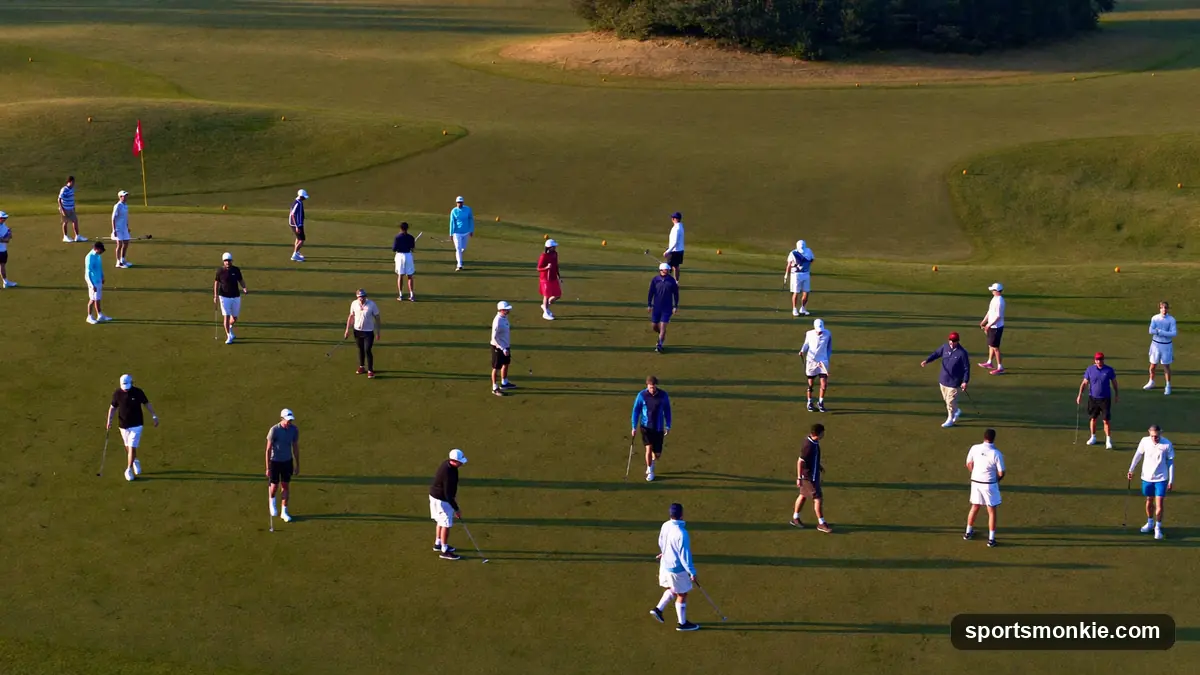
A shotgun start in golf is a format where every group tees off at the same time, but each from a different hole spread around the course, so all players begin and finish their rounds together. Instead of groups going off one after another from the first tee, one group starts on hole 1, another on hole 2, and so on, then each plays all 18 holes in order from wherever it began.
If you have ever signed up for a charity outing or a corporate golf day and been told to “report to hole 7 for the shotgun,” this is what that means. The format is built for events, and it solves a very specific problem: getting a big field of players onto the course and off it on a shared schedule. Here is how it works, why events love it, and what its downsides are.
How a shotgun start works
The mechanics are straightforward once you picture the whole course being used at once:
- Assignments. Before play, each group is assigned a starting hole. Group A goes to hole 1, group B to hole 2, and so on around the course.
- The signal. At the appointed time, a single signal, a horn, siren, or radio call (historically a shotgun blast), tells everyone to begin at the same moment.
- Everyone tees off together. All groups start their first shots simultaneously, but each on its own assigned hole.
- Play continues in sequence. Each group plays 18 holes in order, wrapping around, so a group that started on hole 7 finishes on hole 6.
Because everyone begins and ends at about the same time, the whole field can gather afterward for a meal, scoring or a prize ceremony, which is a big part of the appeal for organised events.
Why events use a shotgun start
The format is popular for tournaments, charity days, corporate outings and leagues for a handful of practical reasons:
- Maximum players at once. A full course lets the largest possible field play in a single session.
- Shared schedule. Everyone starts and finishes together, perfect for a banquet, awards or speeches.
- Predictable timing. Organisers know almost exactly when the event will begin and end.
- Social atmosphere. A simultaneous start creates a shared, event-like feel rather than a trickle of tee times.
It pairs naturally with team formats where a whole field plays together, such as a golf scramble or a best-ball event, which is why so many charity scrambles use a shotgun start.
Shotgun start vs tee-time start
The clearest way to understand a shotgun start is to compare it with the normal way golfers begin a round.
| Feature | Shotgun start | Tee-time (sequential) start |
|---|---|---|
| Where groups begin | Different holes across the course | All from hole 1 |
| When groups begin | All at once | Staggered, every 8-10 minutes |
| Best for | Events, outings, leagues | Daily play, most pro tournaments |
| Course usage | Entire course closed to others | Course opens gradually through the day |
| Finish | Everyone finishes together | Staggered finishes |
Reading across, the tee-time start is the everyday default, while the shotgun is the event specialist, trading flexibility for a big, synchronised field.
The downsides
A shotgun start is not free of trade-offs. It requires closing the whole course to regular play, so the course gives up other bookings and usually needs a large enough group to make that worthwhile. Players also do not ease in on hole 1, you might open on a tough par 3, and pace of play must be watched carefully where the field wraps around, so groups do not bunch up. Finally, since not everyone ends on the 18th green, the finish can feel less traditional than a normal round.
Etiquette on a shotgun start
Because the whole field is on the course at once, good pace and etiquette matter even more than usual. Keep up with the group ahead, be ready to play when it is your turn, and follow the organiser’s instructions on where to start and how holes are numbered for wrap-around play. If you are new to group events, our guide to golf etiquette for beginners covers the habits that keep a full field moving smoothly.
The bottom line
A shotgun start launches an entire field at once from different holes, so everyone plays 18 holes and finishes together, ideal for tournaments, charity outings and any event that wants a shared start, a set schedule and a group finish. It is the opposite of the staggered tee-time start used for daily play. It takes a full course and a decent-sized field to justify, but for organised golf, few formats are as efficient, or as social.
Frequently asked questions
How many golfers can play in a shotgun start?+
A shotgun start can accommodate roughly the number of holes on the course multiplied by the players per group. On an 18-hole course with foursomes, that is about 72 players going off at once (18 holes x 4), and busy events add 'A' and 'B' groups on some holes (for example, 1A and 1B) to fit even more. The practical ceiling depends on the course length, how many groups each hole can hold, and pace-of-play limits, but the format is designed to get the maximum number of players on the course simultaneously.
What is the opposite of a shotgun start in golf?+
The opposite is a tee-time start, sometimes called a sequential or 'tee times' start. In that format, groups tee off one after another from the first hole at set intervals (for example, every 8 to 10 minutes), so players begin and finish at staggered times through the day. Regular daily play and most professional tournaments use tee-time starts, while shotgun starts are more common for one-day outings, charity events and leagues that want everyone playing together.
What are the cons of a shotgun start?+
The main drawbacks are that a shotgun start requires the entire course to be closed to regular play, so the course loses other bookings, and it demands enough players to fill the holes to be worthwhile. Players may also start on a difficult hole rather than easing in on hole 1, pace of play must be managed carefully so groups do not back up where the field 'wraps around,' and scoring can feel less traditional since not everyone finishes on the 18th green. It is efficient for events but less flexible than tee times.
Why is it called a shotgun start?+
The name comes from the starting signal. Historically, an organiser would fire a shotgun into the air (today usually a horn, siren or radio call) to tell every group, positioned on its assigned hole, to begin play at the same moment. Because that single loud signal launched the entire field simultaneously, the format took the name 'shotgun start,' and it stuck even though an actual firearm is rarely used now.
Sources
Play & tools
Free browser games and tools — no account, no download.
- Play today's Sports Connections — Today's Sports Connections — daily hints, answers, and play the grid.
- Play Guess the NFL Player — A new mystery NFL player every day. Eight guesses, with a clue on each — plus free unlimited mode.
- Explore all our games →
Related golf guides
View all →
What Is a Shamble in Golf? Rules vs Scramble
A shamble in golf is a team format where everyone tees off, the best drive is chosen, then each player finishes the hole with their own ball.

Golf Scramble Rules: Format & Handicaps
Golf scramble rules: everyone tees off, the team plays the best shot, and records one score per hole. Handicaps, the Texas scramble and lie rules.

Best Ball Golf Format: Rules and How to Score
In best ball golf, each player plays their own ball and the team takes the lowest score on each hole. Rules, scoring and how it differs from a scramble.

Nassau Golf Game: Rules, Presses, Payouts
A Nassau is three golf bets in one round: front nine, back nine and overall 18. How a $2 Nassau works, how presses add up, and how payouts are settled.

What Is a Links Golf Course? True Links
A links golf course sits on sandy coastal land with firm turf, deep bunkers and wind. What makes a true links and how it differs from parkland golf.

What Is a Mulligan in Golf? Meaning and Rules
A mulligan in golf is an informal do-over: you replay a shot with no penalty and ignore the first. It is not in the official Rules of Golf.