
The Push Shot in Table Tennis: How and When to Use It
On this page5
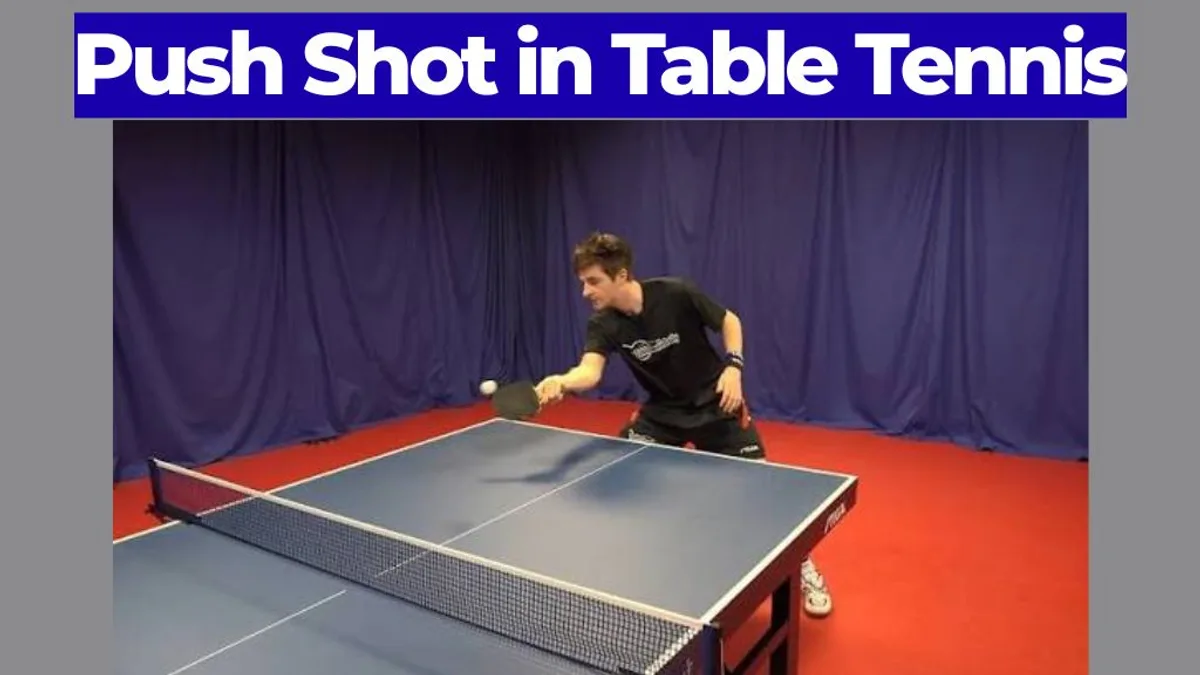
Watch a club-level match for ten minutes and you’ll see it: someone serves a nasty backspin, the returner pokes at it, and the ball either dies in the net or floats up begging to be smashed. That gap between “pushed it back” and “pushed it well” is where the push shot lives, and it’s the stroke most players never bother to drill properly.
What Makes the Push Different
A drive or loop adds forward spin to the ball. A push does the opposite: it matches, and often deepens, the backspin already coming at you. Done right, the ball skids low off the opponent’s side of the table, forcing them to lift it just to keep the rally alive. That lift is your opening.
You’ll see the push most at the start of points, when a cautious return off a tricky serve makes more sense than gambling on an attack, and later in rallies when resetting the point beats forcing a low-percentage shot.
The Technique: Step by Step
Stance and Positioning
Feet shoulder-width apart, knees bent slightly, weight forward on the balls of your feet. Get to the ball early. Wait too long and you’ll end up pushing from underneath a ball that’s already dropped past its peak, which sends it up instead of forward.
Grip
Shakehand or penhold both work here. Shakehand players generally keep a neutral grip, though some loosen it slightly on touch shots to feel the contact better.
Racket Angle
This is what separates a good push from a bad one. Open the blade by tilting the top away from you, so the face points slightly upward. How far you open it depends on how much backspin is coming at you.
| Incoming Spin | Blade Angle Adjustment |
|---|---|
| Heavy backspin | Very open (blade nearly horizontal) |
| Light backspin | Moderately open |
| No spin (float) | Nearly vertical — be careful, a fully open blade will pop the ball up |
| Topspin | Do not push — loop or drive instead |
The Stroke
- Get the racket in front of and slightly above the ball.
- Move it forward and downward through the ball in a short, controlled motion.
- Make contact on the lower back of the ball.
- Follow through low, keeping the ball close to the net.
Keep the motion compact. A long, sweeping push gives your opponent extra time to read the spin and jump on it.
Short Push vs. Long Push
- Short push: would bounce twice on the opponent’s side. It stops them from looping and keeps the ball tight to the net. Good against short serves.
- Long push: faster and deeper, aimed near the opponent’s end line. Useful for hunting a weak backhand or opening up angles.
Common Mistakes
| Mistake | What Happens | Fix |
|---|---|---|
| Blade too closed | Ball goes into the net | Open the angle more |
| Contacting the ball too late | High return, easy to attack | Move feet early, position in front |
| Pushing against topspin | Ball flies off the table | Identify spin before committing to a push |
| Too long a swing | Inconsistent contact, easy to read | Shorten the stroke, stay compact |
When Not to Push
- The incoming ball has topspin — loop or drive it instead.
- The ball sits above table level and is attackable. Attacking wins more points than pushing does in that spot.
- You need to break the rhythm of the rally. A flick does that; a push doesn’t.
Drill to Build Your Push
Wall-feed drill: have a partner or coach feed you consistent backspin balls to your backhand. Push 20 in a row, aiming to land each one within 30 cm of the net. Then switch to the forehand side and repeat. Think about nothing except blade angle and keeping the trajectory low.
Frequently asked questions
What is a push in table tennis?+
A push is a defensive stroke where you slide the racket under the ball with an open blade angle, returning a backspin ball with backspin. It keeps the ball low over the net and is used to handle short or long backspin serves and shots.
When should you use a push in table tennis?+
Use the push when your opponent plays a short backspin ball to your forehand or backhand that is difficult to loop or drive. It is also used to start a rally safely or when repositioning after being moved wide.
What is the difference between a push and a flick in table tennis?+
A push stays low and returns backspin with backspin — it is a controlled, defensive shot. A flick (or flip) is an aggressive attack on a short ball, generating topspin or sidespin to take the initiative away from your opponent.
Sources
Play & tools
Free browser games and tools — no account, no download.
- Play today's Sports Connections — Today's Sports Connections — daily hints, answers, and play the grid.
- Play Guess the NFL Player — A new mystery NFL player every day. Eight guesses, with a clue on each — plus free unlimited mode.
- Explore all our games →
Related guides
Continental Grip in Tennis: How to Hold It and When to Use It
The continental grip places the base knuckle of your index finger on bevel 2 of the racket handle. It is the grip for serves, volleys, slices, and overheads. Here is how to find it and drill it.
Tennis Grips Explained: The 4 Grips and When to Use Each
Tennis grips explained simply: the Continental (bevel 2) serves and volleys, Eastern (bevel 3) hits flat forehands, Semi-Western (bevel 4) adds topspin, and Western (bevel 5) is extreme spin. Here is how to form each and when to switch.
Drop Shot in Tennis: Technique, Timing, and When to Use It
A drop shot in tennis is a soft, backspin-heavy stroke that just clears the net and dies short. Learn the grip, disguise, and when to hit it.
Slice in Tennis: How the Underspin Shot Works and When to Use It
A slice in tennis is a backspin shot hit with a high-to-low swing and open racket face that stays low and skids. Grip, technique, and tactics explained.
The Behind-the-Back Lacrosse Shot: When and How to Use It
A behind-the-back lacrosse shot fires the ball around your body to fool the goalie. Learn when it works, why players use it, and how to practice it safely.
Hack Squat Form: How to Use the Machine Safely, Step by Step
Hack squat form means feet mid-platform and shoulder-width, back and shoulders flat against the pads, knees tracking over the toes, and a controlled drop to thighs-parallel — here are the cues, depth, and mistakes.