
Padres Dismiss Mason Miller Pitch-Tipping Theory as Brewers Deny Knowing What Was Coming
On this page6
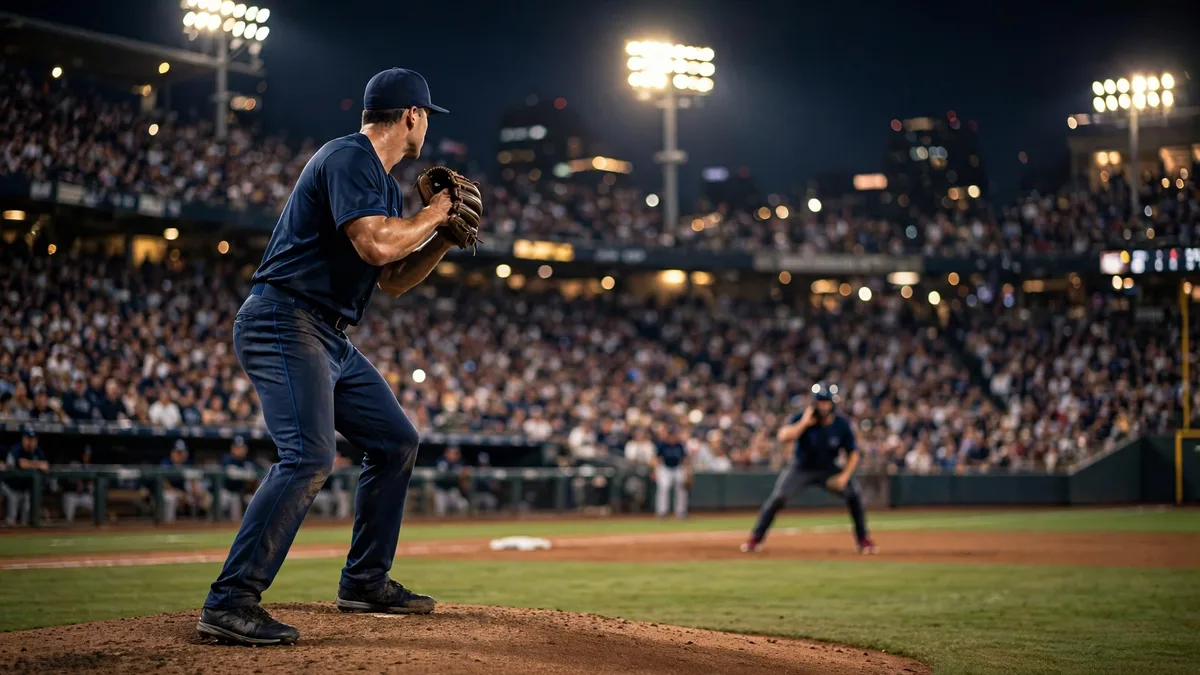
The Padres do not believe Mason Miller gave Game 2 away with his glove. Manager Craig Stammen dismissed the viral pitch-tipping theory at Petco Park on Monday, a day after Milwaukee’s ninth-inning rally beat Miller 4-3 and put San Diego 2-0 down in the NLDS, the Associated Press reports. Brewers manager Pat Murphy denied his hitters knew what was coming. Between the two denials sits a set of video clips that half of baseball spent Monday arguing about, and no proof either way.
What is the pitch-tipping theory about Miller?
That Miller showed the Brewers his pitches before he threw them. For The Win’s frame-by-frame look at the broadcast video argues his hand sat differently in his glove depending on the pitch: for a fastball, the hand came toward his belt with the wrist visible to the runner at second, while for a slider it tucked deeper. In Jackson Chourio’s winning at-bat, Chourio swung at every strike-zone fastball and held off the one slider, at two strikes, a pitch after seeing 103 mph.
The same clips show Sal Frelick, the runner at second, touching his neck once Miller came set, which the theory reads as a relay signal. For The Win’s verdict is that a hitter guessing does not take at-bats like that. It is a coherent theory built entirely from television pictures, and it is worth labelling exactly that: an interpretation of video, not a confirmed fact, and one both dugouts have now pushed back on.
What did the Padres say about the theory?
That catching this exact thing is somebody’s full-time job. “We’ve got a crew of people that are dedicated to that every single day,” Stammen said, via the AP. “That is their sole job. We’re well aware of what’s going on with our pitchers, well aware of what’s going on with the Brewers pitchers and how they do things. The internet can go crazy and take things farther than they need to go. We feel good about our process within that situation.”
Two qualifications matter. Stammen downplayed the discussion rather than flatly certifying Miller clean, the AP notes, saying the club has a lot of people on top of it and is not really worried. And the New York Post, citing ESPN’s Alden Gonzalez, reports a separate Stammen point about the outing itself: that Miller’s shakiness mostly shows up in appearances where he works more than one inning, a workload question about the six-out save rather than a tell. That points back to the decision this site examined in the walk-off that put Milwaukee 2-0 up: the ninth may have been lost to fatigue and command before it was lost to any glove position.
What did the Brewers say about it?
They denied the advance knowledge and defended the homework. Murphy said his team did not know Miller’s pitches in advance, while admitting that decoding an opponent is a big part of today’s game and that stopping your own pitchers from tipping is just as important, the AP reports. Gary Sanchez, who worked the full-count walk that loaded the bases, said he genuinely did not know whether Miller was tipping, and added the obvious: even warned, hitting 104 mph is not easy.
That last point connects to what Miller does at his best. His fastball lives among the fastest pitches in MLB history territory for a closer, which is why the Brewers’ patience, rather than their swings, is the evidence the theory leans on. Milwaukee was first in the majors in hits and second in walks this season, the AP notes, and plate discipline is its stated explanation for the ninth: they laid off because laying off is what they do.
Would relaying a tell from second base even be legal?
Yes, and that is the part of the argument the internet keeps skipping. A runner at second who spots a glove tell with his own eyes and passes it on with a gesture is doing something baseball has treated as fair play for a century: he is reading the pitcher, the same skill Game 1’s roof-cable catch rewarded in reverse, awareness of a park’s quirks. MLB’s prohibitions target technology and outside assistance, cameras, buzzers, dugout feeds, not a baserunner’s eyesight.
So even if every frame of the theory were true, the Brewers would have committed no offence. The failure, if there was one, would be San Diego’s: a tell visible from second base in an elimination game is a scouting and coaching problem, which is precisely why Stammen’s answer centred on the crew employed to catch tells before opponents do.
What do the Game 2 numbers actually support?
Command failure at least as strongly as tipping. Miller threw 40 pitches and 21 strikes over his two innings, walked three men in the ninth, the first postseason walks of his career, and watched Yelich, Frelick and Sanchez take 17 pitches between them without swinging, the AP reports. Chourio laid off a low 1-2 slider before driving the two-out, two-strike single that won it.
Hitters lay off borderline sliders from a wild closer because the odds favour patience, no relay required. The neck touch and the wrist position are real details in the video; the conclusion drawn from them is not the only one the same inning supports. In a best-of-five, where how the MLB playoffs work leaves a 2-0 loser almost no margin, both readings lead to the same place: San Diego has one night to fix whichever problem it actually has.
What happens next in the series?
Game 3 is Tuesday night at Petco Park, Nick Pivetta against Dustin May, with the Padres facing elimination and history: only 10 of 93 teams down 0-2 in a best-of-five have won the series, the AP reports. If Miller pitches again, every camera in the park will be on his glove, and the tell, real or imagined, is now public enough that San Diego has to address it either way. That is the one concrete outcome of the theory so far: a closer’s set position is a story, and his manager has had to spend the day before an elimination game talking about it.
Frequently asked questions
Was Mason Miller tipping his pitches in Game 2?+
There is no proof he was. For The Win's breakdown of the broadcast video argues Miller set his hand differently in his glove for fastballs and sliders, with his wrist visible to the runner at second, and that Sal Frelick touched his neck as if relaying the read. The Padres say their dedicated pitch-tipping staff is on top of it, and the Brewers deny knowing any pitch in advance.
What is pitch tipping in baseball?+
Pitch tipping is any repeatable tell in a pitcher's delivery, a glove position, a grip, a tempo change, that lets hitters or a runner work out which pitch is coming before it is thrown. It is different from sign stealing: a tell is something the pitcher gives away with his own body, and reading it with the naked eye is a long-standing, legal part of the game.
What did Craig Stammen say about the Miller theory?+
That the Padres are not worried about it. Stammen told reporters at Petco Park on Monday that the club has a crew dedicated to pitch tipping every day, that they monitor their own pitchers and the Brewers', and that the internet can take things farther than they need to go, the Associated Press reports. He stopped short of flatly confirming Miller was not tipping.
What did Brewers manager Pat Murphy say?+
Murphy denied his team knew Miller's pitches in advance, the Associated Press reports, while conceding that trying to decode an opponent is a major part of the modern game and that protecting your own pitchers from tipping matters just as much. Catcher Gary Sanchez said he did not know if Miller was tipping, and that hitting a 104 mph fastball is not easy even with a warning.
Would relaying a tipped pitch from second base be legal?+
Yes, on the facts alleged here. A runner at second who spots a tell with his own eyes and signals it to the hitter is using gamesmanship baseball has always allowed. What MLB bans is the use of technology or outside help to steal signs, the line crossed in the electronic sign-stealing scandals. No technology is alleged in the Miller clips, and Milwaukee denies any relay happened.
What do Miller's Game 2 numbers show?+
Wildness at least as much as predictability. Miller threw 40 pitches and only 21 strikes across his two innings, walked three batters in the ninth, and saw Christian Yelich, Sal Frelick and Gary Sanchez take 17 pitches between them without a swing, the Associated Press reports. A pitcher who cannot locate does not need to be tipped to be laid off: hitters can simply wait for strikes that never arrive.
When is Game 3 of the Brewers-Padres series?+
Tuesday night at Petco Park in San Diego, with Nick Pivetta starting for the Padres and Dustin May for Milwaukee, the Associated Press reports. San Diego trails 2-0 and faces elimination. Only 10 of the 93 teams to fall behind 0-2 in a best-of-five series have come back to win it, the AP notes, a format quirk the Division Series has punished for decades.
Sources
- Associated Press via TSN: Padres dismiss Miller pitch-tipping speculation, prepare to face Brewers with season on line
- For The Win: Was Mason Miller tipping his pitches in the Padres' Game 2 NLDS loss?
- New York Post: Padres deny Mason Miller pitch-tipping speculation
- ClutchPoints: Padres news: Craig Stammen speaks up on wild internet Mason Miller theory
Play & tools
Free browser games and tools — no account, no download.
- Play 162-0 — Draft nine and see if your roster can survive a flawless 162-game MLB season.
- Explore all our games →
- Analyze a trade — Compare both sides of a fantasy baseball trade before you accept.
- Run the MLB predictor — Simulate the MLB postseason bracket down to a World Series champion.
- Open the ERA calculator — Work out earned run average from earned runs and innings pitched — handles the .1/.2 thirds convention.
- Explore all our free sports tools →
Related baseball guides
View all →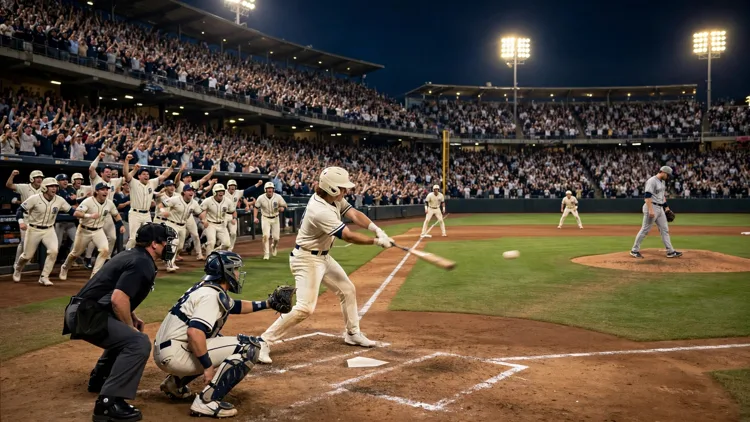
Chourio's Final-Strike Walk-Off Beats Mason Miller as Brewers Stun Padres 4-3 for a 2-0 NLDS Lead
Down to their final strike against Mason Miller, the Brewers walked three times and Jackson Chourio lined a 101.3 mph fastball for a walk-off single and a 2-0 NLDS lead.
Brewers Beat Padres 3-2 in NLDS Game 1 as France's Ninth-Inning Drive Hits the Roof Cables
Milwaukee beat San Diego 3-2 in NLDS Game 1: Contreras homered in the seventh, Chourio set a franchise record, and a roof-cable catch ended the ninth.
Dodgers Beat Braves 5-3 in NLDS Game 1 as Skubal Dominates in 100-Degree Heat
Tarik Skubal struck out seven over six innings and Hernandez, Tucker and Muncy homered as Los Angeles beat Atlanta 5-3 in NLDS Game 1.
White Sox Beat Guardians 3-0 in ALDS Game 1 Behind Murakami Homer and a Three-Hitter
Munetaka Murakami hit a two-run homer and five Chicago pitchers combined on a three-hitter as the White Sox beat Cleveland 3-0 in ALDS Game 1.
Rays Beat Yankees 1-0 in ALDS Game 1 as Rasmussen Takes No-Hitter Into the Eighth
Drew Rasmussen held the Yankees hitless for 7 2/3 innings as the Rays won ALDS Game 1 1-0 on Jonathan Aranda's homer, with Aaron Judge left off the roster.
Yankees vs Rays ALDS Game 1: Judge a Doubt After Wild Card Sweep of Red Sox
The Yankees swept the Red Sox 18-2 to reach the ALDS vs the Rays. Game 1 is Saturday in St. Petersburg, with Aaron Judge a doubt through a calf injury.