
How to Play Era Ball: Draft, Coach & Sim a Season
On this page8
Era Ball’s rules are simple to state and much harder to play well: pick an era, draft nine players and a coach from that era, then let a season simulation tell you whether your roster was actually as good as you thought. Here’s each step in order.
Step 1: Choose your era
Every Era Ball run starts with picking a single decade — 1950s through 2020s — to simulate. This isn’t just a filter on who you can draft; it sets the style of play the entire simulation is judged against. A pass-first, low-pace 1970s build and a switchable, three-point-heavy 2020s build are being scored on completely different criteria, so the era you pick is arguably the single biggest decision in the whole game.
Step 2: Draft your nine-player roster
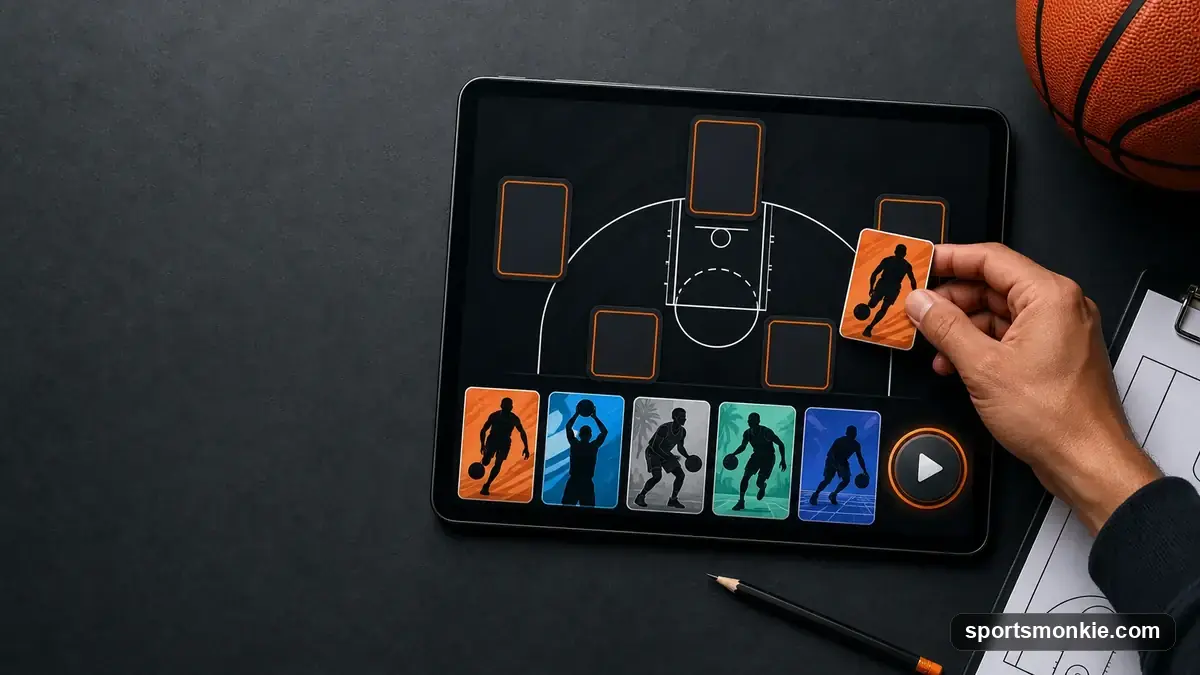
You fill a starting five plus a four-player bench, one pick at a time. Rather than choosing freely from a full-era player list, Era Ball serves up randomized team-and-era combinations each round — you’re picking from what the draft gives you, not hand-selecting your dream roster from a dropdown. Once a player is drafted, they’re gone for the rest of that run; there’s no duplicating a pick to stack a single star twice.
Rerolls: your one escape hatch per pick
If a round’s randomized candidates genuinely don’t fit a positional need your roster has, you get one player reroll and a separate coach reroll to work with — not unlimited re-spinning until a specific famous name shows up. Save it for a real gap, not disappointment that the offered names aren’t as recognizable as you’d hoped.
Step 3: Draft a coach
After your nine players, you draft a head coach pulled from real NBA coaching history. The coach’s actual regular-season win percentage and playoff win percentage aren’t just flavor text — they translate directly into your team’s offensive and defensive grade bonuses. A coach known for offensive systems boosts that side of your sim; a coach with a strong playoff track record boosts your defense and your team’s ability to make in-series adjustments.
Step 4: Simulate the regular season
With a full roster and coach locked in, the game simulates an 82-game season. Team strength is built from the same stat line shown on each player’s draft card — those numbers are era-adjusted and minutes-scaled going in, and they’re what actually drives scoring and results, not a hidden secondary calculation.
Step 5: Simulate the playoffs (if you qualify)
Post a strong enough regular-season record and your run continues into a simulated playoff bracket. This is where a star-heavy roster with thin depth, or a coach whose bonuses don’t fit your roster’s identity, tends to get exposed — a common complaint from players who steamroll the regular season and then lose early in the postseason.
What actually decides the outcome
Reading between the lines of how players talk about the game, results come down to more than raw star power: positional fit, how well your roster’s skill set matches your chosen era’s style, bench depth for a full 82-game grind, and how well your coach’s strengths align with your roster all factor in. That’s also exactly why “just draft the highest-rated players every round” isn’t a reliable strategy — jump to our guide to going 82-0 if a perfect season is the goal, or read the full Era Ball overview for how it stacks up against similar games.
Try our version
Our build of Era Ball follows the same basic shape — pick an era, draft a full roster and coach, simulate a season and playoffs — with its own player dataset, a visible team-chemistry breakdown (so you can see exactly why a roster is or isn’t working), and a seeded simulation engine where the same seed and roster always produce the same result. Free, no account needed.
Frequently asked questions
How do you start an Era Ball game?+
Pick a single era to simulate — anywhere from the 1950s through the 2020s. That choice locks which decade's players you can draft from and sets the style of play (pace, physicality, three-point value) your whole roster will be judged against.
How many players do you draft in Era Ball?+
Nine: a starting five plus a four-player bench, drafted one pick at a time from randomized team-and-era combinations, followed by a head coach.
Can the same player appear more than once on your roster?+
No. Each draft round offers new randomized candidates, and once you've picked a player, they're off the board for the rest of that draft.
How do you choose a coach in Era Ball?+
Coaches are drawn from real NBA head coaches. A coach's regular-season win percentage and playoff record translate into offensive and defensive grade bonuses for your team — a strong regular-season coach boosts your system quality, a strong playoff coach boosts your defense and in-series adjustments.
Does Era Ball simulate the playoffs?+
Yes. If your regular-season record is strong enough to qualify, the game continues into a simulated playoff bracket to determine a champion, the same way the regular season plays out.
Can you choose a random era instead of picking one yourself?+
The core flow is picking your era deliberately, since that choice sets the entire style your roster is judged against — there isn't a documented 'surprise me' random-era option separate from the draft's own randomized team-and-player candidates within whichever era you choose.
How many rerolls do you get, and can you reroll a coach?+
Public gameplay discussion describes one player reroll and a separate coach reroll — used when a round's candidates don't fit what your roster needs, not unlimited re-spinning until a specific name shows up.
How many coaches can you choose from?+
The coach pool is drawn from real NBA head coaches; the exact number available isn't published, but each one carries their own real win percentage and playoff record into your simulation's offensive and defensive bonuses.
Can players from different decades end up on the same roster?+
No. Your era choice locks the entire draft to one decade's player pool — the whole point is testing how a single era's talent performs together, not mixing eras into one super-team.
Which version of a player does Era Ball use — a single season, or their whole career?+
Cards are era-specific rather than career-spanning, which is why a player like Michael Jordan shows up as a distinct 1980s card and a distinct 1990s card rather than one blended 'peak Jordan' entry — see our breakdown of [which Jordan decade to draft](/best-era-ball-players-by-position/) for how that plays out.
What happens right after you finish drafting your ninth player and coach?+
The game locks your roster and moves straight into simulating the regular season — there's no further roster editing once the draft is complete.
Play & tools
Free browser games and tools — no account, no download.
- Play 82-0 — Draft five, one per position, and see if your lineup can go a flawless NBA season.
- Play Era Ball — Draft an all-time NBA roster from a single era, then simulate a season and chase a perfect run.
- Play 32-0 — Draft five college basketball legends, one per position, and chase a perfect 32-0 national title.
- Explore all our games →
- Get the printable bracket — Download and print a blank tournament bracket to fill out by hand.
- Open the TS% calculator — Calculate TS% from points, field goal attempts and free throw attempts — scoring efficiency in one number.
- Explore all our free sports tools →
Related basketball guides
View all →
Best Era Ball Players by Position: Who to Target in the Draft
Which real NBA statistical profiles make the strongest Era Ball picks at each position — and why some star names are better fits than others.

Era Ball Eras Compared: Best NBA Decade to Draft
Every Era Ball decade compared, 1950s to 2020s — what changed about the NBA in each era and which one gives you the strongest roster to draft.
What Is Era Ball? Basketball Draft Game Explained
Era Ball is a free basketball draft game built around NBA eras. Learn its nine-player format, position penalties, modes and where to play.
How to Go 82-0 in Era Ball: What a Perfect Season Actually Takes
Going undefeated in Era Ball is rare by design. Here's what actually separates a perfect-season roster from a star-heavy team that still loses games.

Where to Play Era Ball: Official Site, Mobile & Login
Play Era Ball on its official website, learn how it works on mobile, and see which features may need a login. Avoid unofficial app listings.

82-0 Alternatives: Era Ball, Daily82, Ball IQ and More Compared
If you've played 82-0, here's how Era Ball, Daily82, and Ball IQ's Ultimate Team actually differ — and what to try next.