
How to Play 82-0: Rules, Draft, and Simulation Explained
On this page7
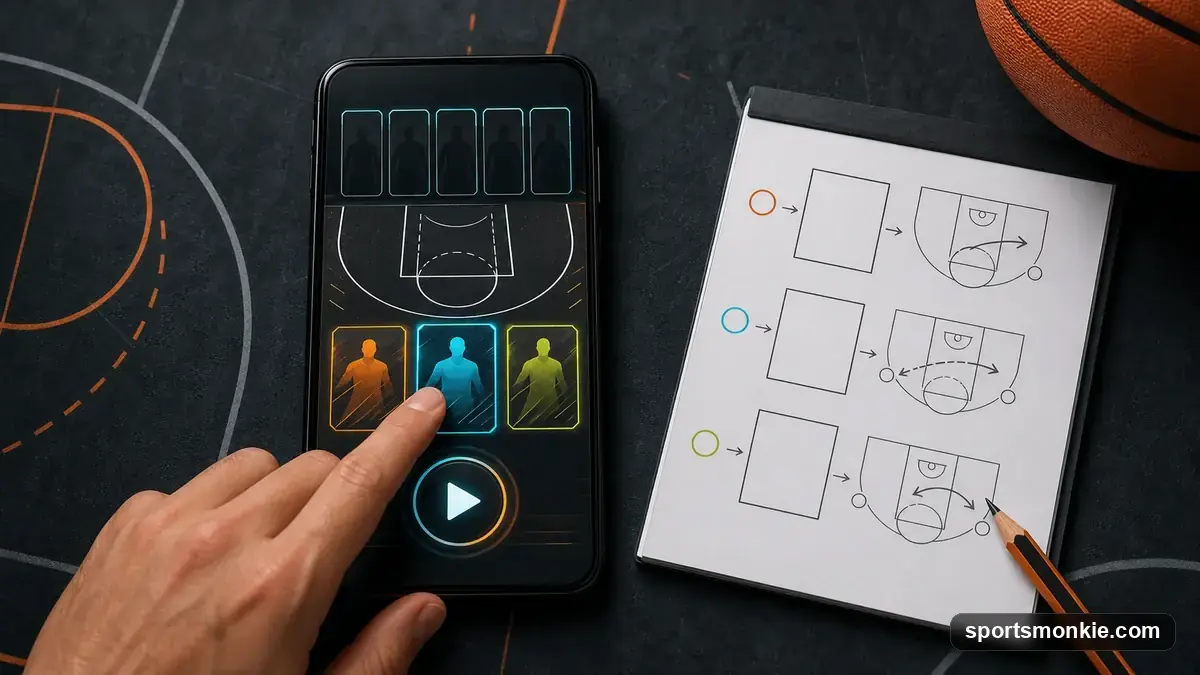
82-0’s rules fit on one page, and the game is genuinely that simple to explain — which is part of why it spread so fast. Here’s the exact flow.
Step 1: Pick a mode
Classic shows full player stats while you draft. Hoop IQ hides them — you’re drafting on memory alone. 1v1 has you draft a full lineup and then face off against a rival roster rather than just chasing a solo record.
Step 2: Spin for a team and decade
Each of the five rounds opens with a “slot machine” that randomly assigns you one specific NBA team and one specific decade — not a free choice across all of basketball history. Land on, say, the 1980s Trail Blazers, and your candidate pool for that round is every player who actually played for that team in that decade.
Step 3: Draft the best available player from that pool
In Classic mode you can browse the full roster with real per-game stats (points, rebounds, assists, steals, blocks) and sort or filter by position. Pick one player, and move to the next round.
Step 4: Use your skips wisely
You get one team skip and one decade skip per game — separate resources, spendable independently. If the wheel lands you on a genuinely weak team-era combination for your build, this is the moment to burn one rather than settling for a below-replacement pick.
Step 5: Repeat for all five rounds
82-0’s roster is five players — no bench, no coach. Once all five picks are locked in, the simulation runs automatically.
Step 6: How the record gets calculated
The engine sums five raw stat categories — points, rebounds, assists, steals, and blocks per game — across your five players into a single “Strength Rating.” That number runs through a non-linear win-projection curve: each additional win gets harder to earn as your total strength climbs, and era-adjusted benchmarks make sure a big scoring number from a fast, high-possession decade isn’t weighted the same as an equally big number from a slower one. You get a projected win-loss record, a letter grade, your best pick, and your roster’s single biggest weakness.
What the rules don’t reward — on purpose, by their own admission
82-0’s own published rules state plainly that there are no positional restrictions and no synergy penalties — the stated optimal strategy is just maximizing raw stat totals in each round, regardless of whether you end up with five guards or a genuinely balanced lineup. If that’s the part of the format you find thin, our 82-0 strategy guide covers how to think about roster construction anyway, and 82-0 is our own take on this same draft-and-simulate premise, built specifically to score real positional fit and lineup chemistry rather than leave it out.
Frequently asked questions
How do you start a game of 82-0?+
Pick a game mode (Classic, Hoop IQ, or 1v1), then begin the draft — each of five rounds starts with a spin that assigns you a team and a decade.
How does the slot machine work in 82-0?+
Each round, it randomly lands on a specific NBA team and a specific decade. You then pick the best available player from that exact team's roster in that era — not a free pick across all of basketball history.
What is 82-0's Strength Rating?+
A cumulative total of five stat categories — points, rebounds, assists, steals, and blocks — summed across your five drafted players. It's the number the season-projection engine actually runs on.
What is the skip mechanic in 82-0?+
You get one team skip and one decade skip per game, usable independently — spend them on a round where the slot machine lands on a particularly weak team or era for your plan.
Does 82-0 adjust for which decade a player is from?+
Yes. The engine applies era-adjusted benchmarks so a given stat line is weighed differently depending on the scoring environment of that decade — 30 points per game meant something different in the 1960s than it does now.
Sources
Play & tools
Free browser games and tools — no account, no download.
- Play 82-0 — Draft five, one per position, and see if your lineup can go a flawless NBA season.
- Play Era Ball — Draft an all-time NBA roster from a single era, then simulate a season and chase a perfect run.
- Play 32-0 — Draft five college basketball legends, one per position, and chase a perfect 32-0 national title.
- Explore all our games →
- Get the printable bracket — Download and print a blank tournament bracket to fill out by hand.
- Open the TS% calculator — Calculate TS% from points, field goal attempts and free throw attempts — scoring efficiency in one number.
- Explore all our free sports tools →
Related basketball guides
View all →
How to Play Era Ball: Draft, Coach & Sim a Season
Learn Era Ball fast: pick an era, draft your nine-player roster, choose a coach, then simulate the season and playoffs. A quick, free how-to guide.

82-0 Classic vs. Hoop IQ: Which Mode Should You Play?
82-0's Classic mode shows full stats; Hoop IQ hides them entirely. Here's the real difference and which one actually tests what you think it does.

Best Era Ball Players by Position: Who to Target in the Draft
Which real NBA statistical profiles make the strongest Era Ball picks at each position — and why some star names are better fits than others.

Era Ball Eras Compared: Best NBA Decade to Draft
Every Era Ball decade compared, 1950s to 2020s — what changed about the NBA in each era and which one gives you the strongest roster to draft.

What Is Era Ball? Basketball Draft Game Explained
Era Ball is a free basketball draft game built around NBA eras. Learn its nine-player format, position penalties, modes and where to play.

How Era Ball's Simulation Engine Works
What actually drives an Era Ball result: era-adjusted stats, positional fit, coaching bonuses, and the era-distance penalty explained.