
Duck in Cricket: Golden, Diamond, Royal & Every Type Explained
On this page6
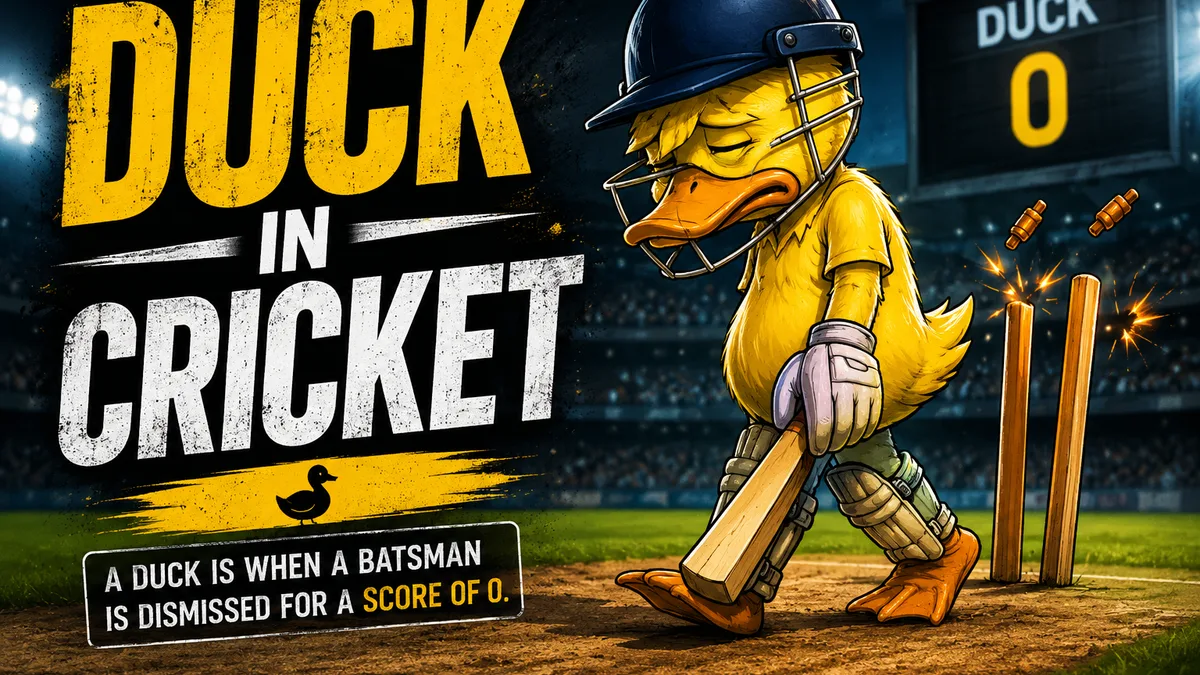
A duck in cricket is when a batter is dismissed for zero runs. The name comes from “duck’s egg”, a nod to how the number 0 looks on the scoreboard. Cricket has built a whole vocabulary around it — golden, silver, diamond, royal and more — with each name marking exactly how, or how quickly, a batter fell without scoring.
What a duck means
At its simplest, a duck is any dismissal that leaves a batter on 0 in the runs column. It does not matter whether they survived one ball or forty; if the innings ends with no runs against their name, it is a duck. The one exception is being not out for 0 — for example, running out of partners at the other end — which is recorded but not counted as a duck.
Where the term comes from
The word traces back to the mid-19th century phrase “duck’s egg”, used because a zero written on the scoreboard resembles the oval shape of an egg. Over time commentators and scorers shortened it to simply “duck”. The same logic gave American baseball its “goose egg”, but only cricket built out an entire family of named ducks around the idea.
Types of duck
| Type | Definition |
|---|---|
| Duck | Out for 0 (any number of balls faced) |
| Golden duck | Out on the first ball faced, for 0 |
| Silver duck | Out for 0 on the second ball faced |
| Bronze duck | Out for 0 on the third ball faced |
| Diamond duck | Out for 0 without facing a legal delivery (e.g. run out at the non-striker’s end, or out off a wide) |
| Royal / platinum duck | Out on the first ball of the team’s innings (an opener, first ball of the match) |
| Pair | Out for 0 in both innings of a match |
| King pair | A golden duck in both innings of a match |
Golden vs diamond — the common mix-up
People confuse these two constantly, but the difference is clean:
- A golden duck means the batter actually faced a legal ball and got out to it — bowled, caught, lbw or otherwise, all on delivery one.
- A diamond duck means they never faced a legal delivery at all. Most often it is a run-out while backing up at the non-striker’s end, or a dismissal off a wide, which does not count as a ball faced.
Put simply: golden duck, ball faced; diamond duck, no ball faced.
Notable ducks and record holders
Ducks are cricket’s most-tracked misfortune, and the extremes belong to bowlers batting at the tail. Courtney Walsh of the West Indies holds the Test record with 43 ducks across his career. Across all international formats combined, Sri Lanka’s Muttiah Muralitharan leads with 59 ducks in Tests, ODIs and T20Is, as of 2026. Both were world-class bowlers whose batting was never the point — a reminder that a duck reflects a single dismissal, not a player’s overall value.
Why ducks matter
A duck is often the first visible sign of a top-order collapse, and fans have kept score of the rarer varieties for decades as running trivia. A king pair — a golden duck in both innings of the same match — is about as painful an entry as a batter can pick up. Because each duck counts as a completed innings of zero, it also drags down a batting average, which is why avoiding one, especially early, matters most to specialist batters.
Related terms
Ducks sit alongside a handful of other zero-related cricket phrases worth knowing: a pair (two ducks in one match), a king pair (two golden ducks), a not out 0 (survived without scoring, not counted as a duck), and the informal silver and bronze ducks for second- and third-ball dismissals. Understanding them turns a bare “0” on the scoreboard into a precise story of how a batter’s innings ended.
Frequently asked questions
What is a golden duck?+
A golden duck is when a batter is out on the very first ball they face, scoring zero. It is the most commonly used duck term worldwide and applies in every format, from Test cricket to T20.
What is the difference between a diamond duck and a golden duck?+
A golden duck means out first ball faced — the batter actually received a legal delivery. A diamond duck means dismissed without facing a legal delivery at all, typically run out at the non-striker's end or off a wide. The diamond duck is the rarer of the two.
What is a king pair?+
A king pair is when a batter is out for a golden duck — first ball, zero runs — in both innings of the same match. It is considered the most unfortunate individual outcome in the game, combining two first-ball dismissals in a single Test or first-class fixture.
Why is a zero score called a 'duck' in cricket?+
The term comes from 'duck's egg', because the shape of a zero on the scoreboard resembles a duck's egg. The phrase dates back to the 19th century and was shortened over time to simply 'duck', now the standard term for a batter dismissed without scoring.
What is a pair in cricket?+
A pair is when a batter is dismissed for a duck in both innings of the same match, scoring zero twice. It does not matter how many balls were faced in each innings — any two ducks in one match make a pair. If both dismissals come first ball, it becomes a king pair.
What is a royal or platinum duck?+
A royal duck, also called a platinum duck, is when an opening batter is dismissed on the very first ball of the team's innings — the first delivery of the match or innings. It is effectively a golden duck suffered by the opener facing ball one.
Who has the most ducks in cricket?+
Courtney Walsh holds the Test record with 43 ducks, most of them as a tail-end bowler for the West Indies. Muttiah Muralitharan has the most across all international formats combined, with 59 ducks in Tests, ODIs and T20Is, as of 2026.
Do ducks count against a batting average?+
Yes. A duck counts as a completed innings with zero runs (unless the batter was not out), which lowers a player's batting average. Frequent ducks can noticeably hurt a batter's average, which is why avoiding them, especially early in an innings, matters at the top level.
Sources
Play & tools
Free browser games and tools — no account, no download.
- Play today's Sports Connections — Today's Sports Connections — daily hints, answers, and play the grid.
- Play Guess the NFL Player — A new mystery NFL player every day. Eight guesses, with a clue on each — plus free unlimited mode.
- Explore all our games →
Related cricket guides
View all →
What Is a Nightwatchman in Cricket?
A nightwatchman is a lower-order batter sent in late to shield a specialist from tricky conditions. See why teams use one and when the tactic pays off.
What Is Strike Rate in Cricket? Batting & Bowling Explained
Batting strike rate is runs scored per 100 balls (runs ÷ balls × 100); bowling strike rate is balls bowled per wicket. Formulas and examples inside.
15 Basic Rules of Cricket Every Fan Should Know
Cricket has a detailed rulebook, but these 15 core rules cover how the game is played, how batters are dismissed, and how runs are scored.
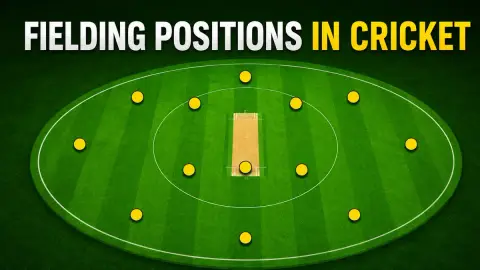
Fielding Positions in Cricket: A Clear Guide to Every Spot
Learn every cricket fielding position, from slips and gully to long-on and fine leg, grouped by close catchers, infield and boundary riders.

Fastest Century in Cricket (Every Format)
AB de Villiers holds the fastest ODI century at 31 balls. The fastest hundreds in T20, ODI and Test cricket explained, with the record-holders for each format.

What Is a Dead Ball in Cricket? Rule and Common Situations
A dead ball is a delivery from which no runs score and no batter is out. Learn when the ball goes dead, who decides, and why it matters in a tight finish.