
CAS Orders Russia Back Into World Hockey as IIHF, Canada and Hasek Push Back
On this page7
The Court of Arbitration for Sport has ordered world hockey to take Russia back. In a ruling issued on Friday, CAS overturned the International Ice Hockey Federation’s exclusion of Russian teams, in place since the full-scale invasion of Ukraine in 2022, and ordered their readmission with immediate effect. The IIHF says it disagrees with the decision but will comply. What happens next is now a scramble across five tournaments, two host governments and a sport that has spent four years arguing about exactly this.
What did CAS rule on Friday?
It ruled that the exclusion could not stand on the evidence the IIHF offered. CAS cited a lack of sufficient evidence to support the federation’s security concerns, the Associated Press reports, and annulled the IIHF Council’s decision. The IIHF had decided in January 2026 against reinstating Russian teams, citing safety and security, Citisports Online reports. The panel’s answer was that only substantiated security concerns can override the right of athletes of a particular nationality to compete, and that test was not met.
The ruling is also narrow in an important way. CAS did not decide whether Russia must compete without national symbols, as a team of neutral athletes, as in some other Olympic sports, or what the other organizational consequences should be. Those questions were not part of the appeal, and they are now the IIHF’s problem. The federation said it maintains that its decisions were necessary to protect the safety and security of all participants and safeguard the integrity of its competitions, but added: “While the IIHF respects the authority of CAS and will act in accordance with its ruling, the outcome does not remove the concerns that informed its assessments.”
Which five tournaments does the ruling cover?
Five events in 2027, starting in less than two months. The first is the men’s world junior championship in Edmonton and Red Deer, Alberta, beginning December 26, 2026, where Russia’s federation has already said it plans to play, identifying the juniors as its next major tournament in a statement on its English-language X account. Then comes the under-18 women’s world championship in the Czech Republic from January 8 to 16, the under-18 men’s world championship in Minnesota from April 22 to May 2, the men’s world championship in Germany from May 14 to 30, and the women’s world championship in Quebec City in November 2027.
One nearby event is untouched, and the distinction matters. The women’s worlds beginning next week in Denmark are not affected, the Associated Press reports, because that tournament counts as part of the 2025-26 season and was moved to November. Russia’s return therefore starts with teenagers in Alberta, not with the senior women in Denmark, which gives the federations a few weeks to work out the practical questions before the first puck drops.
Why is the Germany draw the hardest problem?
Because the tournament is already built. The men’s world championship draw has been completed with 16 teams, and the Associated Press reports that adding an extra team would make for uneven groups and an even longer tournament to fit in more games. The alternative is worse: kicking out a qualified team to make room, which would risk an enormous backlash, especially if that team is Ukraine. Ukraine qualified for the men’s worlds for the first time in two decades, was last to qualify, and is ranked lowest among the 16 teams currently taking part. Its federation said it disagreed with the ruling and argued that security concerns had only intensified since 2022, without indicating how it would approach the championship.
Germany, as host, is not hiding its view. German federation chair Frank H. Lutz said Friday that Germany remains opposed to letting Russia take part and that allowing Russia in has significant security, political and financial consequences for the hosts. New IIHF President Franz Reindl, whose home country is Germany, struck a more administrative note: “Our task now is to implement this ruling responsibly. Several championships are only weeks away, and changes to participation affect many people; players, teams, organizing committees and host cities. We will work closely with all of them to find practical solutions.”
How has Canada responded to the Alberta juniors?
With opposition from Ottawa and compliance from Edmonton. Hockey Canada expressed disappointment with the ruling and said it was seeking clarity on the implications, including for the junior championship that begins in less than two months in Edmonton and Red Deer, Sportsnet reports. Foreign Affairs Minister Anita Anand said Canada is extremely disappointed, adding: “We strongly oppose this outcome. We will continue to maintain our own restrictions on the participation of Russian athletes at events hosted in Canada that receive federal funding.” Secretary of State for Sport Adam van Koeverden echoed her, saying Canada maintains that Russia should not be represented in international sport competitions while the invasion continues.
The federal government had not yet committed any money to the 2027 junior tournament, according to Hockey Canada, while the Alberta government provided $11 million back in 2024 to host hockey events including the 2027 juniors. Alberta Premier Danielle Smith acknowledged the difficulty on Friday but said she would not try to block Russia’s participation, saying the province will comply while understanding the emotions of those still displaced from their homeland. That lands hard in a province home to more than 400,000 Ukrainians or people of Ukrainian descent, Sportsnet reports, and roughly 65,000 to 70,000 Ukrainians have arrived in Alberta since the war began. Lydia Migus, president of the Ukrainian Canadian Congress’s Alberta chapter, called the prospect of a Russian team competing in the province “basically a slap in the face for humanity.” Edmonton has already had a fraught hockey week at Rogers Place, where the Oilers said a viral fan ejection had nothing to do with an Alberta flag, covered in the Oilers ejection story, and Canadian hockey’s mood is raw after the first Saturday without Hockey Night in Canada on CBC since 1952.
Why did Hasek’s reaction lead the backlash?
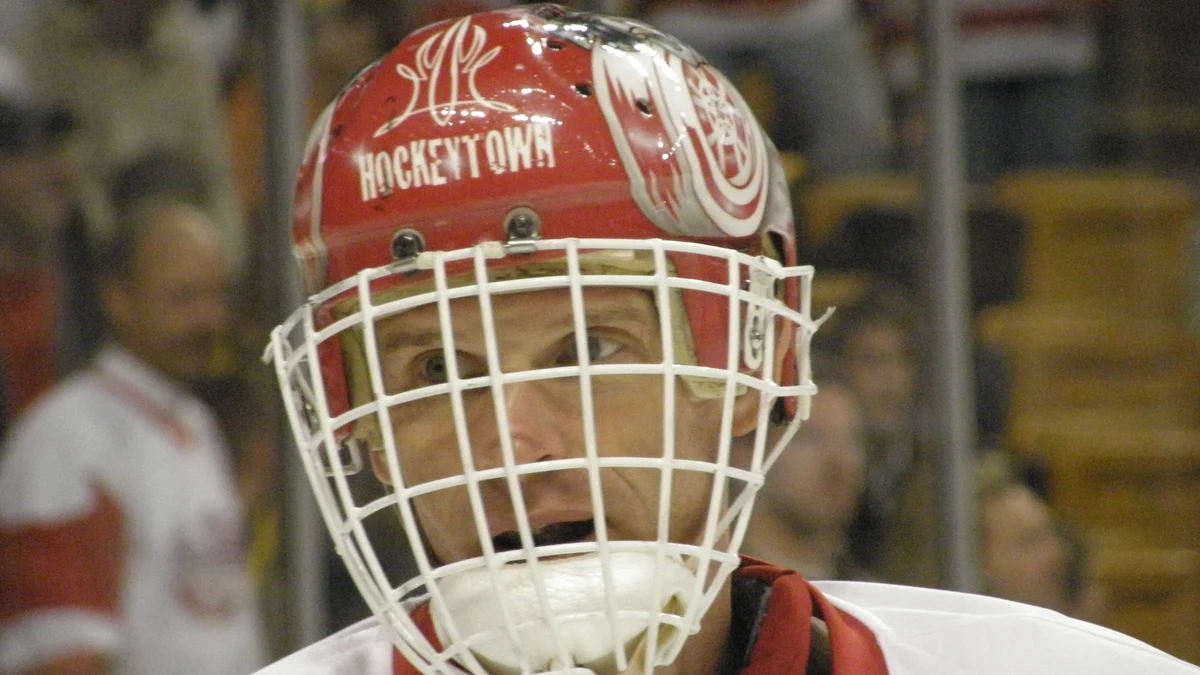
Because he said in public what several federations said in careful statements. Within hours of the ruling, the 62-year-old Hall of Fame goaltender posted on X questioning whether any democratic country in the world would willingly host what he described as advertising for Russia’s war, HockeyFeed reports. He called for immediate rules and laws to prevent it, warning that the consequences could be measured in human lives, and ended the post: “We must not allow this!”
Hasek’s reaction carried weight because this is his long-running fight, not a new one. He has spent years as one of the most outspoken critics of Russia’s influence in professional hockey, repeatedly targeting Washington Capitals captain Alex Ovechkin and his ties to Russian President Vladimir Putin, HockeyFeed reports. Earlier in October he accused the Capitals of exploiting Ovechkin’s children during a pregame ceremony and challenged Canadian lawmakers to ban Ovechkin from entering the country. Ovechkin’s own farewell season, announced earlier this month, is covered in the Ovechkin final season story, and Hasek’s latest post sits in that same long argument about what Russian stars represent when they take the ice.
The federations split on what to do next, which is itself part of the story. Finland’s chair Heikki Hietanen said no player or team official is under any obligation to take part in a tournament in which Russia or Belarus is involved, and that Finland understands and supports those who do not wish to participate. Sweden’s chair Anders Larsson said a boycott is not on the table. A spokesperson for Czech President Petr Pavel said the president considers it appropriate to ban athletes under the Russian and Belarusian flags while aggression continues. Russian Sports Minister Mikhail Degtyaryov celebrated on Telegram, writing that CAS had recognized the Russian Hockey Federation’s demands on key points as justified. Belarus, excluded under the same rationale, was not mentioned in Friday’s ruling.
What does this mean for the NHL’s 2028 World Cup?
Nothing directly, and that is the point the NHL will lean on. The CAS ruling has no effect on the NHL, the Associated Press reports, and the league and the players’ association run the 2028 World Cup of Hockey without the IIHF or national federations. Deputy Commissioner Bill Daly said there is no timeline on whether Russia will be the eighth team, calling it a relevant piece of information the league will weigh among all factors. Darren Dreger reports there is no set timeline, though both sides acknowledge the sooner the better on reaching a decision.
The NHL’s Russian stars are the quiet subplot here. The league’s decision will be read through players like Nikita Kucherov, whose record chase with Tampa Bay is covered in the Kucherov points record story, and through Ovechkin’s farewell year. For now the league can watch the IIHF’s mess from a distance. If Canada, Germany and the federations cannot agree on flags, draws and funding for the junior and senior championships, the World Cup decision only gets harder.
What happens next?
Three decisions, in order. First, the IIHF’s practical arrangements: how Russia fits into draws that are already made, what happens to the flag and anthem question CAS left open, and how schedules, travel and security are reworked for tournaments already in advanced preparation. The IIHF itself warned that those decisions do not consider practical elements which cannot be implemented immediately. Second, Canada’s funding lever: whether federal money stays away from events featuring Russian teams, and whether Alberta’s compliance holds when the juniors actually arrive in December. Third, the wider movement: swimming and volleyball allowed Russia to compete under its national flag this year, the International Olympic Committee has eased its approach, and Russia’s track federation said Friday the hockey decision gave it confidence in its own CAS case against World Athletics. Its soccer federation is already arguing it should be one rule for all. Hockey was the first team sport to force the question to a ruling. It will not be the last to live with the answer.
Frequently asked questions
What did the Court of Arbitration for Sport actually order?+
That the International Ice Hockey Federation must allow Russia back into its international tournaments. The Associated Press reports that CAS overturned IIHF decisions excluding Russia from events in the 2026-27 season, including the men's and women's world championships and the world juniors. The ruling annulled the IIHF Council's exclusion with immediate effect, ending a ban in place since February 2022.
Which five tournaments does the ruling cover?+
The world junior championship in Edmonton and Red Deer, Alberta, from December 26, 2026 to January 5, 2027; the under-18 women's world championship in the Czech Republic from January 8 to 16; the under-18 men's world championship in Minnesota from April 22 to May 2; the men's world championship in Germany from May 14 to 30; and the women's world championship in Quebec City in November 2027. The women's worlds starting next week in Denmark are not affected.
Why did CAS overturn the ban?+
Because the IIHF did not prove its case on security. The Associated Press reports that CAS cited a lack of sufficient evidence to support the federation's security concerns. Under IIHF regulations, only substantiated security concerns can override the right of athletes of a particular nationality to compete, and the panel found that test was not met. The ruling did not address whether Russia must play without national symbols.
Will Russia play under its own flag and anthem?+
That is still undecided, and it is the next fight. CAS expressly did not rule on neutral-athlete status or other organizational consequences, the Associated Press reports. A spokesperson for Czech President Petr Pavel said the president considers it appropriate to ban athletes under the Russian and Belarusian flags while Russian aggression continues. The IIHF says practical arrangements will be decided after it has assessed the ruling.
What has Canada said about the world juniors in Alberta?+
That it strongly opposes the outcome. Foreign Affairs Minister Anita Anand said Canada is extremely disappointed and will maintain its own restrictions on Russian athletes at federally funded events hosted in Canada, Sportsnet reports. Hockey Canada said it is seeking clarity and has briefed the federal government. Alberta Premier Danielle Smith said the province will comply with the ruling and will not try to block Russia's participation.
What is the problem with the men's world championship draw in Germany?+
The draw is already done, with 16 teams in place. Adding a 17th team would make for uneven groups and a longer tournament, the Associated Press reports. Removing a qualified team to make room would risk a backlash, especially if that team is Ukraine, which qualified for the first time in two decades and is ranked lowest of the 16. German federation chair Frank H. Lutz said hosting Russia would carry significant security, political and financial consequences.
What did Dominik Hasek say about the ruling?+
Within hours of the ruling, the Hall of Fame goaltender posted on X questioning whether any democratic country would willingly host what he described as advertising for Russia's war, HockeyFeed reports. He called for immediate rules and laws to prevent it, warning that the consequences could be measured in human lives, and ended the post: 'We must not allow this!' Hasek has spent years campaigning against Russia's presence in international hockey.
Does the ruling affect the NHL's 2028 World Cup of Hockey?+
No, not directly. The Associated Press reports that the CAS ruling has no effect on the NHL, and the league and the players' association run the 2028 World Cup without the IIHF or national federations. Deputy Commissioner Bill Daly said there is no timeline on whether Russia will be the eighth team, calling it a relevant piece of information the league will weigh. Russia has also missed this year's Olympic tournaments.
Sources
- The Associated Press via theScore: Russia reinstated for IIHF World Championship after CAS (the ruling, the security evidence finding, the IIHF and Reindl statements, the Germany draw problem, Ukraine, the federations, the World Cup, the wider reintegration)
- Sportsnet (Canadian Press): Canadian government 'strongly opposes' Russia returning to IIHF competitions (Hockey Canada's position, Anand and van Koeverden, the federal funding restriction, Alberta's $11 million, Premier Smith, the Ukrainian Canadian Congress)
- USA Today (Associated Press): With ban lifted, Russia can return to International Ice Hockey Federation events (the ban lifted, the 2022 invasion context, the IIHF disappointment statement, the May 2027 Germany dates)
- HockeyFeed: Dominik Hasek unloads after shocking Russia Hockey ruling (Hasek's X post and quotes, the Germany pushback, the 57-day countdown to the juniors, the Dreger World Cup timeline, Degtyaryov's celebration)
- Citisports Online: CAS orders return of Russian teams to five International Ice Hockey competitions in 2027 (the five-tournament list with dates, the January 2026 IIHF decision, the Lausanne hearings, the neutral-status question left open)
Play & tools
Free browser games and tools — no account, no download.
- Play 98-0 — Draft a 12-player all-time NHL roster and chase a perfect 98-0 — 82 regular-season wins plus a swept Cup.
- Explore all our games →
Related ice hockey guides
View all →
Best Female Hockey Players of All Time: Ranked
The best female hockey players of all time, ranked: Hayley Wickenheiser, Marie-Philip Poulin, Hilary Knight and the legends who built the women's game.

Best-Looking Female Hockey Players: Talent Meets Style on the Ice
A look at female hockey players who are known both for their on-ice excellence and their strong presence off it, from Marie-Philip Poulin to Hilary Knight.
Elina Svitolina Announces Separation From Gael Monfils
Elina Svitolina announced on Instagram that her marriage to Gael Monfils is ending, citing the toll of the war in Ukraine and asking for space.

Antonelli Can Become F1's Youngest Champion in Austin: The 126-Point Arithmetic Explained
Kimi Antonelli leads F1 by 102 points after Singapore. He can clinch the title in Austin at 20, but only with a win and help from Russell and Hamilton.
First Saturday Without Hockey Night in Canada on CBC Since 1952 Leaves Fans Fuming
Sportsnet's Saturday Night Hockey debuted on October 3 as CBC aired no NHL game on a Saturday for the first time since 1952, and fans refused the new name.
Batherson Completes Hat Trick by Blocking a Shot Into an Empty Net
Drake Batherson scored three goals and added an assist in Ottawa's 7-4 win over the Rangers, completing his third career hat trick when a blocked Adam Fox shot travelled the length of the ice into an empty net on hat giveaway night.