
Curling Sliders: What They Are and How to Choose One
On this page6
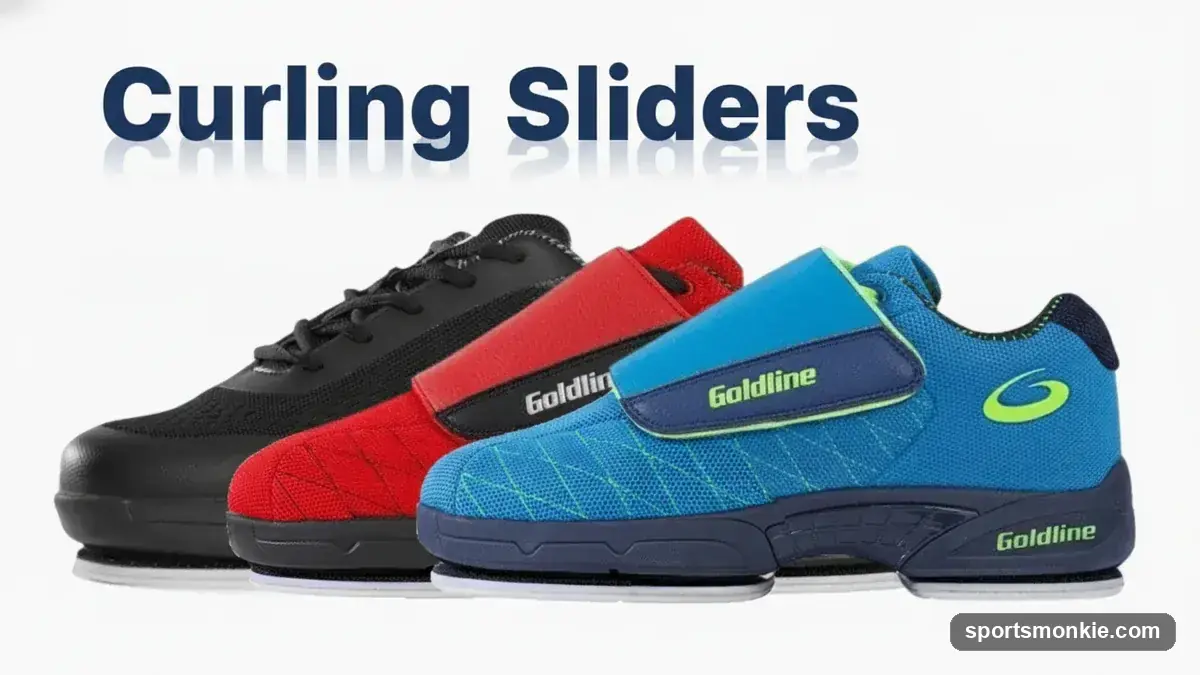
A curling slider is the smooth, low-friction sole worn on a curler’s sliding foot so they can glide out of the hack and deliver the stone under control. Usually made from Teflon (PTFE), nylon, or stainless steel, it cuts friction between shoe and ice. The other foot wears a gripper for traction. Match the material, thickness, and fit to your level and it shows up directly in your balance and accuracy.
How curling sliders work
A curler pushes out of the hack, the rubber foothold at the start of the sheet, with the sliding foot leading. The slider cuts friction between shoe and ice, producing a long, controlled glide through to the release point. A smoother, thicker slider glides faster and shifts the balance point slightly forward; a thinner slider keeps you closer to the ice with more feel.
The other foot wears a gripper, a rubberized sole or slip-on attachment built for traction. Curlers move the gripper on and off between delivering a stone and sweeping or walking the sheet.
Types of curling sliders
| Type | Material | Best for | Notes |
|---|---|---|---|
| Pull-on / step-on slider | Teflon or nylon | Beginners | Fits over any flat shoe; most affordable |
| Full-sole slider | Teflon | Balance and stability | Covers the whole sole for a large contact patch |
| Half-sole slider | Teflon | Faster, agile glide | Covers only the front of the foot |
| Built-in shoe slider | Teflon, nylon, or steel | Regular players | Integrated, often replaceable, sole |
Slip-on sliders stretch or strap over the toe of a regular shoe. They are cheap and fine for learn-to-curl nights, though the looser fit can throw off balance. Dedicated curling shoes pair a slider sole on the sliding foot with a gripper sole on the hack foot, plus ankle support built on a curling-specific last. Higher-end shoes let you swap the slider out entirely to change material or thickness for different ice.
Slider materials compared
Teflon (PTFE) is the standard: a strong glide, good durability, and a choice of thicknesses, with thicker Teflon (around 3/32 inch) faster and thin Teflon (around 1/16 inch) offering more control. Nylon runs slower than Teflon, which actually helps beginners still learning balance, and it wears well. Stainless steel is the fastest and most durable option, and some competitive curlers prefer it because it stays consistent across ice temperatures, though it is heavier.
Top curling slider picks (2026)
As of 2026, four brands dominate curling footwear: BalancePlus, Goldline, Asham, and Hardline. A few representative options:
- BalancePlus pull-on and step-on sliders (roughly $40-$45) are durable Teflon slip-ons well suited to newer curlers.
- Goldline slip-on and full-sole Teflon sliders (roughly $26-$35) are a budget-friendly, widely stocked choice.
- Asham Teflon slip-on sliders come in thin 1/16-inch and thick 3/32-inch versions and in full or half-sole coverage, letting you dial in glide speed.
- For regular players, complete shoes such as the BalancePlus 700-series or Goldline Chinook (roughly $140-$200) add fit, support, and replaceable sliders.
Prices are approximate and vary by retailer and season; confirm current listings before buying.
Choosing the right slider
Newer curlers usually do better with a slower slider, nylon or thin Teflon, since it is easier to control; experienced players tend to move toward faster Teflon or steel. Ice matters too: slower ice calls for a faster slider, and vice versa. Fit matters more than most people expect, because a slider that shifts even slightly wrecks your balance, so choose a properly fitted shoe or a slip-on that holds tight. Since sliders wear down, a shoe with a replaceable slider pays off over a season or two of regular play.
Sizing and care
Buy curling shoes in your normal athletic-shoe size and confirm the slider foot matches your dominant sliding foot (right-handers slide on the left foot). Keep the slider clean and dry: ice shavings and grit cut into glide quickly, so wipe the surface before each session and check for scratches. Store shoes with the gripper on to protect the slider, and never walk on grit, concrete, or rubber matting with a bare Teflon slider, as a scuffed surface throws off your release in ways that are hard to diagnose mid-game.
Frequently asked questions
What is a curling slider?+
A curling slider is a smooth, low-friction device worn on the sole of a curler's sliding foot, the foot they lead with out of the hack. It lets the player glide across the ice under control while delivering the stone. Sliders are commonly made from Teflon (PTFE), nylon, or stainless steel.
Do you need special curling shoes?+
Not to start. Beginners can slip a pull-on or step-on slider over a clean-soled athletic shoe. Dedicated curling shoes, which pair a slider sole on one foot with a gripper sole on the other, offer better fit, ankle support, and durability once you curl regularly.
How do you stop sliding in curling?+
Curlers wear a gripper, a rubber sole or slip-on attachment, over the slider to regain traction when they are not delivering a stone. The gripper lets you walk, sweep, and hold position on the ice without gliding. Players slip it on and off between shots.
What thickness of curling slider should I choose?+
Teflon sliders typically come in a thin 1/16-inch and a thicker 3/32-inch version. Thin sliders sit closer to the ice and suit newer curlers who want more feel and control. Thicker sliders glide faster and add cushioning, which many experienced players prefer.
What is the difference between a full-sole and half-sole slider?+
A full-sole slider covers the entire length of the shoe, giving a large, stable contact patch that helps balance during a long slide. A half-sole slider covers only the front portion of the foot, offering a faster, more maneuverable glide favored by some competitive curlers.
How long does a curling slider last?+
It depends on material and how often you curl. Teflon sliders gradually scratch and wear with regular use and may need replacing every season or two. Stainless-steel sliders last far longer. Buying a shoe with a replaceable slider saves money over repeatedly replacing a whole pair.
Can beginners use a slip-on slider over regular shoes?+
Yes. A pull-on or step-on Teflon or nylon slider fits over a regular flat-soled shoe and is the most affordable way to try curling. The fit is looser than a purpose-built curling shoe, so balance is less precise, but it is perfect for learn-to-curl sessions.
Which brands make curling sliders and shoes?+
BalancePlus, Goldline, Asham, and Hardline are the leading curling footwear makers as of 2026. They produce slip-on sliders, full-sole and half-sole Teflon sliders, and complete curling shoes with integrated, often replaceable, slider soles across a range of prices.
Sources
Play & tools
Free browser games and tools — no account, no download.
- Play today's Sports Connections — Today's Sports Connections — daily hints, answers, and play the grid.
- Play Guess the NFL Player — A new mystery NFL player every day. Eight guesses, with a clue on each — plus free unlimited mode.
- Explore all our games →
Related guides
How Much Does a Curling Stone Weigh?
A curling stone weighs between 38 and 44 pounds (17.24 to 19.96 kg), handle included. The granite, the cost and the specs behind the rock, explained.
Adult Lacrosse Leagues: How to Find One and What They Cost
Adult lacrosse leagues run roughly $100-250 a season. Here is how to find one near you, what the divisions mean, and whether it's too late to start.
Best Lacrosse Mesh: Types, Brands and How to Choose
The best lacrosse mesh for most players is a semi-soft performance mesh. How the mesh types compare, the top brands, and how to pick the right pocket feel.
Lacrosse Rebounders: Are They Worth It and Which to Buy
A lacrosse rebounder returns your passes for solo stick-skills practice. Whether one is worth it, how the top models compare, and the free alternative.
Climbing Shoes for Beginners: What to Buy and How They Should Fit
The best climbing shoes for beginners are flat, neutral, and snug, not painful. Here's how to size them, rent vs buy, and 5 real 2026 models with prices.
Sim Racing Motion Rigs: What They Do and Whether You Need One
A sim racing motion rig physically tilts and shifts your cockpit to mimic G-forces. Real 2026 prices from $1,499 to $30,000, and who actually needs one.