
Richest Cricketers in the World: Who Tops the List?
On this page12
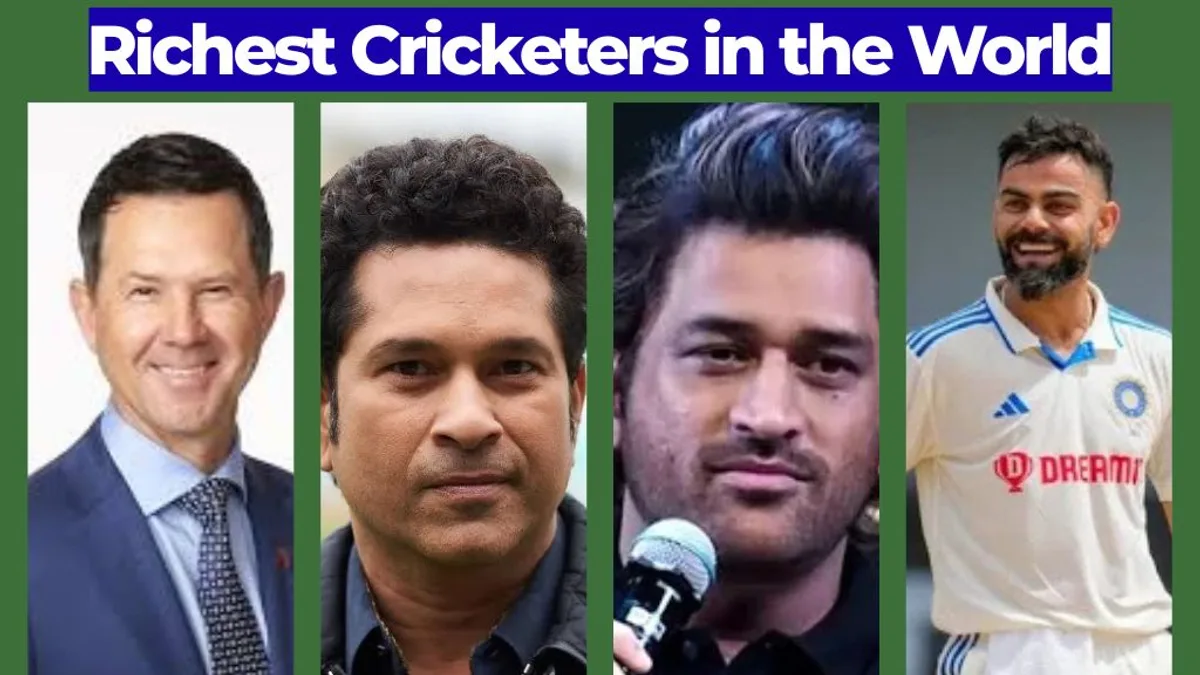
- 01Sachin Tendulkar (India) — about $170 million
- 02MS Dhoni (India) — about $127 million
- 03Virat Kohli (India) — about $125 million
- 04Ricky Ponting (Australia) — about $70 million
- 05Brian Lara (West Indies) — about $60 million
- 06Shane Warne (Australia) — about $50 million
- 07Jacques Kallis (South Africa) — about $48 million
- 08How we ranked the richest cricketers
- 09Why these figures are estimates
- 10Where the money actually comes from
- 11Why Indian cricketers dominate
- 12The 2025-2026 picture
We rank by total estimated net worth in 2026, not annual salary. Endorsement longevity, franchise or business equity, and post-career income all lift a placement; a big playing contract alone does not.
- Career leader
Sachin Tendulkar (India) — about $170 million
Tendulkar has topped the wealth table for years despite last batting internationally in 2013, and the reason is durability of income rather than a single deal. His long-run endorsements with MRF, BMW, and Adidas, an equity stake in the IPL's Mumbai Indians, and holdings such as Smaaash Entertainment keep his estimated $170 million portfolio compounding without a playing salary.
He ranks above Dhoni because his brand equity is both broader and older: sponsors have paid to be associated with the "Little Master" for three decades, and that recognition has outlasted his career by more than ten years.
Country: India · Status: retired (2013) · Wealth drivers: MRF/BMW/Adidas endorsements, Mumbai Indians stake, property
- Franchise icon
MS Dhoni (India) — about $127 million
Dhoni stopped playing for India in 2020 but still captains Chennai Super Kings, which keeps him commercially live in a way most retirees are not. His fortune blends a CSK salary, the Seven apparel label, real estate, and a spread of startup and consumer-brand investments, with endorsements such as Dream11 anchoring the cash flow.
He edges Kohli for second on total net worth (about $127 million to $125 million), a gap narrow enough to flip with a single auction or endorsement cycle. What separates him is a decade of stakes and businesses built while Kohli was still early in his earning peak.
Country: India · Status: IPL only (retired from India, 2020) · Wealth drivers: CSK, Seven brand, startups, endorsements
- Top annual earner
Virat Kohli (India) — about $125 million
Kohli sits third on lifetime wealth but out-earns everyone year to year, combining a BCCI A+ retainer, a roughly ₹21 crore Royal Challengers Bengaluru salary, and an endorsement book led by a landmark Puma deal, plus the One8 lifestyle brand and restaurants. On annual income he is the highest earner in the game.
His commercial pull only sharpened as he narrowed his schedule: he retired from T20 Internationals after India's 2024 World Cup win and from Test cricket in May 2025, then finally lifted his first IPL title with RCB in June 2025 after an 18-year wait.
Country: India · Status: active (ODIs, IPL) · Wealth drivers: Puma deal, RCB, BCCI contract, One8
- Coach and commentator
Ricky Ponting (Australia) — about $70 million
Ponting is the highest-placed non-Indian, and unusually his post-playing income may now rival what he banked as Australia's captain. He is one of the most sought-after IPL head coaches and a lead television analyst, income streams that scale with the same broadcast money driving the players above him.
His placement over Lara reflects that active earning: Ponting draws recurring coaching and commentary contracts each season, where the West Indies great leans more on legacy assets and appearances.
Country: Australia · Status: retired (2012), now coach/analyst · Wealth drivers: playing career, IPL coaching, commentary
- Record breaker
Brian Lara (West Indies) — about $60 million
Lara's wealth traces back to a playing peak that still owns the record for the highest individual Test score, 400 not out, which kept him a premium endorsement name for West Indian and Indian brands alike, including MRF and Angostura.
Today his roughly $60 million rests on property, corporate appearances, and after-dinner speaking rather than a salary. That reliance on legacy income, not live contracts, is why he sits just behind Ponting despite a comparable playing-era profile.
Country: West Indies · Status: retired (2007) · Wealth drivers: endorsements, property, speaking and appearances
- Late great
Shane Warne (Australia) — about $50 million
Warne built his fortune from a long Test career, a high-profile media presence, and endorsements, and he features on wealth lists at a career estimate near $50 million. He also earned from poker and commentary work in his post-playing years.
Warne died in March 2022, so his figure reflects a completed career and estate rather than a growing net worth. We include him because he is a fixture on these lists, but flag that the number is fixed in a way the living entries' are not.
Country: Australia · Status: deceased (2022) · Wealth drivers: playing career, media, endorsements
- All-round earner
Jacques Kallis (South Africa) — about $48 million
Kallis, one of the greatest all-rounders the game has produced, converted a stat-stuffed career into steady post-retirement income. He served as head coach of Kolkata Knight Riders, appears in legends leagues, and holds long-term investments.
His roughly $48 million trails the names above largely because South African playing contracts and endorsement markets never matched India's scale. His earning now depends on coaching and exhibition cricket rather than a marquee brand portfolio.
Country: South Africa · Status: retired (2014), coaching/legends cricket · Wealth drivers: playing career, coaching, investments
Reader interaction
Build your ranking
Drag the names into the order you think is right — or use the arrows — then submit to see how your list compares with everyone else's.
- Sachin Tendulkar (India) — about $170 million
- MS Dhoni (India) — about $127 million
- Virat Kohli (India) — about $125 million
- Ricky Ponting (Australia) — about $70 million
- Brian Lara (West Indies) — about $60 million
- Shane Warne (Australia) — about $50 million
- Jacques Kallis (South Africa) — about $48 million
Audience ranking
How everyone ranked them
Built from reader rankings using position-based points.
The ranked cards above cover who holds the most wealth and why. The sections below explain how we built the order, why the numbers are approximate, and where a top cricketer’s money actually comes from.
How we ranked the richest cricketers
We rank by total estimated net worth in 2026, not by salary or single-year earnings. Three factors decide a placement:
- Endorsement longevity. A sponsor relationship that survives retirement (Tendulkar’s, for example) is worth more over time than a short, high-value deal.
- Equity, not just fees. Ownership stakes in franchises and businesses compound; match fees do not. This is why retired players keep climbing.
- Ongoing income. Active coaching, commentary, and franchise salaries lift a placement above a peer living purely on legacy assets, which is how Ponting edges Lara.
Annual income is a separate ranking. Kohli leads there while sitting third on total wealth, so we call that out rather than blur the two. For where these names sit on pure achievement instead of money, see the greatest cricketers of all time and our list of the greatest batsmen.
Why these figures are estimates
No cricketer publishes an audited net worth. Compilers assemble known deals and salaries, estimate business valuations, and infer the rest, which is why the same player appears with different totals across sites. The numbers here are rounded ranges, and they move with each IPL auction, endorsement renewal, and investment swing. Read them as tiers rather than exact rankings, especially where two players sit within a few million dollars of each other.
Where the money actually comes from
For the wealthiest players, salaries are the smallest piece. This is the rough hierarchy of income sources:
| Source | Who it favors | Why it matters |
|---|---|---|
| Brand endorsements | Indian stars with mass appeal | Largest single driver; can dwarf playing pay |
| Franchise / business equity | Retired and veteran players | Compounds over time, no playing required |
| IPL and T20 league salaries | Active marquee names | Two-month payout rivals a year of internationals |
| Central contracts and match fees | All contracted internationals | Stable but a minor share of top fortunes |
| Coaching, commentary, appearances | Retired greats | Keeps non-players earning for decades |
Why Indian cricketers dominate
Seven of the ten richest cricketers in 2026 are Indian, and the reason is market size, not a monopoly on talent. Cricket is India’s dominant sport, and a population above a billion creates an advertising market no other cricket nation can match. Players with sustained national-team exposure sign deals with consumer brands, banks, and lifestyle companies that make their playing salaries look small. Layer IPL wealth and the BCCI’s central contracts on top, and India’s leading names rank among the best-paid athletes in any sport. The same commercial engine powers the audiences behind the best cricket World Cup matches, which is where much of this brand value is built.
The 2025-2026 picture
The defining recent storyline is Kohli. He retired from T20 Internationals after India’s 2024 World Cup win and from Test cricket in May 2025, then guided Royal Challengers Bengaluru to their first IPL title in June 2025, ending an 18-year drought. Narrowing his schedule has, if anything, strengthened his commercial pull, keeping him the game’s top annual earner even as he plays less.
Meanwhile the retired names keep rising without facing a delivery. Tendulkar’s franchise stake and investments continue to appreciate, and figures like Ponting show that coaching and commentary now pay enough to keep a former captain near the top of the wealth table. In modern cricket, the money increasingly follows the brand, not only the bat.
Frequently asked questions
How are cricketers' net worths calculated, and how reliable are the numbers?+
These figures are estimates, not audited disclosures. Compilers add up known endorsement deals, salaries, franchise or business equity, and property, then apply assumptions about undisclosed income. Because contracts are private and investments fluctuate, the same player can appear with different totals on different sites. Treat every number here as an approximate range that shifts with each IPL auction and endorsement cycle rather than a precise, verified figure.
Why aren't Pakistan or England players near the top of the list?+
Wealth on this list tracks commercial market size more than on-field greatness. India's billion-plus audience, the IPL's broadcast riches, and the BCCI's status as the richest board create endorsement and salary ceilings no other nation approaches. English and Australian players earn well from central contracts and franchise leagues, but their home advertising markets are far smaller, so even all-time greats rarely reach the totals India's biggest names command.
How much does an IPL contract pay compared to international cricket?+
For marquee names, a single IPL season can rival or beat a full year of international earnings. Top players were retained or bought for double-digit crore fees in the 2025 mega-auction, with Kohli held at roughly ₹21 crore. Central-contract retainers and match fees provide steadier, year-round income, but the IPL's concentrated payout over two months is why it reshaped cricket economics so quickly.
Is Virat Kohli actually richer than MS Dhoni?+
On total 2026 net worth, no: Dhoni is estimated slightly ahead, around $127 million to Kohli's $125 million. On annual income, Kohli leads comfortably as the game's top yearly earner. The distinction matters. Dhoni's edge comes from a longer head start on businesses and stakes, while Kohli is still in his commercial prime, so the order between them could realistically flip within a year or two.
Who is the richest non-Indian cricketer?+
Ricky Ponting, at an estimated $70 million, is the wealthiest cricketer from outside India. His total combines a decorated Australia career with high-paying post-retirement work as an IPL head coach and television analyst. Brian Lara of the West Indies follows at roughly $60 million. Both trail the Indian top three by a wide margin, a gap driven almost entirely by the size of India's endorsement and franchise market.
Do any women cricketers appear on the richest-cricketers list?+
Not yet at these levels. Pay and endorsement values in women's cricket have risen sharply with the Women's Premier League and improved match fees, but the top earners remain well below the men's figures shown here. The gap reflects broadcast revenue and sponsorship history rather than talent. For where the women's game stands competitively, see our roundup of the [best women cricketers](/best-women-cricketers/).
Sources
Play & tools
Free browser games and tools — no account, no download.
- Play today's Sports Connections — Today's Sports Connections — daily hints, answers, and play the grid.
- Play Guess the NFL Player — A new mystery NFL player every day. Eight guesses, with a clue on each — plus free unlimited mode.
- Explore all our games →
Related cricket guides
View all →
Most Popular Cricketers in the World: All-Time Fan Favourites
Virat Kohli tops today's popularity charts, but Sachin Tendulkar, MS Dhoni, Babar Azam, and Brian Lara rank among the most popular cricketers ever. Ranked and explained.
Most Runs in International Cricket (All Formats)
Sachin Tendulkar has the most runs in international cricket with 34,357 across Tests, ODIs and T20Is. The all-time aggregate run-scorers ranked.

Brian Lara Net Worth: Career Earnings & Financial Legacy
Brian Lara's net worth ranks among cricket's wealthiest retired stars, built from match fees, endorsements, broadcasting, and business ventures.
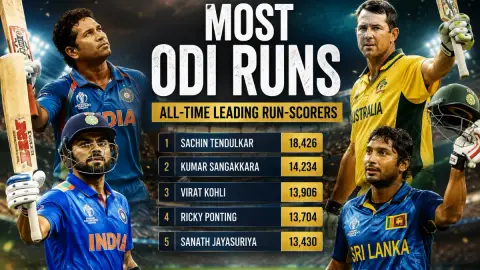
Most ODI Runs Ever: Sachin Tendulkar's 18,426 Leads All-Time List
Sachin Tendulkar's 18,426 runs is the all-time ODI record. See the full ranked top 12, plus 2026 updates on Virat Kohli (14,941) and Rohit Sharma, the closest active chasers.
Most Followed Cricketers on Instagram
Virat Kohli leads every other cricketer on Instagram by more than 200 million. Here are the 12 most followed cricketers, ranked by approximate follower count as of 2026.
Most Loved Cricketers of All Time: 12 Fan Favourites, Ranked
Sachin Tendulkar leads our ranking of cricket's most loved players, with MS Dhoni, Virat Kohli, Brian Lara, AB de Villiers and 8 more legends named and ranked.