
NBA Players With Long Hair: Icons of the Court
On this page7
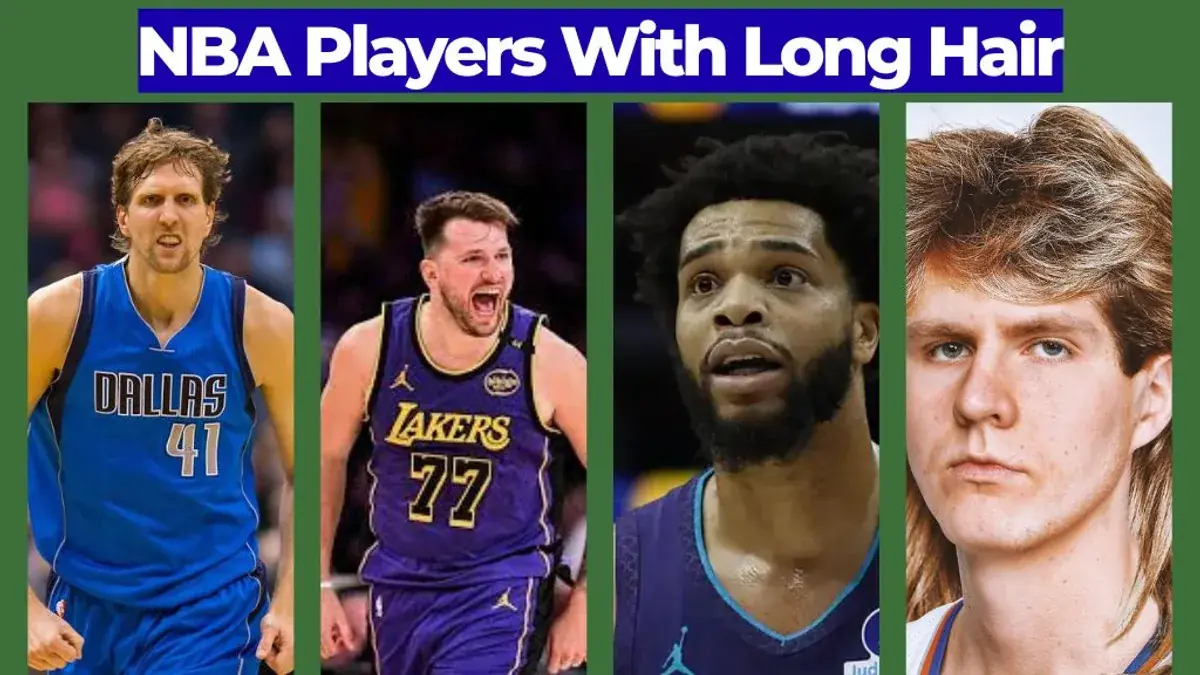
The NBA has never restricted hair length, so players from Bill Walton and Rasheed Wallace to Kevin Durant, Kristaps Porzingis and Luka Doncic have turned long hair into a signature look. Braids, dreadlocks, flowing natural styles and curly manes have appeared in every era of the league, making hair one of the most recognizable parts of a player’s on-court identity.
Why long hair stands out on the court
Basketball offers no helmets and no face guards, so hairstyles are on full display for 48 minutes at a time. In a league where personality carries almost as much weight as statistics, distinctive hair has helped plenty of players stand out even when their box score did not. Bill Walton’s curls were as recognizable as his outlet passes, and kids copied Allen Iverson’s cornrows on playgrounds that had never seen an NBA game live.
There is a practical side too. Some players rely on headbands or braids to keep hair out of their eyes mid-drive, while others simply wear what feels like them. Either way, hair has quietly been part of how fans recognize and remember players for as long as the league has been on television.
Iconic long-haired NBA players
Bill Walton carried thick, curly red hair through his UCLA and NBA years in the 1970s and early 1980s. A two-time NBA champion and Hall of Famer, his look became just as tied to his identity as his passing. He remained a fixture as a broadcaster until his death in May 2024 at age 71.
Rasheed Wallace made dreadlocks iconic during his run in the 1990s and 2000s, most notably with the 2004 champion Detroit Pistons. His hair carried real cultural weight and became part of his fiery, unmistakable on-court presence.
Dirk Nowitzki wore flowing blond hair through much of his early Dallas Mavericks career, bringing a loose, European casualness to the look before settling into a shorter style later on.
Kevin Durant has cycled through long braids and natural styles across his entire modern career with the Warriors, Nets, Suns and now the Houston Rockets. His hair has grown into a familiar part of his silhouette.
Kristaps Porzingis and Luka Doncic both brought a distinctly European long-hair aesthetic to the NBA, closer to continental club style than American locker-room norms, and both remain among the most recognizable longer-haired stars in the league.
Notable NBA players known for long hair
| Player | Era | Hair style |
|---|---|---|
| Bill Walton | 1970s–1980s | Curly red locks |
| Larry Bird | 1980s | Straight blond hair |
| Rasheed Wallace | 1990s–2000s | Dreadlocks |
| Al Harrington | 2000s | Cornrows / braids |
| Dirk Nowitzki | 2000s–2010s | Flowing blond hair |
| Kevin Durant | 2010s–present | Braids and natural styles |
| Kristaps Porzingis | 2010s–present | Long, straight hair |
| Luka Doncic | 2018–present | Longer natural style |
The cultural significance of hair in the NBA
Dreadlocks carried real cultural weight for players like Rasheed Wallace, well beyond just a look. For many Black players, braids connect to heritage and personal identity. International stars such as Porzingis and Nowitzki brought a more unstructured casualness, closer to European club style than American norms.
With a global audience watching, these choices get noticed. Cornrows spread fast during Allen Iverson’s prime, and young fans still copy the hairstyles of players they idolize, the same way they copy a signature crossover. What used to be a small style choice has become part of a larger conversation about self-expression in professional sports.
Does hair length affect performance?
No evidence links hair length to on-court performance. Players deal with it through headbands, clips, and elastic ties, and the real factor is comfort. A player who feels like himself tends to play looser and more freely.
Some players change their hair dramatically at big career moments, almost as a reset ritual. Others keep the same look for an entire career because it is simply who they are. There is no measurable advantage either way, so the decision stays personal.
Long-haired stars in the 2024-26 NBA
The current league runs the full range of long-hair looks: braids, natural twists, and hair left to grow out. Kevin Durant, who joined the Houston Rockets in the 2025 offseason, still wears his familiar braided and natural styles. Kristaps Porzingis, traded to the Golden State Warriors during the 2025-26 season and re-signed there in mid-2026, keeps his long, straight look.
Luka Doncic, dealt to the Los Angeles Lakers in February 2025, and Kyrie Irving of the Dallas Mavericks round out the modern generation of longer-haired stars, with Irving cycling through several phases over his career. Social media now speeds up how fast a new look travels, sometimes trending within hours of a game ending.
The bottom line
Long hair has been part of the NBA’s visual identity from Bill Walton’s curls to today’s braids and natural styles. With no league rule against it and a global stage that puts every look on display, hair remains a canvas for cultural and personal expression, and one of the simplest ways players make themselves unforgettable — right alongside the league’s most tattooed players, another form of personal storytelling fans track just as closely.
Frequently asked questions
Which NBA player is most famous for long hair?+
There is no single answer, but a few names stand out across eras. Bill Walton's curly red mane defined the 1970s, Rasheed Wallace made dreadlocks iconic in the 1990s and 2000s, and Kevin Durant has worn long braids and natural styles throughout his modern career. In Europe-influenced circles, Kristaps Porzingis and Luka Doncic are often cited for their flowing looks.
Does the NBA have rules about hair length?+
No. The NBA has no rule restricting hair length or style. Players can wear braids, dreadlocks, flowing natural hair, or headbands as long as nothing creates a safety hazard for themselves or opponents. Team dress codes cover clothing off the court, not hair.
Which NBA players have long hair as of 2026?+
Kevin Durant, who joined the Houston Rockets in the 2025 offseason, continues to wear long braided and natural styles. Kristaps Porzingis, who moved to the Golden State Warriors during the 2025-26 season, and Luka Doncic, traded to the Los Angeles Lakers in February 2025, are also known for longer hair. Kyrie Irving of the Dallas Mavericks has cycled through several long-hair phases.
Why do so many NBA players wear braids or dreadlocks?+
For many Black players, braids and dreadlocks connect to cultural heritage and personal identity, not just fashion. The styles also serve a practical purpose by keeping hair controlled during fast, physical play. Allen Iverson's cornrows in the early 2000s helped popularize the look far beyond basketball.
Did Bill Walton have long hair?+
Yes. Bill Walton was known for his thick, curly red hair during his UCLA and NBA playing days in the 1970s and 1980s. He remained a beloved figure as a broadcaster until his death from cancer in May 2024 at age 71. His look was as recognizable as his passing and rebounding.
Do NBA players wear headbands because of long hair?+
Sometimes. Headbands help keep longer hair and sweat out of a player's eyes during play, which is why guards and wings driving to the basket often use them. Many players wear headbands purely for style or superstition, though, regardless of hair length.
Has any NBA player cut long hair as a career reset?+
Yes, several players have made dramatic hair changes at pivotal moments, treating a fresh cut almost like a personal reset. Others keep the same signature look for an entire career because it has become part of their identity. There is no on-court advantage either way, so the choice is personal.
Is long hair a disadvantage for basketball performance?+
No evidence links hair length to on-court performance. Players manage longer hair with headbands, clips, and elastic ties, and comfort is the main factor. A player who feels like himself tends to play more freely, which is why most stick with whatever style suits them.
Sources
Play & tools
Free browser games and tools — no account, no download.
- Play 82-0 — Draft five, one per position, and see if your lineup can go a flawless NBA season.
- Play Era Ball — Draft an all-time NBA roster from a single era, then simulate a season and chase a perfect run.
- Play 32-0 — Draft five college basketball legends, one per position, and chase a perfect 32-0 national title.
- Explore all our games →
- Get the printable bracket — Download and print a blank tournament bracket to fill out by hand.
- Open the TS% calculator — Calculate TS% from points, field goal attempts and free throw attempts — scoring efficiency in one number.
- Explore all our free sports tools →
Related basketball guides
View all →
NBA Players Fear Wearable Tech Data Could Be Used Against Them in Contract Talks
Adam Silver says the NBA and the Players Association have no agreement on wearable tech in games, because players fear their own data could be used in bargaining.
Highest-Paid NBA Players by Salary
Stephen Curry leads the NBA at about $59.6M for 2025-26, the biggest single-season salary ever. See the full supermax top nine and why salary isn't net worth.
The Oldest NBA Players in History
Nat Hickey played an NBA game at 45 in 1948, the oldest ever. Kevin Willis (44) leads the modern era. The full leaderboard, explained.
The Shortest NBA Players of All Time
Muggsy Bogues is the shortest NBA player ever at 5'3". The full leaderboard of the smallest players to make it in the league, explained.
Tallest NBA Players Ever: Full 7-Foot-4+ List
Muresan and Bol share the NBA height record at 7'7". See every 7'4"-plus player, tied ranks, and the current tallest roster listings.
The Youngest NBA Players in History
Andrew Bynum debuted at 18 years and 6 days old, the youngest player in NBA history. The full leaderboard of the league's teen debutants.