
Greatest Cricketers of All Time: The Full Ranked List
On this page19
- 01The greatest cricketers at a glance
- 02Don Bradman
- 03Sachin Tendulkar
- 04Garry Sobers
- 05Shane Warne
- 06Viv Richards
- 07Muttiah Muralitharan
- 08Jacques Kallis
- 09Brian Lara
- 10Wasim Akram
- 11Glenn McGrath
- 12Imran Khan
- 13Ian Botham
- 14Adam Gilchrist
- 15Virat Kohli
- 16How we ranked them
- 17Comparing eras fairly
- 18The specialists at a glance
- 19Who just missed
Placement rewards statistical dominance measured against a player's own era first, then influence on how the game is played, then sustained output across a full career rather than one great series. Peak scores matter less than a career-long gap from the field, which is why Bradman outranks higher-ceiling scorers like Lara.
The greatest cricketers at a glance
| Rank | Player | Defining achievement |
|---|---|---|
| 1 | Don Bradman | Test average: 99.94 |
| 2 | Sachin Tendulkar | 34,357 runs and 100 international centuries |
| 3 | Garry Sobers | 8,032 Test runs plus 235 wickets |
| 4 | Shane Warne | 708 Test wickets; revived leg-spin |
| 5 | Viv Richards | Changed the tempo of elite batting |
| 6 | Muttiah Muralitharan | Record 800 Test wickets |
- The outlier
Don Bradman
Bradman is No. 1 because the single most important number in cricket belongs to him and no one is close. His Test average of 99.94 sits nearly 40 runs clear of the next-best career average in history, a margin statisticians treat as almost impossible to replicate in any sport. Across 52 Tests for Australia between 1928 and 1948 he made 6,996 runs with 29 centuries.
He ranks above every volume scorer here, Tendulkar included, because greatness on this list is measured as distance from the field, and Bradman's distance is unmatched. He famously needed 4 in his final Test innings to average exactly 100 and was bowled for a duck instead, which changes the number but not the verdict.
Team: Australia · Era: 1928–1948 · Defining feat: 99.94 Test average, 29 centuries in 52 Tests
- Career leader
Sachin Tendulkar
Tendulkar ranks second on sheer accumulated output: he retired in 2013 with 34,357 international runs and 100 international centuries, both records no one else has reached. He debuted at 16 and played until 40, and the 24-year span is as much the case as any single innings, because his production barely dipped through multiple eras of bowling attacks.
He sits behind Bradman only because peak dominance outweighs volume in our criteria, not because the gap is obvious. See our most runs in international cricket leaderboard for how far clear he is, or the full greatest batsmen ranking for how he compares with Lara and Richards on batting alone.
Team: India · Era: 1989–2013 · Defining feat: 34,357 international runs, 100 international centuries
- Complete all-rounder
Garry Sobers
Sobers is the highest all-rounder here because he was a genuine triple threat, not a batsman who bowled a bit. He made 8,032 Test runs at 57.78 for the West Indies, took 235 wickets bowling fast-medium, orthodox spin and wrist-spin depending on the pitch, and held 109 catches.
His 365 not out against Pakistan in 1958 stood as the record Test individual score for 36 years, until Brian Lara passed it. He ranks above Kallis, the other all-time all-rounder on this list, on the breadth of his bowling and fielding rather than raw run totals.
Team: West Indies · Era: 1954–1974 · Defining feat: 8,032 runs at 57.78 plus 235 wickets and 109 catches
- Craft revived
Shane Warne
Warne is the highest bowler on this list because he rescued a dying skill and turned it into the most feared weapon in the game. His 708 Test wickets are the most by any specialist spinner in history, second overall only to Muralitharan.
His first ball in Ashes cricket, the 1993 delivery that spun a long way to clip Mike Gatting's off stump, is still the reference point for what leg-spin can do. He ranks above Murali here on influence and match-shaping presence, even though Murali holds more wickets, a debatable call our criteria come down on narrowly.
Team: Australia · Era: 1992–2007 · Defining feat: 708 Test wickets, most by any specialist spinner
- Intimidator
Viv Richards
Richards earns this spot for changing the tempo of batting a generation before T20 made power-hitting standard. He attacked fast bowling on the front foot, frequently without a helmet, and carried a strike rate that looked misplaced by the standards of his era.
He anchored the West Indies side that dominated world cricket through the late 1970s and 1980s, a run detailed in our most successful cricket captains guide. He ranks above the specialist bowlers below him because his influence on how the game is played is still visible in every aggressive top-order batsman today.
Team: West Indies · Era: 1974–1991 · Defining feat: redefined aggressive batting; core of the dominant WI sides
- Wicket record
Muttiah Muralitharan
Murali holds the two numbers that define this entry: 800 Test wickets, a total no other bowler has reached, and 1,347 international wickets across formats, also the most ever. He built them on an unorthodox action and a doosra that beat batsmen who had faced him dozens of times.
His all-format count is broken down in our most wickets in cricket guide. He sits just below Warne despite the larger haul because our criteria weight game-shaping influence alongside the raw total, and that call is genuinely close.
Team: Sri Lanka · Era: 1992–2010 · Defining feat: 800 Test wickets, 1,347 international wickets
- Bat-and-ball engine
Jacques Kallis
Kallis makes the top half on a statistical combination no other all-rounder has approached: 13,289 Test runs at 55.37 alongside 292 Test wickets. Very few players have posted a top-order batting record and a frontline seamer's wicket column in the same career.
He ranks below Sobers because his bowling was one discipline rather than three, but the run column is far heavier. South Africa's strongest team of the 2000s was built around him as the fixed point in the middle order and the fourth seamer when required.
Team: South Africa · Era: 1995–2014 · Defining feat: 13,289 Test runs plus 292 Test wickets
- Peak scorer
Brian Lara
Lara holds two batting records that may never fall: 400 not out against England in 2004, the highest individual Test innings, and 501 not out for Warwickshire in 1994, the highest first-class score ever. His ceiling is as high as batting gets.
He ranks below the players above him precisely because our criteria reward a career-long gap from the field over singular peaks, and his career average of 52.89 sits well short of Bradman's. He carried a declining West Indies line-up through the 1990s and 2000s, often on his own. See highest score in Test cricket for the full record.
Team: West Indies · Era: 1990–2007 · Defining feat: 400* in Tests and 501* in first-class, both records
- Swing master
Wasim Akram
Akram is here for redefining what a fast bowler could do with an old ball. His reverse swing, paired with Waqar Younis, made Pakistan's attack the most feared in the world through the 1990s, and his 414 Test wickets came with a left-arm angle that troubled right-handers in ways conventional swing did not.
He ranks above McGrath on sheer unpredictability and skill variety, where McGrath's case is relentless control, a close call between two different bowling philosophies.
Team: Pakistan · Era: 1984–2003 · Defining feat: 414 Test wickets; pioneer of modern reverse swing
- Metronome
Glenn McGrath
McGrath's case is relentlessness rather than spectacle: 563 Test wickets from a line and length so exact that batsmen wore down as much as they were beaten. He was the enforcer at the top of Australia's attack through the most dominant era in the country's history.
He ranks just below Akram because his method offered fewer ways to take a wicket, but few bowlers have sustained his economy across such a heavy workload for so long.
Team: Australia · Era: 1993–2007 · Defining feat: 563 Test wickets with sustained pinpoint accuracy
- Captain-leader
Imran Khan
Imran ranks here as a genuine strike bowler who could bat at four or five and, above all, as a leader: he captained Pakistan to their only ODI World Cup title in 1992. Few all-rounders have combined that on-field output with that much influence off it.
He built the fast-bowling tradition that produced Wasim Akram and Waqar Younis, and his captaincy is still a reference point for Pakistan's place among the most successful cricket teams in history.
Team: Pakistan · Era: 1971–1992 · Defining feat: 1992 World Cup-winning captain and frontline all-rounder
- Match-turner
Ian Botham
Botham makes the list on moments more than steady accumulation, and none tops the 1981 Ashes, a series that swung almost entirely on his bat and ball over a few days, days after he had been dropped as captain.
He finished with 5,200 Test runs and 383 wickets, England's most complete all-rounder of the modern era. He ranks below Imran because his figures came without the sustained captaincy record, though his single-series impact is arguably unmatched here.
Team: England · Era: 1974–1992 · Defining feat: 5,200 runs and 383 wickets; the 1981 Ashes
- Role redefiner
Adam Gilchrist
Gilchrist is the highest wicketkeeper because he changed what the position was expected to contribute. He kept to the fastest bowlers in the world while batting at a strike rate no keeper before him had managed, often walking in at six to turn a strong position into a rout.
His 17 Test centuries as a keeper-batsman reset the template, and every attacking gloveman since is measured against him. See our greatest wicketkeepers in cricket history ranking for how he compares with Boucher, Dhoni and the rest.
Team: Australia · Era: 1996–2008 · Defining feat: 17 Test centuries; redefined the keeper-batsman role
- Modern great
Virat Kohli
Kohli is ranked conservatively at 14 because his standing is still settling, not because his numbers are thin. He was the most prolific ODI run-scorer of his generation and retired from Test cricket in 2025 with 9,230 runs at 46.85 across 123 matches.
His case for a place this high rests on volume and consistency across three formats rather than a single defining peak, which is why most rankings keep him below the retired greats above him for now. That position is the one most likely to move as the record is finalized.
Team: India · Era: 2008–2025 (Tests) · Defining feat: 9,230 Test runs; leading modern ODI run-scorer
Reader interaction
Build your ranking
Drag the names into the order you think is right — or use the arrows — then submit to see how your list compares with everyone else's.
- Don Bradman
- Sachin Tendulkar
- Garry Sobers
- Shane Warne
- Viv Richards
- Muttiah Muralitharan
- Jacques Kallis
- Brian Lara
- Wasim Akram
- Glenn McGrath
- Imran Khan
- Ian Botham
- Adam Gilchrist
- Virat Kohli
Audience ranking
How everyone ranked them
Built from reader rankings using position-based points.
Cricket has been played at international level since 1877, so any greatest-of-all-time list is really an argument across five or six generations that barely overlapped. Bradman never faced Warne’s leg-spin. Sobers never batted against Muralitharan. The ranked cards above are the 14 names that appear, in some order, on almost every serious version of that argument, with the numbers and moments that put them there.
Players who could change a Test with either discipline need a closer comparison than one combined list allows. Our ranking of the greatest cricket all-rounders separates genuine dual-skill careers from great batters or bowlers who merely contributed occasionally in the other discipline.
How we ranked them
Three things decide placement. First, statistical dominance relative to a player’s own era, which is why Bradman’s average and Muralitharan’s wicket count carry so much weight. Second, influence on how the game is played, credited to Warne for reviving leg-spin and Gilchrist for redefining wicketkeeping. Third, sustained output across a full career rather than a single great series, which is why volume scorers like Tendulkar and Kallis rank ahead of higher-ceiling peaks.
Peak matters less than distance from the field. That is the reason Brian Lara, who owns the highest scores in both Test and first-class cricket, still ranks below batsmen with a longer career-long gap over their contemporaries. Active or recently retired players such as Virat Kohli are ranked conservatively, since their final place in history is still being written and can move.
Comparing eras fairly
Raw numbers do not travel between eras. A 1930s Test used uncovered pitches, no helmets, timeless matches and a fraction of today’s playing schedule, so Bradman’s 99.94 and a modern batsman’s average measure different games. This list handles that by scoring each player against the field he actually faced, then comparing those margins, rather than laying one century count on top of another. The same applies to bowling: Muralitharan and Warne bowled in a high-scoring, heavily protected batting era, which makes their wicket totals harder, not easier, to accumulate.
The specialists at a glance
| Discipline | Highest-ranked here | The number behind it |
|---|---|---|
| Peak Test batting | Don Bradman | 99.94 career average |
| Career run volume | Sachin Tendulkar | 34,357 international runs |
| All-round (bat + ball + field) | Garry Sobers | 8,032 runs, 235 wkts, 109 catches |
| Spin bowling | Muttiah Muralitharan | 800 Test wickets |
| Fast bowling | Glenn McGrath | 563 Test wickets |
| Wicketkeeper-batsman | Adam Gilchrist | 17 Test centuries as keeper |
Who just missed
A top 14 forces hard cuts. Kumar Sangakkara, Ricky Ponting, Sunil Gavaskar, Rahul Dravid, Dennis Lillee and Kapil Dev all hold credible cases and appear on plenty of other rankings; widen this to a top 20 and most of them fold in without argument. For the fan-favorite angle rather than the statistical one, see our most loved cricketers list, and for format-specific records behind these careers, check most double centuries in Test cricket. This ranking covers the men’s game; for the equivalent on the women’s side, see our best women cricketers of all time list.
Frequently asked questions
Who is the greatest cricketer of all time?+
Don Bradman, by wide consensus. His Test batting average of 99.94 is nearly 40 points clear of the next-best career average in the sport's history, a gap statisticians consider almost impossible to replicate. No player in any sport has separated himself from his peers by that margin on a core statistic, which is why virtually every serious ranking, including this one, starts with him before the debate over the rest even begins.
Does this list rank ODI and T20 records or only Test cricket?+
It weighs all three formats but leans on the format a player defined. Bradman and Sobers are judged almost entirely on Tests because that was the game they played. Tendulkar and Kohli are weighed across Tests and ODIs, since their volume records span both. T20 careers are considered where relevant but rarely decide placement, because the format is too young to produce the career-long dominance this ranking rewards.
Why is Sachin Tendulkar ranked above Brian Lara and Viv Richards?+
Volume and durability. Tendulkar's 34,357 international runs and 100 centuries came across a 24-year career with almost no decline, which our criteria weight heavily. Lara owns the higher individual peaks, including a Test-record 400 not out, and Richards was more intimidating in his prime, but neither sustained Tendulkar's output over as long a span. Peak ceiling loses to career-long consistency in this ranking's method.
Are there great cricketers left off this list of 14?+
Yes, and reasonably so. Kumar Sangakkara, Ricky Ponting, Sunil Gavaskar, Dennis Lillee, Rahul Dravid and Kapil Dev all have credible cases and appear on other rankings. The 14 here are the names that show up on almost every serious version of the list, in some order. A top 20 or top 25 would fold most of those players in without much argument.
How can players from the 1930s be compared with today's cricketers?+
You cannot compare raw numbers directly, because eras used different equipment, pitches, workloads and bowling attacks. This ranking sidesteps that by measuring each player against his own era first, so Bradman's dominance of 1930s cricket is weighed against Kohli's dominance of 2010s cricket rather than one run total against another. Influence on how the game is played is judged across eras separately.
Where do the women's game and current active players fit in?+
This ranking covers the men's game; for the women's side, see our best women cricketers of all time list. Active or recently retired players such as Virat Kohli are ranked conservatively because their final standing is still being written, and a player's placement here can move as the historical record settles. Retired greats with closed careers are easier to rank with confidence.
Sources
Play & tools
Free browser games and tools — no account, no download.
- Play today's Sports Connections — Today's Sports Connections — daily hints, answers, and play the grid.
- Play Guess the NFL Player — A new mystery NFL player every day. Eight guesses, with a clue on each — plus free unlimited mode.
- Explore all our games →
Related cricket guides
View all →
Best Cricket Coaches Ever: 12 Greatest Ranked (2026)
John Buchanan leads our best cricket coaches ranking. See the all-time top 12 plus the 2026 cases for Gautam Gambhir, Andrew McDonald and Gary Kirsten.
Best Spin Bowlers in Cricket History: All-Time Greats
Test cricket's 13 greatest spin bowlers ranked, from Muralitharan and Warne to Lyon and Ashwin — with wickets, signature deliveries, and what sets each apart.

Most Popular Cricketers in the World: All-Time Fan Favourites
Virat Kohli tops today's popularity charts, but Sachin Tendulkar, MS Dhoni, Babar Azam, and Brian Lara rank among the most popular cricketers ever. Ranked and explained.

Best Women Cricketers of All Time: Legends of the Game
The 14 greatest women cricketers ever, ranked and named — from Belinda Clark and Mithali Raj to Ellyse Perry and Smriti Mandhana — with the records behind each.
Greatest All-Rounders in Cricket History, Ranked
The 12 greatest all-rounders in cricket history, ranked from Garfield Sobers to Ben Stokes, each with the Test batting and bowling numbers that back the case.
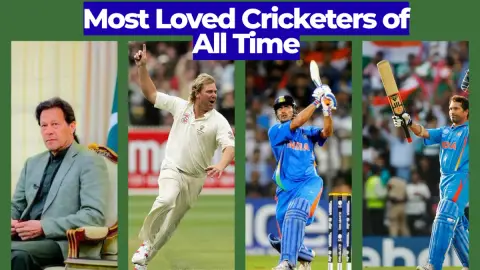
Most Loved Cricketers of All Time: 12 Fan Favourites, Ranked
Sachin Tendulkar leads our ranking of cricket's most loved players, with MS Dhoni, Virat Kohli, Brian Lara, AB de Villiers and 8 more legends named and ranked.