
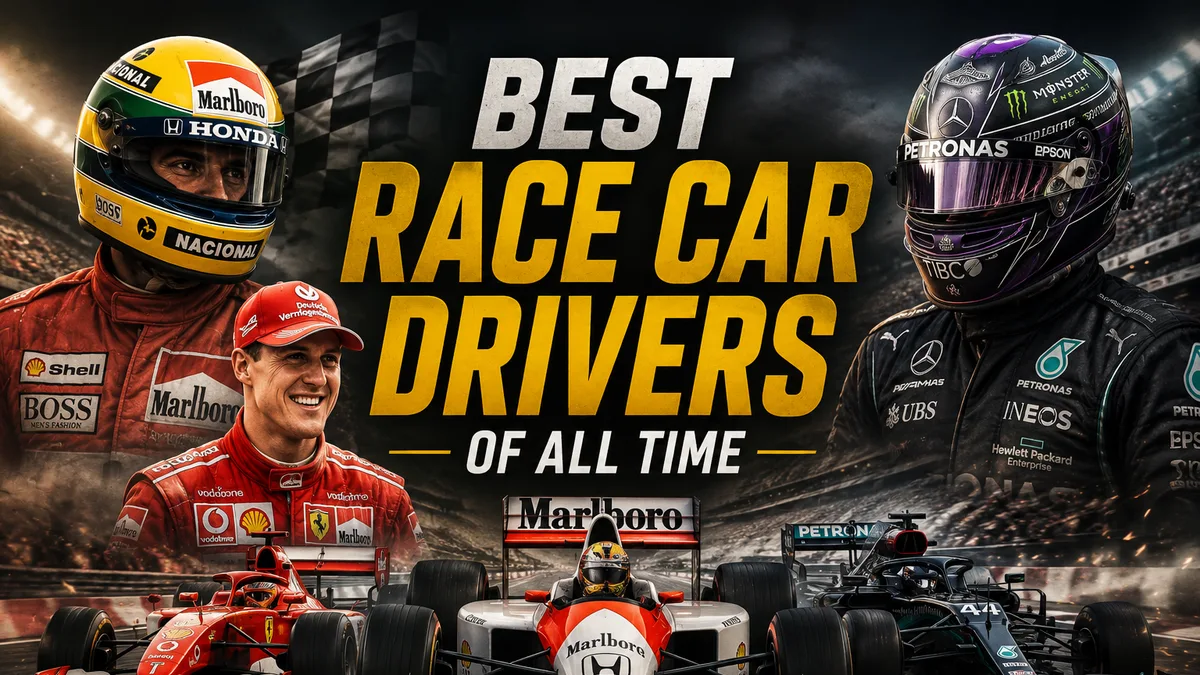
Best Race Car Drivers of All Time: Ranked Across Motorsport
On this page14
- 01The greatest race car drivers at a glance
- 02Lewis Hamilton
- 03Michael Schumacher
- 04Juan Manuel Fangio
- 05Ayrton Senna
- 06Mario Andretti
- 07A.J. Foyt
- 08Max Verstappen
- 09Jim Clark
- 10Tom Kristensen
- 11How we ranked these drivers
- 12Judging greatness across eras
- 13Cross-series comparison at a glance
- 14Why endurance and American racing belong here
We weighted four things over raw win totals: championships, era-adjusted dominance against a driver's own rivals, versatility across cars and series, and peak speed on a single lap. A driver who won in different machinery outranks a one-series specialist with a similar trophy count.
The greatest race car drivers at a glance
| Rank | Driver | Defining record |
|---|---|---|
| 1 | Lewis Hamilton | Seven F1 titles; record 106 wins |
| 2 | Michael Schumacher | Seven titles; five straight with Ferrari |
| 3 | Juan Manuel Fangio | Five titles with four constructors |
| 4 | Ayrton Senna | Three titles; qualifying and wet-weather benchmark |
| 5 | Mario Andretti | F1, IndyCar, Indy 500 and Daytona winner |
| 6 | A.J. Foyt | Four Indy 500 wins plus Daytona and Le Mans |
- Statistical leader
Lewis Hamilton
Hamilton holds the outright Formula 1 records for wins, pole positions, and podium finishes, and he shares the title record at seven. His 106th career victory came in 2026 at Barcelona-Catalunya, his first for Ferrari and proof he can win in a fourth distinct works team. He ranks above Michael Schumacher because he broke the records Schumacher set — most F1 wins and poles — while matching the seven-title mark across rule-change eras (V8, hybrid, ground-effect) rather than one stable regulation cycle.
Titles: 7 · Wins: 106 (record) · Poles/podiums: all-time leader · Teams won with: McLaren, Mercedes, Ferrari
- Dynasty builder
Michael Schumacher
Schumacher won five consecutive championships with Ferrari from 2000 to 2004, a run that turned a team without a drivers' title since 1979 into the sport's benchmark. His 91 wins and seven crowns were the outright records for well over a decade. He sits below Hamilton only because those totals have since been passed, but his method — building an entire team around one driver, testing program and all — reshaped how F1 organizations are run to this day.
Titles: 7 · Wins: 91 · Signature run: 5 straight titles, 2000–2004 · Impact: Ferrari's modern dynasty
- Era-adjusted king
Juan Manuel Fangio
Fangio won five titles in the 1950s with four different manufacturers — Alfa Romeo, Maserati, Mercedes, and Ferrari — a versatility feat no champion has repeated. His career win rate of roughly 47% (24 wins from 51 starts) remains the highest in Formula 1 history. He ranks above the three-title greats below him because era-adjusted dominance is our third criterion, and no one before or since controlled their grid by that margin. His five-title record stood for 46 years until Schumacher.
Titles: 5 · Constructors won with: 4 · Win rate: ~47% · Era: 1950s
- Peak-speed benchmark
Ayrton Senna
Senna took three titles between 1988 and 1991 and 65 pole positions, and his qualifying laps and wet-weather drives — Monaco 1984, Donington 1993 — are still used as coaching references. On raw single-lap speed, our fourth criterion, he is the sport's touchstone. He edges fellow three-title driver Jackie Stewart here because of that qualifying dominance and outsized influence: multiple modern champions name him as their model. His death at Imola in 1994 froze a career still climbing.
Titles: 3 · Poles: 65 · Signature: wet-weather and qualifying mastery · Idol to: a generation of champions
- Versatility master
Mario Andretti
Andretti is the only driver to win the Formula 1 World Championship (1978), the Indianapolis 500 (1969), and the Daytona 500 (1967). That spread across open-wheel, oval, and stock-car racing is the purest example of our versatility criterion. He tops the multi-discipline group because he reached the summit of each category rather than merely competing — a range single-series specialists were never asked to demonstrate.
F1 title: 1978 · Indy 500: 1969 · Daytona 500: 1967 · Also won: IndyCar, sprint cars
- American icon
A.J. Foyt
Foyt won the Indianapolis 500 four times, added the 1972 Daytona 500 and a 1967 Le Mans victory, and took races in sprint cars, midgets, and stock cars. No American matched his breadth across dirt, pavement, and endurance. He ranks just below Andretti because he never won a Formula 1 title, but inside American motorsport his range has no equal — he is the reference point for domestic versatility.
Indy 500 wins: 4 · Daytona 500: 1972 · Le Mans: 1967 · Range: sprint, midget, stock, endurance
- Modern dominator
Max Verstappen
Verstappen won four straight titles from 2021 to 2024 and set the record for most wins in a single season with 19 in 2023. At his peak he blended qualifying speed with race-day control few have shown. He ranks above Jim Clark on championship count (four to two), and his 2025 near-miss underlines the level: he lost the title to Lando Norris by just two points in a three-way finish with Oscar Piastri, still in his mid-20s.
Titles: 4 (2021–2024) · Single-season wins: 19 (2023 record) · 2025: runner-up by 2 pts · Team: Red Bull
- Driver's driver
Jim Clark
Clark won two Formula 1 titles (1963, 1965) and the 1965 Indianapolis 500, and he won 25 of his 72 Grand Prix starts — a strike rate that, era-adjusted, sits near Fangio's. Senna named him his own idol. He ranks below Verstappen on titles but above most three-plus-title drivers on dominance-per-start. His versatility across F1 and Indy in the same period is a lighter version of the Andretti template.
Titles: 2 · Wins: 25 of 72 starts · Indy 500: 1965 · Era: 1960s
- Endurance king
Tom Kristensen
Kristensen holds the outright 24 Hours of Le Mans record with nine victories, six of them consecutive from 2000 to 2005 — the nickname "Mr Le Mans" is earned, not marketing. Endurance racing tests stamina, night pace, and shared-car discipline that sprint formats never touch. He makes the list because any ranking that ignores endurance is incomplete. His nine wins sit three clear of Jacky Ickx's six, the widest margin at the top of any major motorsport record here.
Le Mans wins: 9 (record) · Streak: 6 straight, 2000–2005 · Discipline: sports-car endurance
Reader interaction
Build your ranking
Drag the names into the order you think is right — or use the arrows — then submit to see how your list compares with everyone else's.
- Lewis Hamilton
- Michael Schumacher
- Juan Manuel Fangio
- Ayrton Senna
- Mario Andretti
- A.J. Foyt
- Max Verstappen
- Jim Clark
- Tom Kristensen
Audience ranking
How everyone ranked them
Built from reader rankings using position-based points.
The ranking above is the heart of this piece. The sections below explain how we weighed the field and why cross-discipline and endurance careers earn a seat at a table that Formula 1 usually dominates.
How we ranked these drivers
Win totals are the first thing people reach for and the easiest to misread, because calendars have grown from seven races a season to more than twenty. Instead of trusting raw numbers, we scored each driver on four things and let them settle close calls:
- Championships — the sport’s own verdict, repeated over full seasons rather than one race.
- Era-adjusted dominance — how far a driver stood above their actual rivals and teammates at the time.
- Versatility — winning in different cars, tracks, weather, and, where relevant, different series.
- Peak speed — the single-lap ceiling, best measured by qualifying and wet-weather form.
A multi-discipline champion outranks a one-series specialist with a similar trophy count, which is why Mario Andretti and A.J. Foyt sit among Formula 1 royalty rather than in a separate list.
Judging greatness across eras
Comparing a 1950s champion with a 2020s one is genuinely hard. Cars, tires, safety, data, and team budgets have all changed beyond recognition, and a modern driver contesting 24 rounds cannot post a 1950s win percentage no matter how dominant. The fairest fix is to measure each driver against the people they actually raced — their teammates in equal equipment first of all. By that test the names above keep rising to the top, whichever decade they come from.
Cross-series comparison at a glance
| Driver | Titles / Signature | Key discipline | Era |
|---|---|---|---|
| Lewis Hamilton | 7 titles, 106 wins | Formula 1 | 2000s–present |
| Michael Schumacher | 7 titles, 91 wins | Formula 1 | 1990s–2000s |
| Juan Manuel Fangio | 5 titles, 4 constructors | Formula 1 | 1950s |
| Ayrton Senna | 3 titles, 65 poles | Formula 1 | 1980s–90s |
| Mario Andretti | F1 + Indy 500 + Daytona 500 | Multi-discipline | 1960s–80s |
| A.J. Foyt | 4 Indy 500s, Daytona 500, Le Mans | American racing | 1960s–80s |
| Max Verstappen | 4 titles, 19 wins in 2023 | Formula 1 | 2010s–present |
| Jim Clark | 2 titles, 1965 Indy 500 | Formula 1 / IndyCar | 1960s |
| Tom Kristensen | 9 Le Mans wins | Endurance | 1990s–2010s |
For deeper single-series debates, see our rundowns of the greatest Formula 1 drivers and the drivers with the most Indy 500 wins.
Why endurance and American racing belong here
Pure Formula 1 rankings quietly ignore two rich traditions. Endurance racing crowns drivers who master a full day and night in a shared car — Tom Kristensen’s nine Le Mans wins and Jacky Ickx’s six define a parallel greatness that qualifying pace alone can’t capture. American oval and stock-car racing produced Foyt and Andretti, whose range across sprint cars, ovals, and road courses is a versatility test Grand Prix specialists never faced. Leaving either out doesn’t make a list cleaner; it makes it smaller.
The debate over a single “greatest” will never close, and that open argument is exactly what keeps motorsport history worth revisiting.
Frequently asked questions
Has any driver won the Triple Crown of Motorsport?+
Only Graham Hill has completed the unofficial Triple Crown — the Monaco Grand Prix, the Indianapolis 500 (1966), and the 24 Hours of Le Mans (1972). Fernando Alonso is the closest active challenger, having won Monaco and Le Mans but not the Indy 500. Because the three events reward such different skills and calendars now overlap, most observers expect Hill to stay the only member for a long time.
Who is the youngest Formula 1 world champion?+
Sebastian Vettel remains the youngest Formula 1 World Champion, winning his first title in 2010 at 23 years and 134 days with Red Bull, then taking four in a row through 2013. Max Verstappen is the youngest race winner but was older than Vettel when he first won the championship. You can dig into the full picture in our guide to the [youngest world champion in F1](/youngest-world-champion-f1/).
Which woman has had the most success in top-level racing?+
Danica Patrick is the most successful woman in major American open-wheel and stock-car racing. She is the only woman to win an IndyCar Series race, taking the 2008 Indy Japan 300, and she finished third at the 2009 Indianapolis 500 — the best Indy 500 result by a woman. She later became the first woman to start a NASCAR Cup Series race from pole, at the 2013 Daytona 500.
Why aren't Sebastian Vettel and Fernando Alonso on the list?+
Both sit just outside our top nine, not off the radar. Vettel's four consecutive titles (2010–2013) and 53 wins are elite, but they came in one dominant car and one series. Alonso's two titles, longevity, and near-Triple-Crown record are remarkable, yet neither matched the record totals or era-defining dominance of the drivers ranked above. In a top-15 list, both would appear comfortably.
Which driver has the highest win percentage in Formula 1?+
Juan Manuel Fangio holds the highest win percentage among multiple-race champions, at roughly 47% — 24 wins from 51 starts. Alberto Ascari is close behind for his early-1950s peak. Modern drivers race far more events per season, which mathematically caps their percentages, so raw win rate flatters the short, brutal calendars of the 1950s. It is one reason we weigh era-adjusted dominance rather than headline win counts alone.
What separates an endurance champion from a Grand Prix winner?+
A Grand Prix is a roughly two-hour sprint won on qualifying pace and tire management. The 24 Hours of Le Mans is a full day and night shared between two or three drivers, where fuel saving, traffic through slower classes, mechanical sympathy, and consistency after midnight decide the result. That is why a specialist like Tom Kristensen can dominate Le Mans without ever chasing a Formula 1 seat — the disciplines reward different strengths.
Sources
Play & tools
Free browser games and tools — no account, no download.
- Play 24-0 — Draft an F1 chassis and two drivers, then chase a perfect 24-0 — win every race on the 24-round calendar.
- Explore all our games →
Related motorsport guides
View all →
IndyCar vs F1: Which Is Faster?
IndyCar vs F1 compared: top speed, horsepower, cars, ovals, cost and driver pay. Which is faster and which is harder, explained side by side.
Best Female NASCAR Drivers of All Time, Ranked
The 10 most accomplished female NASCAR drivers, ranked by on-track results — from 1949 pioneer Sara Christian to Danica Patrick and full-time racer Toni Breidinger.
F1 Restores 305km Race Distance in 2028 After One Season at 290km
The FIA's published 2027 regulations restore the 305km grand prix distance from 2028. The 290km cut lasts one season. Here is the timeline and the engine changes behind it.
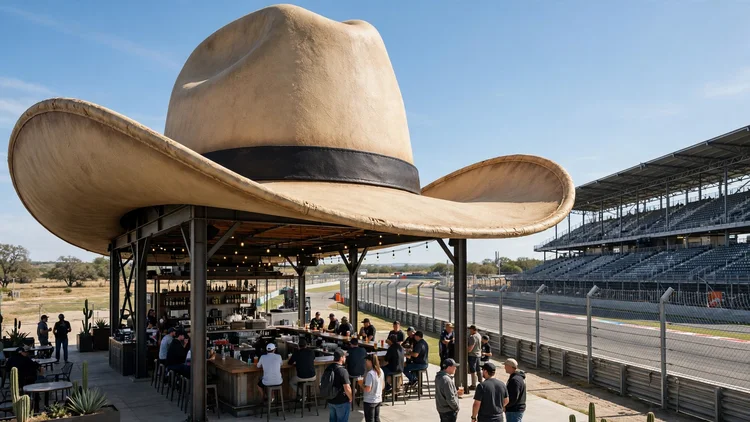
COTA Unveils the World's Largest Cowboy Hat, With a Bar Under It, Before the US Grand Prix
Circuit of the Americas and Tecovas unveiled a 47-foot cowboy hat on Monday, certified by Guinness World Records as the world's largest, with a bar underneath.
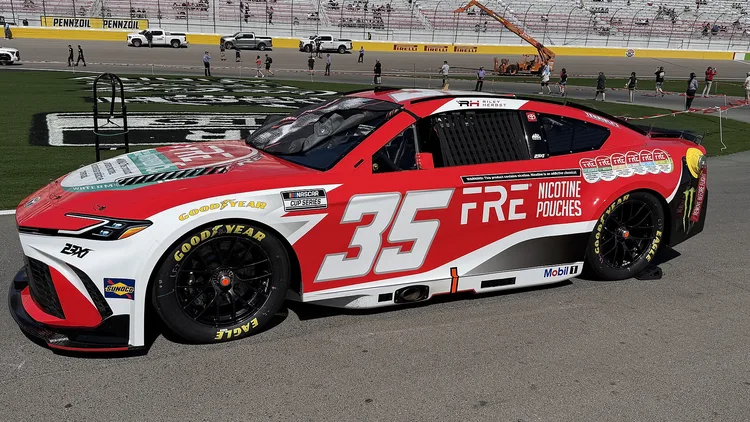
Herbst Dumps McDowell at Phoenix and Wrecks Himself in Stage One
Riley Herbst drove into Michael McDowell's bumper in Turn 3 at Phoenix, sent the No. 71 backwards into the wall and wrecked himself in the day's first caution.
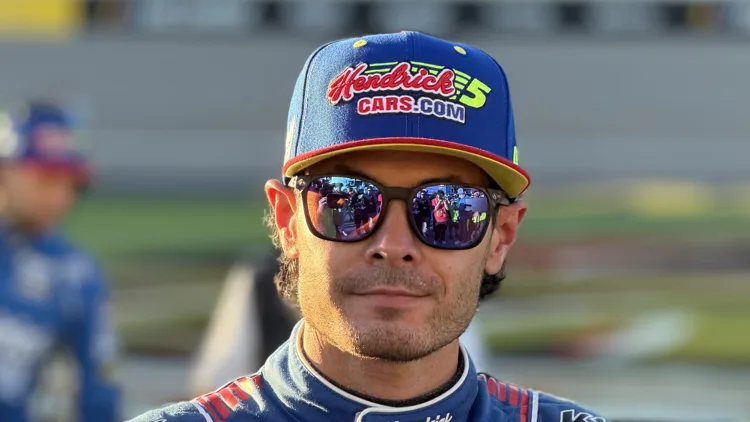
Larson's 49-Point Lead Is Down to Five After His Phoenix Crash
Kyle Larson warned all week his car would be bad at Phoenix. He qualified 22nd, fell a lap down, blew a right front tire with 31 laps left and scored three points.